
Sugarcane Farmers Provide Key Recommendations to Government for Indonesia's Sugar Self-Sufficiency
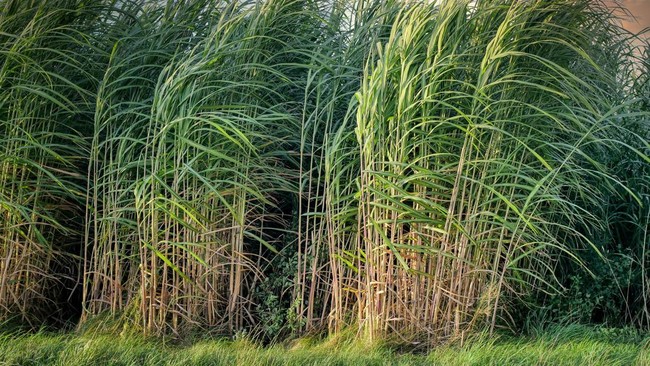
Sugarcane farmers have provided concrete “recipes” for Indonesia to break free from sugar import dependency and achieve self-sufficiency. The key lies not in massive expansion, but in internal improvements, such as land intensification, data correction, and the use of agricultural tools and machinery (alsintan) suited to domestic land conditions.
APTRI Chairman Soemitro Samadikoen stressed that the most crucial initial step is to strengthen the national sugarcane sector’s foundation, starting from data to real field conditions.
“Intensification (of sugarcane land) first. From the existing land, properly survey the planting area. What is our actual area? It always increases every year, is that true? It’s not true. I have proof, it’s not true. So this is not accurate,” Soemitro told CNBC Indonesia on Friday (10/4/2026).
According to him, the government needs to conduct comprehensive mapping of sugarcane land, including locations, plant conditions, and partnership patterns with sugar mills. From there, the main problems hindering productivity can be identified.
“Data our crops according to reality. Then, assess their condition. So mapping is needed. Map the area, the state, where our current sugar plants are, and whether they partner with sugar mills. So build partnerships. Tripartite, yes. Sugar mills, government, and farmers,” he explained.
He emphasised that every field problem must be specifically diagnosed before intervention. From water shortages, fertiliser, seeds, to capital access.
“Now, fulfil the shortages. Short on water, build irrigation channels. Short on fertiliser, facilitate fertiliser access. Short on seeds, short on capital, facilitate capital acquisition. So what’s the diagnosis? Is it correct? Once diagnosed, what’s the disease? Then treat it,” Soemitro clarified.
Additionally, he criticised policy approaches deemed still top-down without involving farmers as the main actors in the field.
“If it’s about farmers’ affairs, invite us to talk, me. Don’t not invite to talk. We (smallholder sugarcane farmers) are never invited to talk. Invited to talk properly. Not one-way traffic,” he said.
Mechanisation Must Be Adapted
Soemitro also highlighted the importance of mechanisation, but with an approach suited to Indonesia’s conditions. He reminded that the small-scale structure of domestic sugarcane land is not compatible with large tools used in other countries.
“Our land’s mechanisation is not the same as lands abroad, using big alsintan, can’t. Create agricultural production tools that suit our land conditions,” Soemitro explained.
He even suggested that the government encourage the development of small-sized alsintan that are more adaptive to farmers’ land.
“Our land is how? Small-small. Well, create small tractors, small alsintan. Not big ones. They should listen to us. Don’t just assume,” he said.
On the other hand, he also mentioned obstacles in accessing subsidised fertiliser, which farmers still find difficult due to administrative issues.
“It’s said subsidised fertiliser, but we have a hard time even using subsidised fertiliser,” he stated.
Government Accelerates Sugarcane Rejuvenation
Meanwhile, Agriculture Minister Amran Sulaiman stated that the government is focusing on rejuvenating sugarcane plants (ratoon dismantling) as a quick step to boost national production.
“After we evaluated in 2025 on the direction of Mr President (Prabowo Subianto), we checked our sugarcane across Indonesia, 70%-80% is not viable. So we do ratoon dismantling and Mr President asked us to help Indonesian sugarcane farmers, we immediately allocated Rp1.7 trillion in 2025, we continue in 2026,” Amran said when met at the Parliament Complex, Jakarta, on Wednesday (8/4/2026).
According to him, of the total approximately 500,000 hectares of national sugarcane land, around 300,000 hectares are old plants that are no longer productive.
“Our plan is ratoon dismantling because approximately 300,000 (hectares) out of 500,000 hectares are old plants, production can’t possibly rise, so farmers can’t profit,” he explained.
This programme is targeted to run for three years with a scheme of 100,000 hectares per year.
“The government’s step is, we help with ratoon dismantling and that’s government subsidy, 100,000 hectares of ratoon per year, Insyaallah finished in 3 years, that’s the government’s step,” he revealed.
Amran is optimistic that if the programme runs as planned, Indonesia can achieve self-sufficiency in consumption sugar in the near future.
“The production increase is clear, at the latest 2027 we achieve self-sufficiency in white sugar (consumption sugar),” he concluded.