
Sugarcane Farmers Demand HPP Increase to Rp15,500 as Fertiliser Costs Soar
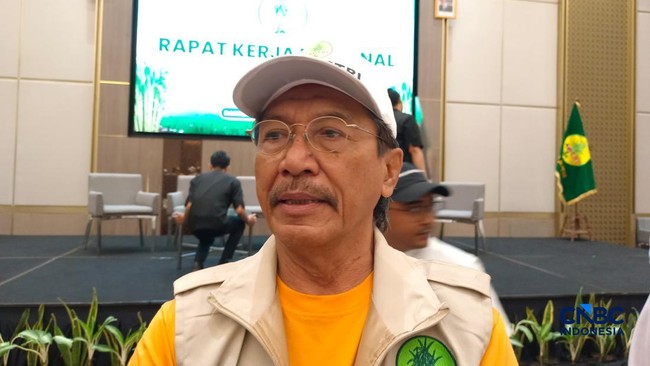
The Indonesian Sugarcane Farmers Association (APTRI) has urged the government to revise the farmers’ sugar cost price (HPP), which it says no longer reflects rising production costs. Farmers argue that higher fertiliser prices and the Middle East conflict have increased cultivation expenses, yet the HPP has remained unchanged for three consecutive harvest seasons.
APTRI Chairman Soemitro Samadikoen stated that global conflicts have driven up prices for various agricultural inputs, particularly non-subsidised fertilisers, which have become the primary burden for sugarcane farmers.
“The impact of the Middle East conflict, unfortunately, has caused the dollar to rise significantly, affecting us. The most evident effect is that non-subsidised fertiliser prices are now at Rp9,000 per kg or higher,” Soemitro said at an APTRI national meeting in Jakarta on Monday, 25 May 2026.
“At the start of 2025, non-subsidised ZA Plus fertiliser was priced around Rp4,300 per kg, but it has now nearly doubled to approximately Rp8,600.”
“The price of non-subsidised ZA Plus fertiliser at the beginning of the 2025/2026 season was only around Rp4,300 per kg,” he added.
“Sugarcane farmers receive only limited subsidised fertiliser—enough for a maximum of two hectares of land, or about 108 kg of subsidised ZA—which means the majority of their needs must be met with non-subsidised fertiliser.”
“We only receive subsidised fertiliser for up to two hectares of land, with about 108 kg of subsidised ZA. Thus, we have to rely on non-subsidised fertiliser,” he said.
“In addition to ZA Plus, farmers must purchase other fertilisers such as NPK, Ponska, and SP36 based on land requirements, causing production costs to surge.”
“Therefore, I must stress that this is not just irrational—it’s outright unjust,” he said.
“APTRI has called on the government to raise the farmers’ sugar HPP to at least Rp15,000-15,500 per kg. They also demand the removal of the Selling Reference Price (HAP) at consumer level to allow more flexible pricing for farmers.”
“Even if the increase isn’t substantial, raise the HPP to Rp15,000 or 15,500 per kg, but the consumer-level HAP must be abolished entirely,” Soemitro said.
“The consumer-level HAP restricts auction prices for farmers, making the market rigid and potentially disrupting sugar distribution,” he explained.
“In practice, even a rise from Rp17,500 to Rp18,000 per kg is considered a sharp price jump. It’s the chilli prices that are soaring,” he noted.
“APTRI has calculated the ideal sugar price based on production costs and balance with other food commodities like rice.”
“Sugar has traditionally been 1.5 times the price of rice. There’s a rational calculation behind this,” he said.
“With standard rice priced at Rp12,500 per kg, the ideal sugar price should be at least Rp18,000 per kg.”
“We want sugar priced at Rp18,000 per kg, as 1.5 times the rice price at Rp12,500 is the minimum,” Soemitro explained.
“Meanwhile, APTRI Secretary-General M. Nur Khabsyin said the Middle East conflict has driven up fuel prices and other production costs, yet farmers’ sugar prices remain stagnant.”
“Amid current global uncertainties, the Middle East conflict has directly impacted us with rising fuel prices and other costs, which are placing immense strain on everyone,” Nur stated.
“But while fuel prices rise, sugar prices don’t increase—which we regret. We just received news that the HPP remains unchanged, which is a shock,” he added.
“Nur emphasised that the farmers’ sugar HPP of Rp14,500 per kg has remained unchanged since the 2024 harvest season through 2026, despite nearly all production costs rising.”
“We’ve had three harvest seasons without an HPP increase. The Rp14,500 per kg rate has been in place since the 2024 harvest, and we’re still using it for the 2025 and 2026 seasons,” he said.
“This is highly irrational as production costs rise every year—labour wages, transport, fuel, plastic prices due to the Middle East conflict, and land rents,” Nur added.
“Fertiliser now accounts for 15%-20% of total sugarcane production costs. At Rp9,000 per kg for non-subsidised ZA, land cultivation costs for one hectare can reach Rp50 million.”
“Non-subsidised ZA is currently around Rp9,000 per kg. For one hectare, cultivation costs reach Rp50 million, with fertiliser contributing nearly 20% of that,” he explained.
“Thus, APTRI urges the government to promptly raise the farmers’ sugar HPP and regulate non-subsidised fertiliser prices to alleviate the burden on farmers.”
“The government must set a fixed HET (Maximum Retail Price) for subsidised fertiliser to prevent prices from spiralling out of control,” Nur concluded.