
Sudirman Says State Power Has Become an Electoral Machine
State power has been diminished. Its meaning narrowed. An independent, sovereign, rule-of-law, nation-state designed to protect all Indonesian people, promote general welfare, and enlighten national life has been reduced and repurposed into an electoral machine.
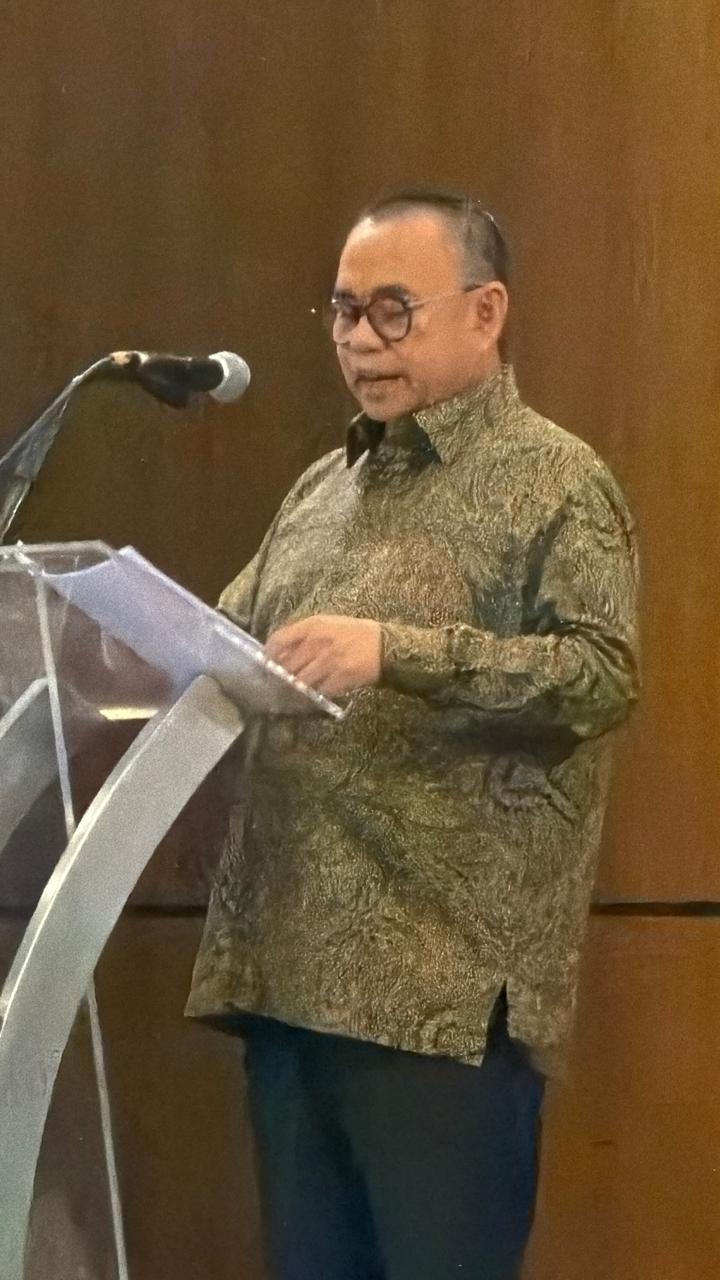
This was stated by former Energy and Mineral Resources Minister Sudirman Said during the opening of the Republic Conference at Gadjah Mada University Club in Yogyakarta on Saturday (30/5).
“There is an acute tendency for the state to be managed aberrantly, serving merely as an instrument to obtain, accumulate, and expand power,” Sudirman Said said in a statement on Saturday (30/5).
Sudirman Said, who is also the conference committee chair, said the state is used to extend power, preferably indefinitely, and controlled by a select few families.
“Corrupt systems are nurtured. Checks and balances are disabled. Nepotism and cronyism are encouraged. Meritocracy is sidelined. Politics becomes the supreme authority in decision-making, while expertise, legal order, and governance are destroyed,” he explained.
The rector of Harkat State University (UHN) further noted an acute and growing trend: public power, meant to serve the people, is treated as private asset to advance family interests.
DOMINANCE
Currently, the state’s role increasingly dominates governance processes, sidelining other pillars. The business sector faces pressure and treatment that unsettles investors. Civil society and critical voices endure not only psychological pressure but physical intimidation.
In short, institutional and state functions have deteriorated, including declining leadership, institutional dysfunction, and the erosion of governance culture and norms.
According to Sudirman, the root cause is that over the past decade, we have discarded or sidelined three fundamental aspects of state governance: the marginalisation of intellectual aspects, moral decline, and distancing from spiritual values.
“Addressing this deficit in three aspects could lead to a governance where anything is permissible,” Sudirman added at the event attended by hundreds of civil society figures from academia, activists, economists, students, and community leaders.
Anything can be done. Whatever the authorities desire is justified. If laws prohibit, amend the laws. If the Constitution restricts, change the Constitution.
“What if propriety and ethics forbid it? If the Constitution is easily amended, what about propriety?” said Sudirman Said
STRENGTHEN AWARENESS
He urged conference participants to strengthen awareness and understanding of their role as the educated class.
“We should dare to take greater responsibility than the general public. We have received many privileges: the best education, opportunities, partly funded by public money, etc. All these privileges must be repaid to the nation. This is the essence of strengthening civil society’s role. To unify our efforts, the key is capacity,” he urged.
He added that this key can be achieved through three leadership approaches. First, institutional leadership. A shared awareness that we must rebuild damaged state institutions. This requires collective effort from all sectors.
Secondly, collective leadership—or collective effort—rather than personal or banner leadership that highlights individual personas and neglects collective work. Given the scale of the nation’s future agenda, no single person can accomplish it alone.
Thirdly, intrinsic leadership is needed. We require many true leaders—those whose strength stems not from status, rank, position, or power symbols, but from noble values: honesty, integrity, competence, vision, willingness to sacrifice, service-oriented mindset, and the ability to harness diversity as a source of strength, among others.
“Today, in this room, Indonesia has vast potential for institutional, collective, and intrinsic leadership. Beyond this room, with patience and diligence in weaving these potentials together, we can harness this leadership to restructure our national governance, ensuring it stays true to the goals entrusted by the Republic’s founders,” Sudirman Said concluded, hailing from Brebes.