
Sudden Warning of Tobacco Worker Redundancy Threat: What's Happening?
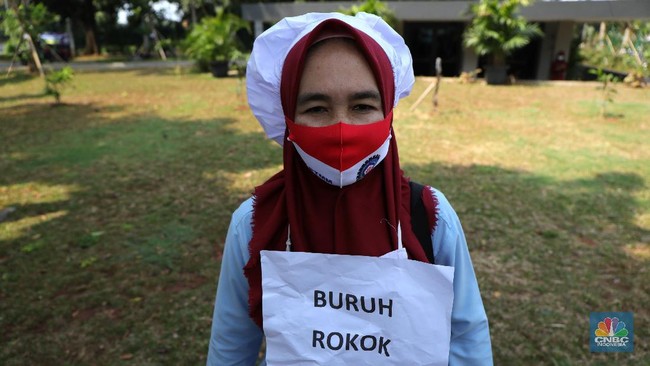
Jakarta, CNBC Indonesia - Labour unions in the tobacco products industry have warned of potential mass redundancies if the government implements regulations restricting nicotine and tar content in cigarettes. The policy is seen as presenting a significant risk to workers in this labour-intensive sector.
The government is currently reviewing regulations setting maximum nicotine and tar limits in cigarettes. Under the proposed rules, the government would cap nicotine at 1 milligram (mg) and tar at 10mg per cigarette.
The regulation, derived from Government Regulation No. 28 of 2024, is considered potentially destabilising to Indonesia’s entire tobacco industry ecosystem, from production to distribution.
The Federation of Tobacco, Food and Beverage Workers’ Unions – All-Indonesia Workers’ Union (FSP RTMM-SPSI) views the proposed regulation as a direct threat to workers’ job security.
Waljid Budi Lestarianto, chairman of FSP RTMM-SPSI in Yogyakarta, stated that workers have already felt pressure since several tobacco control regulations were implemented in recent years.
“We have already experienced declining welfare before this. With Government Regulation 28 of 2024, the pressure on tobacco industry workers has become even greater,” Waljid said at a press conference in Jakarta on Tuesday (10 March 2026).
He argued that the tar and nicotine restriction rule would severely impact the hand-rolled kretek cigarette (SKT) sector, which is one of the largest employers in the tobacco industry.
“The majority of our members work in the hand-rolled kretek sector, which has high tar and nicotine content because it uses domestic tobacco. If this regulation is implemented, this sector will be heavily damaged,” he said.
According to Waljid, workers need not only protection after losing their jobs, but certainty of continued employment.
“We don’t want protection after losing our jobs. What we’re asking for is protection that guarantees our right to work,” he said.
He also highlighted the lack of inter-ministerial coordination in discussing the policy’s impact on the workforce. In his view, policy discussions have focused heavily on health aspects without considering socio-economic consequences.
If the policy is nevertheless forced through, workers are prepared to take action to voice their opposition.
“If this regulation is decided without considering workers’ welfare, we will hold the government accountable through protests,” he said.
Implementing nicotine and tar restrictions of just 1mg and 10mg is extremely difficult for kretek products, which dominate the domestic market.
“Even mild machine-rolled cigarettes struggle to meet this standard, let alone hand-rolled kreteks with high tobacco content,” Waljid said.
The policy poses a serious threat to tobacco industry workers across various regions.
“If this regulation is enforced without room for compromise, it will be a nightmare for tobacco industry workers in Indonesia,” he said.