
Success of Medan Coding Competition 2026 in Nurturing Digital Talent
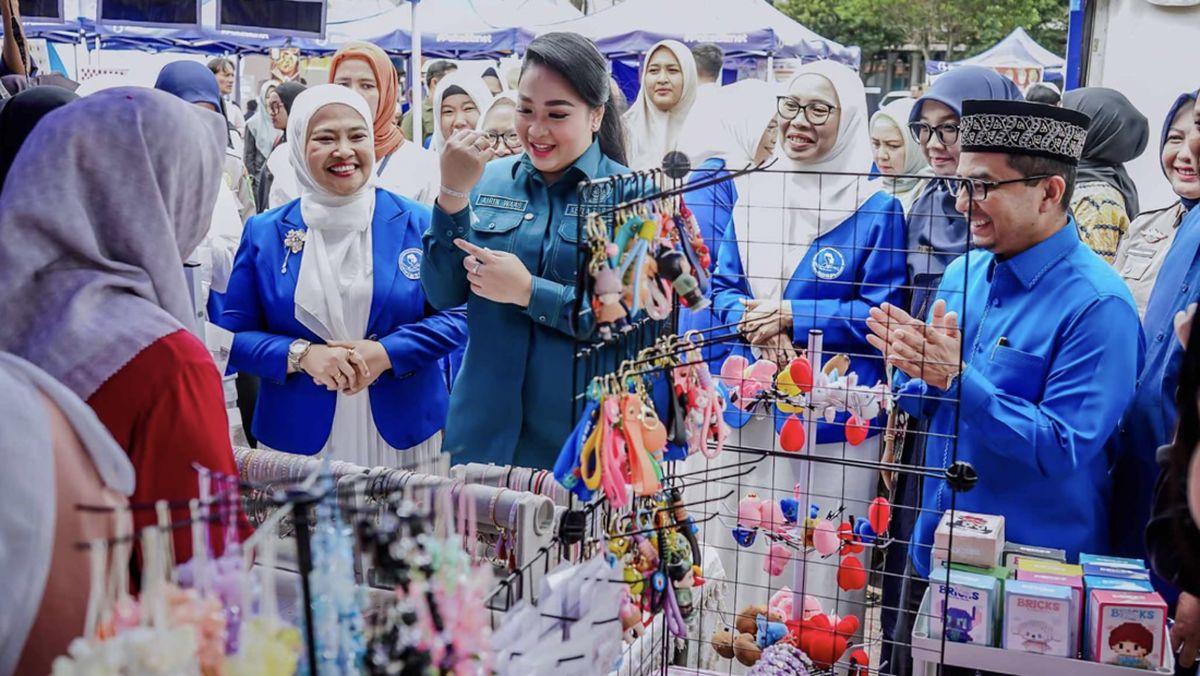
The Medan City Government (Pemkot Medan), through the Regional Research and Innovation Agency (BRIDA), in collaboration with the Indonesian Businesswomen Association (IWAPI) Medan Chapter and Universitas Muhammadiyah Sumatera Utara, held the Medan Coding Competition 2026 as an effort to produce a creative and innovative digital generation on Saturday (9/5).
On 9-10 May, participants from various education levels, starting from primary schools, junior high schools, senior high schools/vocational schools to university students, competed in various competition categories, such as unplugged coding, Scratch, robotics, e-sports, Internet of Things (IoT), and mobile application development.
Held at the UMSU campus, the event was opened by the Chair of the Medan PKK TP, Rico Waas, who is also the Chair of the Medan Dekranasda. She stated that this competition is a manifestation of Pemkot Medan’s commitment to building a digital talent ecosystem from an early age to higher education.
“Through coding, the young generation not only learns technology, but also how to create solutions and innovations for society,” said Rico.
Rico explained that the Medan Coding Competition aims to sharpen logical thinking and problem-solving skills, encourage creativity and innovation, as well as produce outstanding young digital talents. This aligns with the Golden Indonesia 2045 vision, which places the quality of human resources as the main key to national progress.
Concluding her speech, Rico advised all participants to continue learning, innovating, and not to be afraid to dream big in achieving the future.
UMSU Rector Prof. Dr. Akrim, M.Pd., in his speech, emphasised the importance of encouraging the young generation to think critically, as well as to study Artificial Intelligence (AI) and coding while still grounded in spiritual values.
He stated that Universitas Muhammadiyah Sumatera Utara is in the process of becoming a world-class digital campus through three stages: foundation, acceleration, and excellence. Currently, UMSU is in the acceleration phase.
In line with this, UMSU is also developing internal innovations such as chatbots and various AI-based applications as part of readiness to face the digital era.
Akrim also highlighted the importance of cross-sector collaboration between universities, government, and community organisations. According to him, the involvement of various parties, including government support for technology curricula, becomes a strong foundation in building an inclusive digital education ecosystem.
As a concrete form of support, UMSU is preparing full scholarships at the Faculty of Computer Science and Information Technology (FIKTI) for high school equivalent participants who achieve the best rankings. He also revealed that UMSU and the City of Medan will host the Muhammadiyah Congress and ’Aisyiyah in 2027, as well as a momentum to strengthen human resource quality in the digital era.
Meanwhile, the Chair of the Medan Coding Competition 2026 Committee, Yoshida Sary, who also serves as Acting Chair of IWAPI Medan, stated that this coding activity was born out of concern over the still limited access and basic coding skills among children.
“This collaboration is a real manifestation of concern between government, academics, and the business world to equip the next generation with relevant skills,” said Yoshida.
She added that the main goal of this activity is to create an inclusive digital ecosystem in Medan City, while also providing broad impacts not only on the education sector, but also on strengthening the economy through the involvement of UMKM actors during the event.
The competition was attended by a total of 632 participants. For the primary school level (SD), there were 133 participants from grades 1-3 and 158 participants from grades 4-6. At the junior high school level, it was attended by 166 participants.
Meanwhile, at the senior high school/vocational school level, the e-sports category had 50 participants and the robotics competition had 28 participants. For the university level, it included the Internet of Things (IoT) competition with 40 participants and the mobile apps competition attended by 57 participants.