
Subsidised Fuel Prices Assured to Remain Unchanged Amid Hormuz Strait Crisis
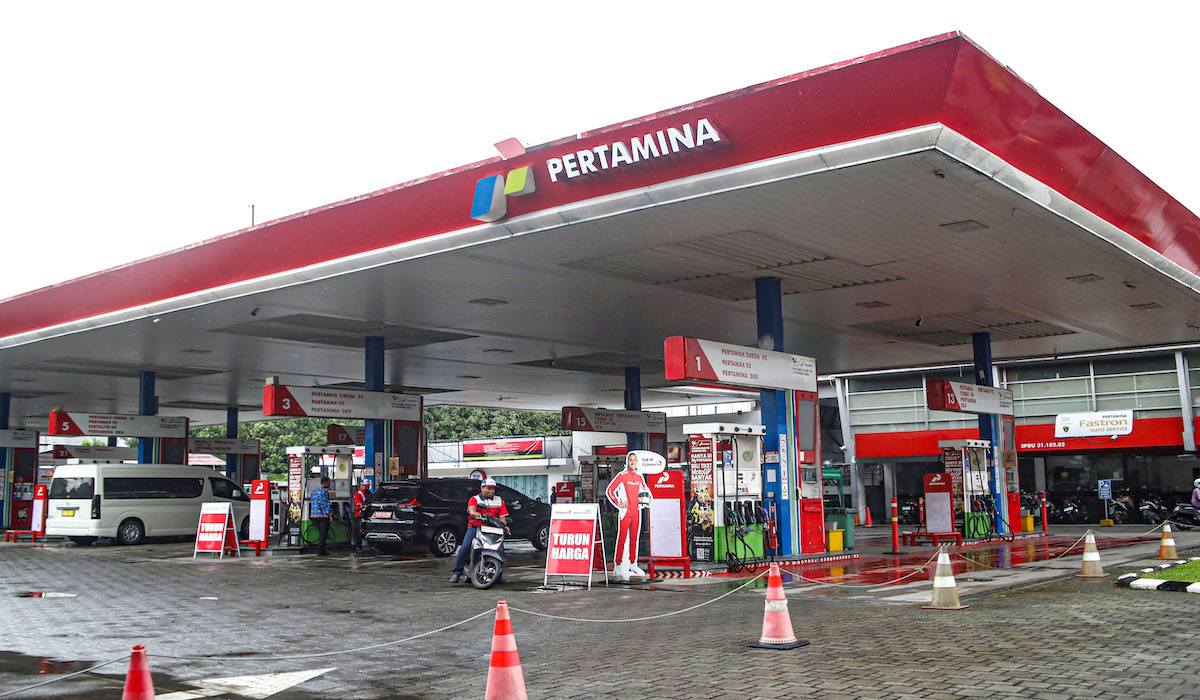
The Indonesian government is taking a firm stance to shield its people from the shocks of the global energy crisis. The Minister of Energy and Mineral Resources (ESDM), Bahlil Lahadalia, along with the Minister of Finance, Purbaya Yudhi Sadewa, have assured that there are no plans to increase prices for subsidised fuels, such as Pertalite and Solar, in the near future.
This strategic decision follows specific instructions from President Prabowo Subianto. Bahlil revealed that the head of state has directed the economic team to “rack their brains” in finding fiscal solutions so that the burden of the Middle East energy crisis is not immediately passed on to the public.
“I, along with the Minister of Finance, are continuously seeking the best solutions. Last night, the President’s directive was to find ways to avoid burdening the people with subsidised fuel, even as the world is in crisis,” Bahlil stressed during a surprise inspection in Central Java on Thursday (26/3/2026).
Bahlil emphasised that the government is still able to maintain stability in retail prices at petrol stations. Based on the latest data, the price of Pertalite remains at Rp10,000 per litre and subsidised Solar at Rp6,800 per litre, despite fluctuations in global crude oil prices that reached US$119 per barrel in mid-March.
The current global energy crisis has been triggered by military escalation between the United States (US)-Israel and Iran. The situation worsened after Iran took full control of the Strait of Hormuz, a vital shipping route that carries about 20 percent of the world’s oil supply.
This blockade has caused disruptions in energy distribution to Asian countries. However, Bahlil assured that national energy resilience is still intact. “Energy stocks, including petrol, diesel, and LPG, are still safe. We ask the public to consume energy wisely and not to hoard,” he added.
Although subsidised fuel prices are being held steady, pressure on the State Revenue and Expenditure Budget (APBN) is predicted to rise sharply. Economic analysts assess that the government must prepare strong fiscal buffers if the conflict in the Persian Gulf prolongs.
The Minister of Finance, Purbaya Yudhi Sadewa, had previously signalled that the government would maximise the use of foreign exchange reserves and adjustments to non-priority spending to cover the swelling energy subsidy burden due to the surge in global oil prices.
Indonesia’s approach contrasts with some Southeast Asian neighbours. The Philippines, for instance, has declared a national energy emergency since 24 March due to its high dependence on oil imports passing through the Strait of Hormuz.
The Minister of ESDM, Bahlil Lahadalia, claimed that energy stocks in Indonesia are secure even though nearly every country in the world is affected by the war between the United States and Iran.
In addition to mineral downstreaming, the government is moving quickly to develop alternative energy to reduce reliance on conventional sources.
Experts assess that the government has successfully allayed public concerns regarding potential energy and fuel shortages amid escalating geopolitical tensions.
The energy diplomacy conducted by Minister of ESDM Bahlil Lahadalia in Tokyo, Japan, is seen as a strong signal of Indonesia’s shifting position on the global power map.
The Minister of Finance, Purbaya Yudhi Sadewa, urged the public to remain calm in responding to issues of potential economic recession. He explained that despite global uncertainties, domestic demand remains the main driver of the economy.
The Minister of Finance, Purbaya Yudhi Sadewa, affirmed that fuel prices will not rise until the end of 2026 even if global oil exceeds US$100. See the assurances on APBN strength here.
The Minister of Finance, Purbaya Yudhi Sadewa, detected 10 companies engaging in underinvoicing. State revenue leaks will be promptly addressed to meet the 2026 fiscal targets.