
Subsidised fertiliser shortages and unresolved flood impacts threaten Aceh's harvest
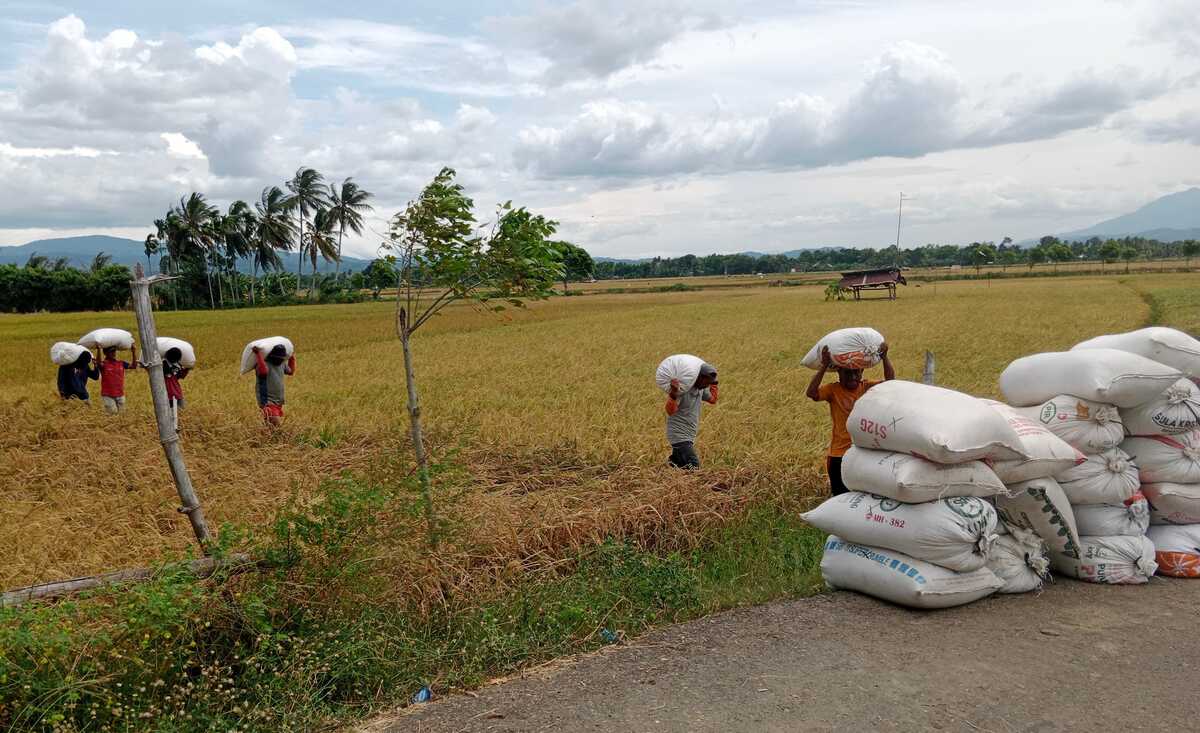
The hopes of farmers in Aceh province for a bumper harvest during the 2026 rendengan (main harvest) season have been dashed. Instead of experiencing increased production after the major floods of November 2025, rice yields in several areas have plummeted due to shortages of subsidised fertiliser and climatic factors.
As observed by Media Indonesia on Wednesday (25/2), harvesting activities in Indrajaya District, Pidie Regency, which began on the third day of Ramadan, were marked by farmer disappointment. In Meulayu and Tungkop villages, rice productivity is recorded at only 5.2 tons per hectare, a significant decrease from the normal standard of 6 to 6.2 tons per hectare.
Ridwan, a farmer in Indrajaya District, said that the decline in this harvest reached 600 to 800 kg per hectare. He strongly suspects that the drop in production is due to the shortage of subsidised Urea and NPK Phonska fertiliser during the critical growth period of the rice plants.
“The first stage of fertiliser application, which should be given 3-7 days after planting, was only available when the plants were one month old. In fact, some only fertilised at 45 days old, when the rice plants had begun to tiller. At that stage, the function of the fertiliser was no longer optimal,” said Ridwan.
In addition to the fertiliser problem, the shift in the planting season is also a serious obstacle. The planting season should have been completed in November 2025, but it was only finished in January 2026. This delay made the rice plants vulnerable to pest attacks and extreme weather changes.
Dean of the Faculty of Agriculture at Syiah Kuala University (USK), Professor Sugianto, warned that the shortage of subsidised fertiliser could have fatal consequences for food security in Aceh. According to him, superior seed varieties resulting from high technology are highly dependent on balanced fertilisation.
“The current superior rice seeds have a short lifespan (100-120 days) with a tiller population of 16-20 stems per clump. If there is a lack of fertiliser, the number of tillers will decrease to 13 stems, which automatically reduces the size of the grain and the length of the panicle. The harvest can decrease by up to 40% if there is no fertiliser,” explained Prof. Sugianto to Media Indonesia.
This soil expert, a graduate of Curtin University, Western Australia, urged the Ministry of Agriculture to immediately improve the distribution of fertiliser in Aceh. Moreover, the process of rehabilitating hundreds of thousands of hectares of land damaged by the floods has not yet been completed.
“A lot of land is covered in quite a thick layer of mud, making it difficult to irrigate. If the increase in production on land that is still good cannot be optimised because of the fertiliser shortage, then the threat of a rice production crisis in Aceh will become even more real,” he concluded. (MR/E-4)
The National Disaster Management Agency (BNPB) confirmed that it will continue to assist local governments even though the emergency status for disasters in several areas of Sumatra has been lifted.
The National Police is increasing personnel and resources to accelerate the recovery of areas affected by the Sumatra disaster in Aceh, North Sumatra, and West Sumatra.
The Minister of Home Affairs, Muhammad Tito Karnavian, said that the flash floods and landslides in Aceh, North Sumatra, and West Sumatra caused several villages to be swept away and disappear.
Pupuk Indonesia welcomed the Presidential Regulation No. 113/2025 on the management of subsidised fertiliser, which is considered to encourage industrial efficiency.
Farmers in various regions of Aceh province are experiencing great anxiety during the rendengan rice planting season, the main planting season that is very important for annual food production.
The misappropriation of 665 tons of subsidised fertiliser has been ongoing since 2020, causing losses to the state of up to IDR 4.5 billion.
“The fertiliser needs of farmers reach about 50 tons per day, while the supply to the kiosks is very limited.”
Subsidised fertiliser is now cheaper and easier to obtain. The maximum retail price has decreased by 20%, and farmers in Garut can now buy fertiliser since early 2026.
Copyright @ 2026 Media Group - mediaindonesia. All Rights Reserved