
Stunning View of RCW 36 Nebula: the 'Cosmic Eagle' Pouncing on Its Prey
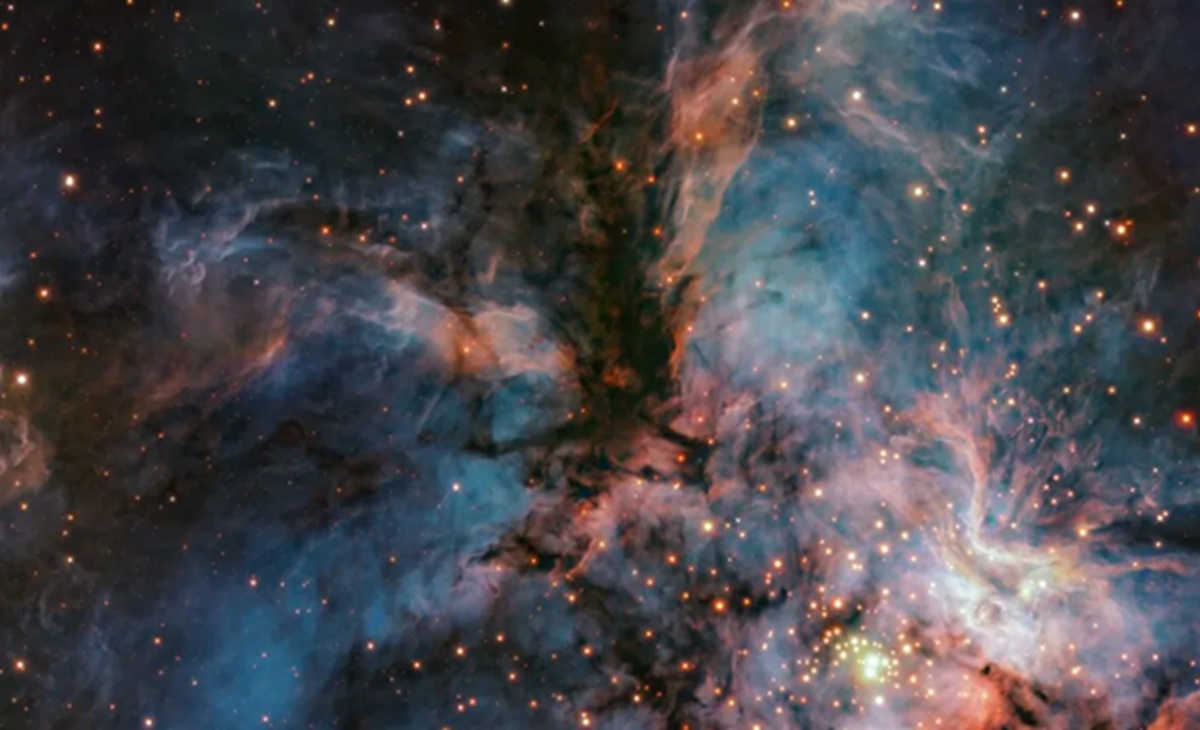
Stellar imaging has revealed a striking view of the depths of the Milky Way. Using the Very Large Telescope (VLT), astronomers captured a dramatic image of a glowing nebula whose shape resembles a giant eagle diving to strike its prey. The phenomenon, known as RCW 36, lies about 2,300 light-years from Earth in the constellation Vela, offering a visually dramatic structure rich in interstellar material. The silhouette of the eagle’s head and body is formed by a thick dark cloud and dust and gas filaments. At the bottom of the silhouette lies a contrasting blue view of ‘stellar nurseries’ filled with newly formed massive stars. However, the main draw for scientists is not the bright young stars but the faint objects hiding within the nebula: brown dwarfs. Brown dwarfs are often nicknamed ‘failed stars’ because, while they form like ordinary stars from the collapse of dense, cold gas, they lack enough mass to trigger the intense reactions at their cores. As a result, they do not reach the temperatures and pressures needed to fuse hydrogen into helium, which defines a star on the main sequence. A unique and ironic fact behind the image is that the portrait was captured with a VLT instrument named HAWK-I (High Acuity Wide-field K-band Imager). The RCW 36 image provides not only visual satisfaction for astronomy enthusiasts but also important data for researchers seeking to understand more about the formation of sub-stellar objects in our universe.