
Study Reminds Businesspeople to Rethink Investments in the Coal Industry
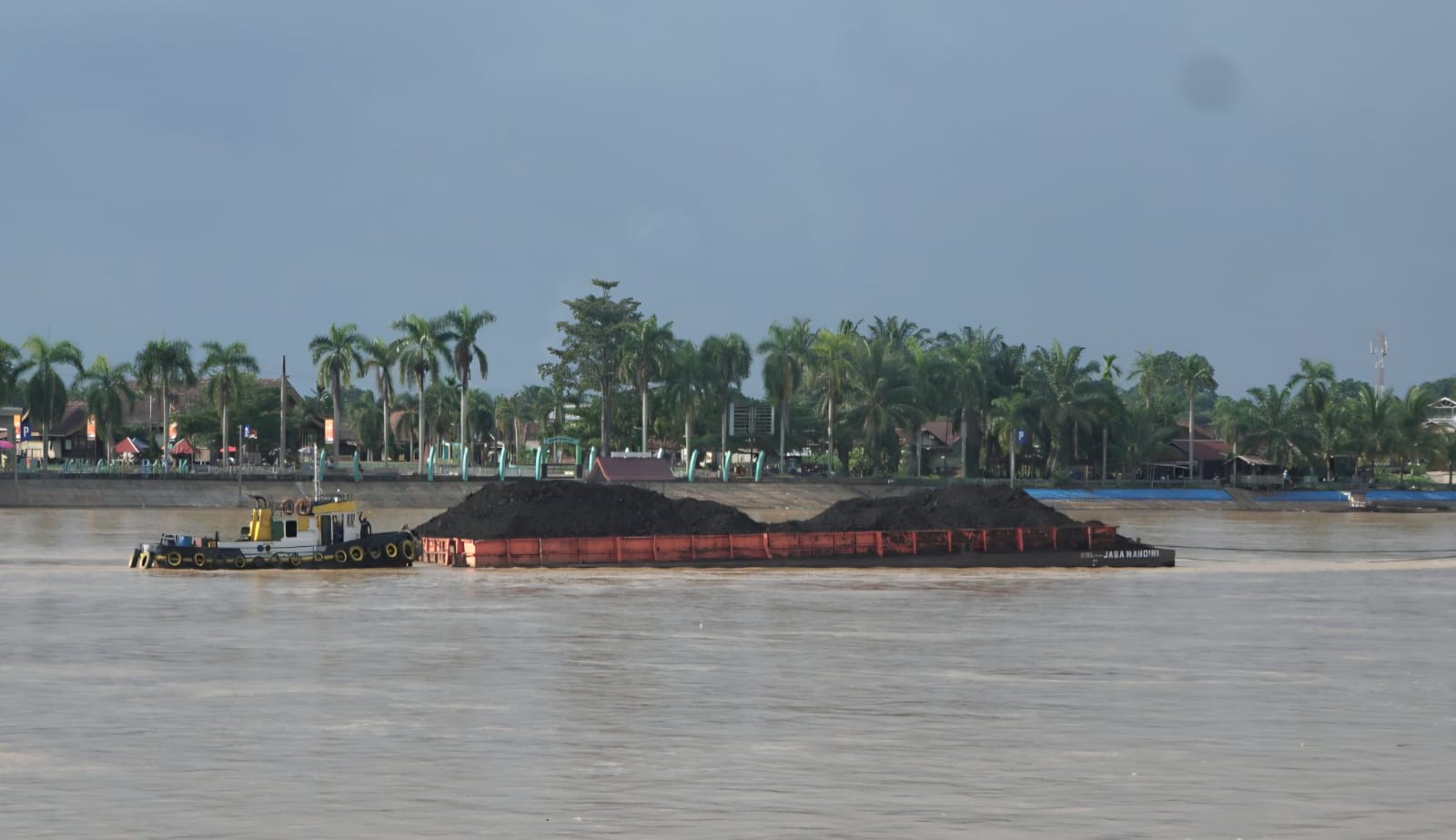
Pressure to halt the coal business is intensifying as the extractive industry is projected to decline further and cause environmental damage. Results from a study and research by Publish What You Pay (PWYP) Indonesia predict that coal will be depleted in the next 30-50 years. Meanwhile, countries interested in Indonesian coal are showing a downward trend. Major importers like China are beginning to shift to other suppliers such as Mongolia and Russia.
Another reason for mining entrepreneurs to consider stopping their business is the adverse environmental impact of this extractive industry. Haris Retno Susmiyati, a Mining Law Expert from Mulawarman University, revealed that mining expansion has reached 10,466,060 hectares or 44% of the land area of the Indonesian Archipelago.
On the other hand, Primi Suharmadhi Putri, an academic from Gadjah Mada University, urges emission reductions. She reminds the government that dependence on coal will be the main obstacle to achieving the SNDC commitment targets.
Coal investors or entrepreneurs must start rethinking their extractive business. This is because, from business trends to the environment, this dirty energy source shows significant losses.
Results from the study and research by Publish What You Pay (PWYP) Indonesia predict that coal will be depleted in the next 30-50 years. “This provides a picture that it’s not going to last that long,” said Ditto Mohammad Ikhsan, a researcher at PWYP Indonesia.
So far, the coal industry has been the main pillar of the national economy. Its contribution to gross domestic product (GDP) is above 5%.
The Ministry of Energy and Mineral Resources (KESDM) records abundant coal resources in Indonesia. The amount reaches 143.73 billion tonnes, with verified reserves of 25.83 billion tonnes.
The power generation sector still dominates the realisation of domestic coal use, namely 57% or equivalent to 133 million tonnes. Smelters account for 30% or equivalent to 70 million tonnes in 2024.
The current annual production rate is around 700-800 million tonnes. This amount exceeds the production target limit mandated by Presidential Regulation 22/2017 on the National Energy Plan (RUEN), where the limit should not exceed 400 million tonnes.
Ditto said that countries interested in Indonesian coal are showing a downward trend. Major importers like China are beginning to shift to other suppliers such as Mongolia and Russia.
In addition, this Bamboo Curtain country is also becoming aggressive in increasing its domestic renewable energy production and gradually reducing coal use.
According to him, the profit surge in 2022, which contributed up to 6.6% to GDP, was not due to increased demand for Indonesian coal. Rather, it was a domino effect from the Russia-Ukraine war.
The global crisis caused coal prices to soar. However, he warns that dependence on external fluctuations makes the coal industry vulnerable to shocks.
From the workforce side, signs of decline are also evident. Automation of heavy equipment, efficiency, and cost reductions have led many companies to reduce their workforce.
“After 2025, there will be a trend where workforce needs could stagnate or even decrease.”
Triggering Deforestation
Another reason for mining entrepreneurs to consider stopping their business is the adverse environmental impact of this extractive industry.
Haris Retno Susmiyati, a Mining Law Expert from Mulawarman University, revealed that mining expansion has reached 10,466,060 hectares or 44% of the land area of the Indonesian Archipelago.
As a result, Indonesia has become one of the four countries in the world with the highest loss of tropical forests or deforestation due to large-scale mining. This condition occurs on large islands, coasts, and small islands.
“The critical question is, up to what extent will mining be allowed and tolerated?”
The Mining Advocacy Network (Jatam) records that 44% of Indonesia’s land area has already been concessioned for mining. Land grabs spread across 35 small islands reach 351,933 hectares.
Mining exploitation has left 3,092 open pits. Jatam records that approximately 143 lives have been lost due to this.
Retno said it is ironic that several regulations actually worsen the current situation. For example, Law 2/2025 on Mineral and Coal Mining, which expands access to mining permits.
This regulation, she said, allows mining permits for cooperatives, SMEs, and community organisations, including religious mass organisations.
She also highlighted the definition of mining legal areas. Because the area covers all customary spaces, sea spaces, including spaces within the earth up to the continental shelf.
Another problematic regulation is Presidential Instruction (Inpres) 5/2019, which opens loopholes for mining in forest areas. Companies are allowed to use forest areas for exploration activities. It enables mining exploration even though the area should be protected or avoided from industrial activities.
Retno recommends that the mining permit moratorium be more ambitious. A permanent mining moratorium, including coastal areas and small islands, is urgent. Referring to Law 1/2014 on the Management of Coastal Areas and Small Islands.
“A moratorium on new mining permits must be followed by audits and evaluations of existing permits!”
A national moratorium, she continued, is needed for safety and sustainability. This policy must have provisions for sanctions and legal implications to have deterrent power and effect.
“In addition, regulations governing the Presidential Instruction need to be elevated to the level of a Government Regulation or Law to make it stronger legally.”
Difficult but Possible
PWYP Indonesia assesses that directly stopping coal production may be difficult. However, it can start with reductions. Shifting businesses to green ventures will not result in losses in the long term.
Anglo American, which gradually reduced coal production and switched to solar power plants, initially experienced a 26% revenue drop. However, it improved afterwards.
In its research, PWYP Indonesia reveals that coal business actors have started to switch and diversify their businesses. Unfortunately, many are still exploiting nickel.
They recommend