
Students Urged to Express Aspirations Peacefully
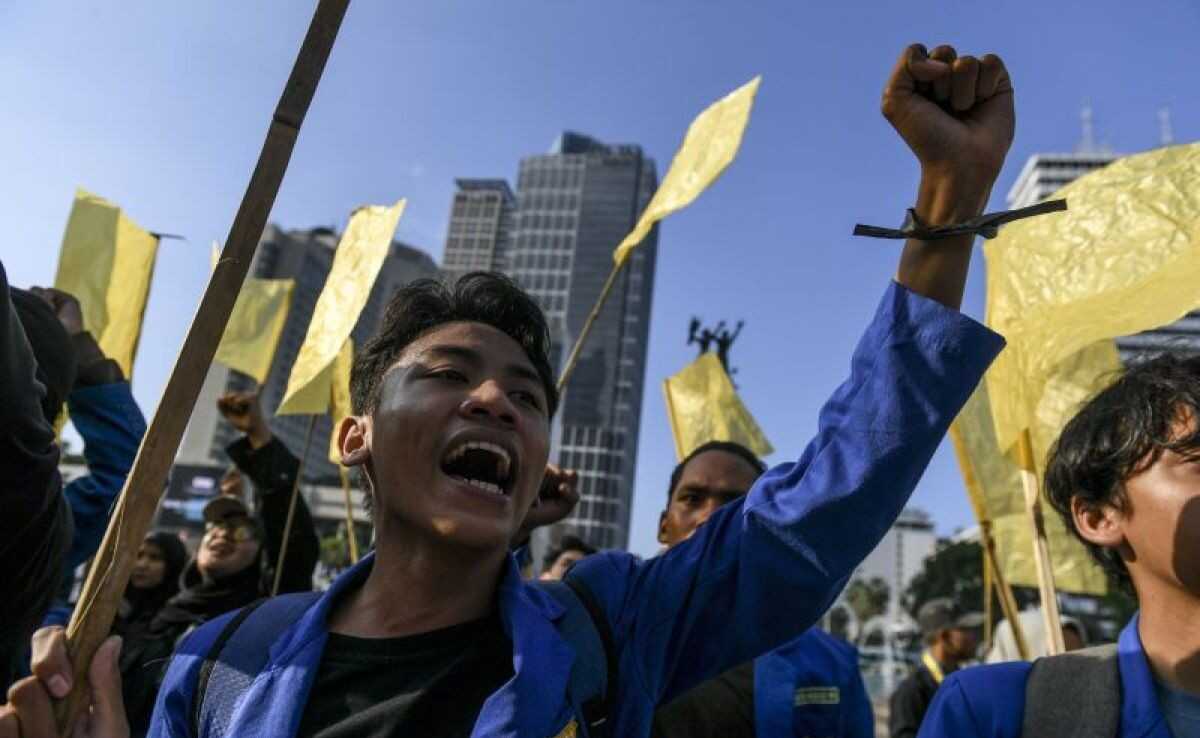
Students are urged to continue expressing their aspirations peacefully and constitutionally, especially during the holy month of Ramadan. Anarchic actions not only violate democratic values but also damage the image of the student movement itself. This was conveyed by the Director of Etikanet, Wahyu Irawan, following the attack on the Yogyakarta Regional Police headquarters by a group of young people and students on Tuesday night (February 24th).
“This incident should be a lesson so that expressing opinions does not go beyond the legal framework,” he said.
Wahyu expressed his concern over the anarchic actions during Ramadan, which should be a time for self-control.
“Students have the constitutional right to express their aspirations, but violence and the destruction of public facilities clearly violate the law and the principles of democracy,” he said.
From a legal perspective, Wahyu explained that violent acts can be subject to several articles, including Article 170 of the Criminal Code regarding joint violence, Article 351 of the Criminal Code regarding assault, and Articles 212 to 214 of the Criminal Code related to resisting officers carrying out their duties. In addition, Law Number 9 of 1998 concerning Freedom of Expressing Opinions in Public also prohibits actions that lead to violence and destruction.
He also highlighted the increasing calls for action through social media in the lead-up to the planned demonstration in Jakarta on February 27-28, 2026, which is said to involve the consolidation of students from several campuses.
“Social media information can be an alarm for security forces. We learned from the riots and attacks on the Yogyakarta Regional Police headquarters last night (February 24th) that we must prevent incidents that damage and harm the community,” he emphasized.
Wahyu also urged security forces to take measures to mitigate the potential for anarchic actions, while also inviting students to continue upholding the law and democracy. (E-3)
ESA observer Unggul Jamiluddin Ritonga criticized the proposal for a permanent coalition for Golkar to support Prabowo, arguing that it risks weakening the DPR and checks and balances.
Democracy can grow from the roots of knowledge integrated with good deeds.
The Corruption Perception Index (IPK) of Indonesia in 2025 fell to a score of 34. Researcher Zaenur Rohman from Pukat UGM stated that improving law enforcement is key to combating corruption.
Expert from the Faculty of Law at the University of Indonesia, Titi Anggraini, highlighted the weak transparency of financial matters in Indonesian political parties, emphasizing that external audits and strict supervision are needed.
Member of the DPR RI from the NasDem Party faction, Willy Aditya, affirmed that literacy and critical thinking skills are the main foundations in building a healthy democratic ecosystem.
Upon arriving at the Presidential Flight Airport at 6:00 PM local time, the President was immediately warmly welcomed by representatives of Indonesian citizens residing there.
The strengthening of the state ideology is no longer just an academic discourse, but a key factor in the success of the transformation towards Indonesia Pancasila.
This coastal cleanup activity in Kuta, Bali was attended by at least 80 Melanesian students studying at various universities in Bali.
This intimidation is a real form of suppression of students’ critical thinking.
For Muhammad Abdurrahman Azzam, his time in college is actually an entry point to be directly involved in strengthening the community’s economy.