
Struggle to extinguish forest and land fires in the quiet border region
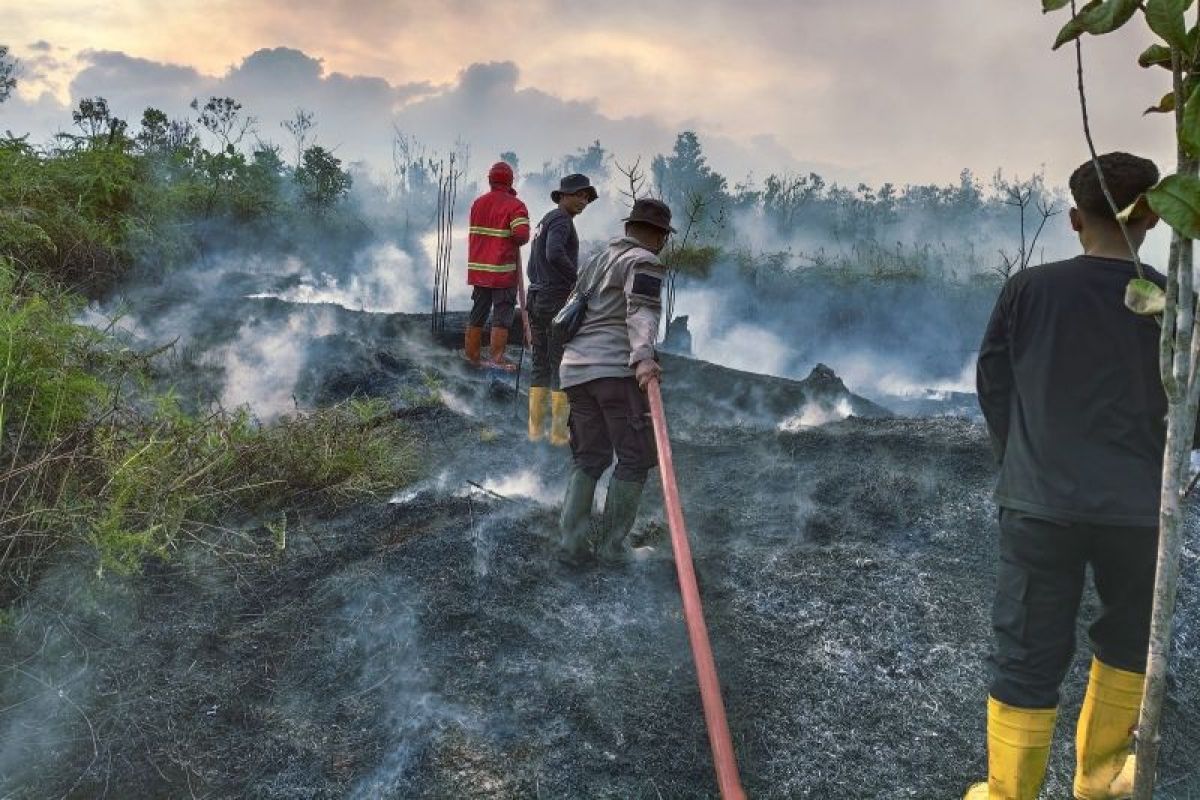
In Natuna, a remote border region far from the hustle and bustle of big cities, the struggle unfolds in silence. Natuna (ANTARA) - The sky over several areas of Natuna Regency, Riau Islands Province, turned red in recent weeks from late March to early April 2026. Smoke that initially was thin gradually thickened, enveloping forests and dried lands due to prolonged days without rain caused by the El Niño phenomenon. Vegetation that lost moisture turned into natural fuel that was easily ignited by fire. In that situation, forest and land fires (karhutla) nearly emerged at all points, spreading quickly and widely. The most extensive initial fire occurred in Northeast Bunguran Subdistrict on Sunday (23/3) night. Around 50 hectares of land were reported to have burned. The fire moved quickly, jumping from bushes to trees, growing large in a short time. That night, a joint team struggled for more than three hours. Personnel from the Fire and Rescue Service along with police apparatus tried to contain the fire’s fury with whatever equipment they had. Fire trucks could only reach certain points. For the rest, personnel had to walk, penetrating smoke and heat, beating the flames using branches and twigs. That simple method became the only option amid limitations. “There were no significant obstacles, but the impact was indeed widespread,” said the Head of the Natuna Fire and Rescue Service, Syawal. The following days became increasingly difficult. Fire points emerged in other areas between Batubi Bunguran Subdistrict, North Bunguran to West Bunguran. Strong winds and high temperatures accelerated the spread. The fire crept into deeper forests in areas difficult to reach by vehicles or ground personnel. Steep terrain, long travel distances, and limited water sources made firefighting efforts a physical and mental gamble. Personnel had to walk for hours, carrying equipment amid the encirclement of smoke that obscured vision. The area affected continued to expand to hundreds of hectares. Smoke began to disrupt community activities. Roads were covered in smoke fog, while air quality dropped and posed risks to health, especially for children and the elderly. Seeing the increasingly worrying conditions, the Natuna Regency Government took firm steps. The disaster handling status was elevated from emergency alert to emergency response, effective from 26 March to 1 April. This decision aimed to open wider coordination space as well as serve as a basis for requesting support from the central government. That step proved correct. Fires that had entered deep forest areas could no longer be handled solely with regional capabilities. Larger and faster intervention was needed. Requests for assistance were submitted for aerial firefighting operations through water bombing and weather modification to induce artificial rain. The response came soon after. The National Disaster Mitigation Agency (BNPB) deployed helicopters for water bombing and aircraft for weather modification operations. Turning point