
Strong Fundamentals, BNI Confident in Boosting Performance in 2026
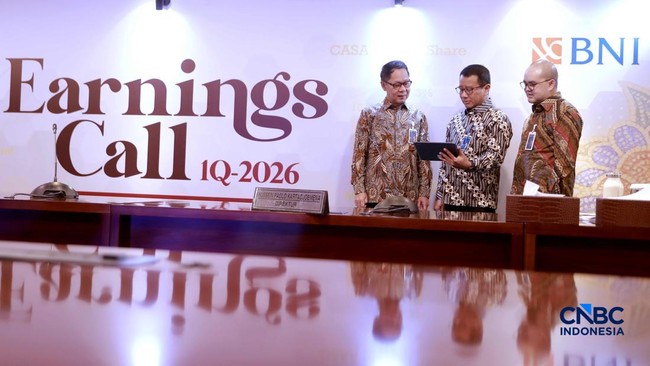
PT Bank Negara Indonesia (Persero) Tbk, or BNI, recorded solid performance up to the first quarter of 2026. This achievement was attained amid global uncertainties and geopolitical conditions, particularly the war in the Middle East, which has influenced oil price movements, increased inflation, and central bank interest rate policies in various countries. Domestically, BNI views the mix of monetary and fiscal policies as an important buffer for the national economy. From the monetary side, Bank Indonesia’s (BI) benchmark interest rate is at a balanced level to support growth and stability. Additionally, BI has issued various policies to maintain rupiah exchange rate stability, which is crucial for preserving investor and business confidence amid global pressures. Meanwhile, from the fiscal policy aspect, the government provides stimuli such as social assistance, energy subsidies, and support for business sectors to protect people’s purchasing power and bolster domestic consumption as the main driver of economic growth. Besides the consumption side, the government also focuses on productive spending that can enhance economic growth and national competitiveness. The banking industry remains in a strong position to sustain the national economy’s driving engine in the future. In facing these dynamics, BNI is optimistic about demonstrating the resilience of its solid fundamentals built over the years. This is reflected in strong capital and liquidity conditions, resilient asset quality accompanied by adequate provisioning levels to keep the risk profile intact. Moreover, BNI consistently applies anticipatory measures and readiness to ensure it can navigate the ongoing global uncertainties. BNI President Director Putrama Wahju Setyawan stated that this achievement reflects the resilience of BNI’s business model, built through strengthening fundamentals, productivity, and sustainable transformation. “BNI continues to maintain growth momentum by prioritising prudence principles and discipline in risk management amid challenging global dynamics,” said Putrama on Wednesday (29/4/2026). As an effort to strengthen the capital foundation, BNI took proactive steps by issuing Additional Tier-1 (AT1) instruments worth USD700 million, equivalent to Rp11.9 trillion, in April 2026. This capital strengthening further enhances BNI’s capacity to anticipate potential risks while opening room for sustainable and healthy business expansion in the future. In line with this strategy, BNI is also implementing a business transformation focused on regions, areas, and branches through the BRAVE (Branch, Region, Area, Value, Empowerment) initiative. With the spirit of “empowerment”, this transformation aims to enhance BNI’s network capabilities down to the smallest operational units, empowering branches and sub-branches as the main points of sale for banking products and services. This transformation began in Q4 2025 with a phased capability implementation model. It is targeted that through BRAVE implementation, credit and CASA growth can occur in a quality and sustainable manner, followed by an increase in BNI’s market share in the banking industry, ultimately leading to improved productivity of BNI’s branches, which number more than 1,700 across Indonesia. About six months after the BRAVE initiative began, BNI successfully recorded business growth exceeding the industry average, both in credit disbursement and third-party fund mobilisation. As of March 2026, BNI’s credit grew 20.1% year-on-year, supported by a strengthening CASA funding structure with 26.6% year-on-year growth, thereby supporting cost of funds efficiency amid challenging market dynamics. Strategic Role in Driving the National Economy BNI, as a national bank with global capabilities, reaffirms its role as an active contributor to the national economy, not only as an intermediary institution but also as a strategic partner to the government in promoting inclusive and sustainable growth. In line with government priorities and Asta Cita, this contribution is focused on strategic sectors such as education, health, food security, strengthening village economies, and real sectors that are the main drivers of job creation and regional development. This role is realised through targeted financing, strengthening financial services, and optimising digitalisation to ensure development programmes run effectively and have broad impact. In the Free Nutritious Meals Programme (MBG), BNI plays a role by providing digital transaction solutions through Virtual Accounts and BNIdirect to enhance efficiency and transparency. For the People’s School Programme, BNI provides integrated digital banking services, including account opening for students and educators, as well as strengthening the financial ecosystem through Agen46. On the other hand, support for MSMEs, cooperatives, and villages is also continuously strengthened through financing for the KDMP programme linked to Agen46, as well as participation in the 3 Million Houses Programme through FLPP mortgage disbursement. “BNI will continue to be present as a strategic partner to the government in driving inclusive economic growth, while strengthening its role in sustainably improving community welfare,” emphasised Putrama. BRAVE as the Foundation for Long-Term Growth Putrama added that BNI continues its transformation programme to face changing market conditions and increasingly competitive rivalry, one of which is through the BRAVE initiative. Through BRAVE, BNI implements a programme to empower the role of branches (up to sub-branches