
Strong Fundamentals, Analysts Optimistic BRI's Business Will Remain Strong in 2026
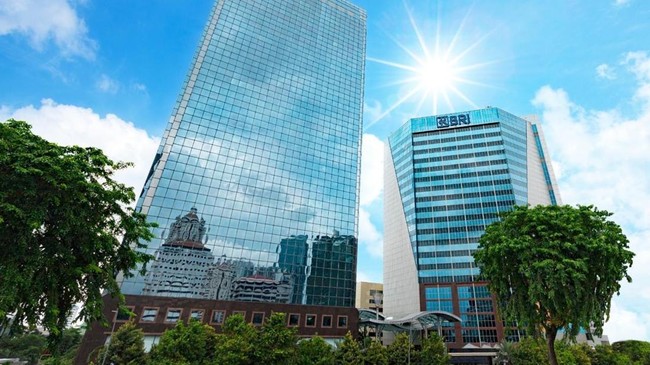
Jakarta, CNBC Indonesia - Several analysts believe that the performance of PT Bank Rakyat Indonesia (Persero) Tbk, or BRI, will remain strong in 2026. This is not without reason, as the bank led by Hery Gunardi has the capability to generate substantial profits annually. One key factor is its clear credit expansion into the micro, small, and medium enterprise (UMKM) segment.
As is well known, BRI is one of the banks designated by the government as a development agent tasked with revitalising the business world, particularly UMKM. With extensive experience and a strong emphasis on prudent principles, it is no surprise that BRI has significant potential to elevate UMKM to higher levels, while maintaining its position as a profit-oriented company.
Head of Research at Korea Investment & Sekuritas Indonesia, Muhammad Wafi, even stated that BRI, as a bank focused on UMKM, possesses an economic moat or long-term competitive advantage in maintaining market share and profitability against competitors.
“The prospects are solid. The drivers are credit expansion in the micro segment with high margins, strong CASA ratios, and improvements in asset quality,” Wafi told CNBC Indonesia, quoted on Monday (20/4/2026).
This effect, Wafi continued, is highly beneficial for investors. Thus, investors can continue to enjoy profits from BRI’s consistently positive performance throughout the year, particularly from dividends.
This is what makes BRI shares always sought after by investors, both institutional and retail.
Moreover, recently, BRI decided to distribute a dividend payout ratio of 92% amounting to Rp 52.1 trillion. The high percentage of dividends relative to net profit certainly serves as a unique attraction for investors, demonstrating the company’s confidence in conducting its business.
“The dividends are attractive due to the relatively high yield. This also reflects solid fundamentals, robust profitability, and abundant cash liquidity. The dividends are appropriate and shareholder-friendly. This decision proves confidence in the Capital Adequacy Ratio (CAR) that remains sturdy to support future business expansion targets,” he explained.
This is also acknowledged by Deputy President Director of Samuel Sekuritas Indonesia, Suria Dharma. He stated that BRI’s dividend payout ratio is very large compared to other Himbara banks. This becomes a unique attraction, making BRI shares one of the investor choices.
The challenge ahead, Suria said, is how BRI can focus on suppressing Non-Performing Loans (NPLs) or problematic loans. In doing so, BRI’s potential to achieve greater profits could increase.
“The challenge ahead is indeed how BRI can reduce its NPLs again and select credit distribution. The micro business, which was once the mainstay, is now more focused on recovering credit quality,” Suria said.
Not to be left out, Banking Observer from Bina Nusantara University (BINUS), Doddy Ariefianto, stated that banking plays a strategic role in supporting UMKM resilience through financing. In September 2024, the UMKM credit portion in general banks was recorded at 19.74% of total general bank credit.
However, OJK recorded UMKM credit NPL at 4.00% in September 2024, still below the 5% threshold, but this remains higher than the gross NPL of general banking, which is around 2.2% in mid-2025.
“This means that increasing UMKM financing can be safe if the underwriting is disciplined, the portfolio is diversified, and the monitoring is strong; not safe merely because of large volume. Concentration risk is also real, with UMKM credit still concentrated in the wholesale and retail trade sector (46.12%) and on Java Island (56.00%),” Doddy emphasised.
According to him, BRI appears successful in making UMKM a growth engine without losing risk discipline, but this success heavily depends on the quality of underwriting, debtor cash flow monitoring, and the resilience of the micro segment, which is indeed most vulnerable when the business cycle weakens.