
Strong Carbon Economy Framework Crucial for Building Domestic Market: OJK
Strong Carbon Economy Framework Crucial for Building Domestic Market: OJK
Oleh - Gusti Panji Alif Pratama
Editor - Lasti Martina
26 Feb 2026
Voice of Indonesia
RRI.CO.ID, Jakarta – The Financial Services Authority (OJK) said strengthening the national carbon economic value framework is essential to building a credible, transparent, and accountable domestic carbon market ecosystem.
Acting Chairperson and Deputy Chairperson of the OJK, Friderica Widyasari Dewi, delivered the statement at the 2nd Indonesia Climate Banking Forum in Jakarta on Thursday, February 26, 2026. The forum discussed policy direction and the role of the financial sector in strengthening the low-carbon economy.
“By reaffirming various carbon economic instruments, the government is encouraging the establishment of a credible, transparent, and accountable domestic carbon market ecosystem,” Friderica said, as quoted by Antara.
She said the framework was expected to provide a clear carbon price signal for business actors while strengthening the integrity of national climate policy. The initiative aligned with Indonesia’s target of achieving net zero emissions by 2060.
At the same event, the OJK expressed appreciation for the banking industry’s commitment to strengthening sustainable finance practices, including through the development of green financing instruments and the implementation of climate risk management.
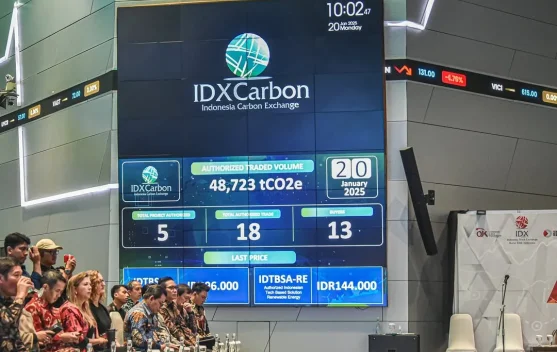
Friderica said the authority continued to build a more comprehensive policy ecosystem by refining the Indonesian Sustainable Finance Taxonomy, establishing the Indonesian Carbon Exchange and implementing a climate risk management framework and scenario analysis for the banking sector.
“In parallel, we are developing a more comprehensive policy ecosystem through improvements to the Indonesian Sustainable Finance Taxonomy, the establishment of the Indonesian Carbon Exchange, and the implementation of a climate risk management framework and scenario analysis for the banking industry,” she said.
She added that the taxonomy provided clear classification for green and transition activities. Meanwhile, the carbon exchange supported transparent price discovery mechanisms and market-based instruments to manage the economic value of carbon and reduce greenhouse gas emissions.
All of these instruments formed an integrated policy foundation to support Indonesia’s transition agenda while maintaining financial system stability. ***