
Strengthening Palm Oil Export Governance Expected to Continue Prioritising Farmers
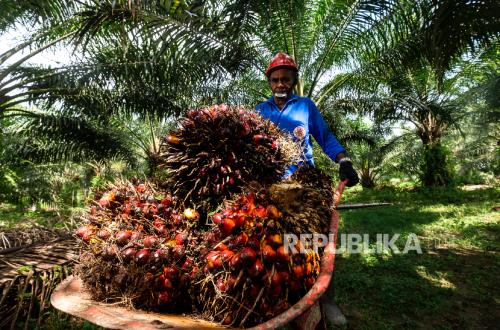
JAKARTA — The plan to reinforce the governance of exports for strategic commodities through Danantara Sumber Daya Indonesia (DSI) has drawn the attention of self-help palm oil smallholders. The Indonesian Palm Oil Smallholders Union (SPKS) asks that the policy continue to prioritise protection of fresh fruit bunches (TBS) prices and the sustainability of farmers’ livelihoods in the region.
SPKS chairman Sabarudin said that the government’s efforts to strengthen oversight of palm oil exports and raise Indonesia’s bargaining position in the global market are important steps. However, he said, policy implementation must be carried out carefully to avoid placing new pressure on smallholder palm oil farmers.
“The state exists to protect farmers. Therefore, strengthening the governance of exports must also ensure that farmers’ positions remain protected,” Sabarudin said in a statement on Thursday (21 May 2026).
SPKS regards the certainty of trading mechanisms and price formation as key factors in maintaining domestic palm oil market stability. According to Sabarudin, farmers need guarantees that the price of TBS remains aligned with a transparent market mechanism and does not disadvantage farmers at the farm level.
He noted that TBS prices in several regions have begun to decline. SPKS also reminded that smallholder farmers currently manage around 60 percent of the national palm oil land. Therefore, the sustainability of the national palm oil industry is considered to depend heavily on the stability of smallholder enterprises and their welfare.
According to Sabarudin, the government should open space for dialogue with business players, cooperatives, and farmer organisations before full policy implementation. This step is important so that strengthening export governance can run in tandem with protection of the national palm oil supply chain.
“The aim of reforming governance is certainly positive, but its implementation must ensure that farmers remain a key protected part of the national palm oil ecosystem,” said Sabarudin.
SPKS also calls for transparent oversight, farmer involvement in the policy monitoring process, and for a share of the palm oil industry’s benefits to support programmes for replanting and increasing productivity of smallholder plantations.
Earlier, the government planned to strengthen the governance of exports of strategic commodities through DSI to improve trade oversight and state revenue from the natural resources sector.