
Strengthening National Understanding: Johan Rosihan Launches Young Pillar School Initiative
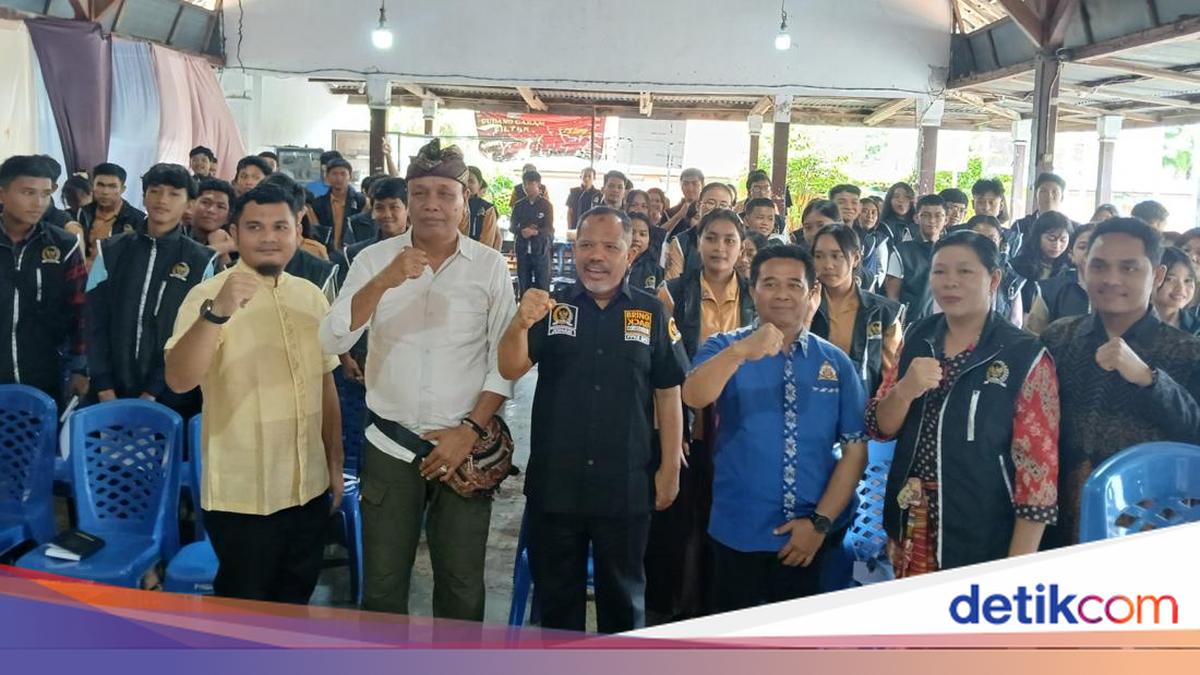
Deputy Chair of the Budget Committee of the People’s Consultative Assembly of the Republic of Indonesia (MPR RI) H. Johan Rosihan, together with research institution MY Institute, has launched a youth education programme called the Young Pillar School (Sekolah Pilar Muda) to strengthen young people’s understanding of national values through a more innovative and participatory approach.
Johan stated that the programme was born from reflection on various national awareness-raising activities previously implemented in Sumbawa Regency. In December 2025, a dissemination activity on the Four Pillars of the MPR RI was carried out at several locations involving secondary and senior high school students, university students, youth communities, and various community members. During the activity, not only was material on national values presented, but also an evaluation survey was conducted with participants to understand how young people viewed the dissemination activity.
“The evaluation results revealed quite interesting findings. Participants generally stated that national values remain important to young people. However, they also conveyed that the dissemination methods employed so far have tended to be one-directional. Participants desired more participatory and dialogical civic activities that provide space for young people to engage directly in social action in their communities,” Johan stated in his statement, Thursday (12 March 2026).
Many respondents also suggested that civic activities be linked to real issues they face in their respective regions, such as environmental concerns, food security, and various social problems at the local level. Young people not only want to understand national values theoretically, but also want to practise them through concrete activities that benefit society.
Based on these aspirations, Johan Rosihan and MY Institute then designed a youth education programme that functions not only as a forum for national awareness dissemination, but also as a space for learning, discussion, and social action for young people. The programme became known as the Young Pillar School.
The Young Pillar School is designed as a community-based youth education programme that integrates the values of the Four Pillars of the MPR RI with leadership development and youth social movements. The programme emphasises not only understanding of Pancasila, the 1945 Constitution of the Republic of Indonesia, the Unitary State of the Republic of Indonesia, and Bhinneka Tunggal Ika, but also encourages young people to translate these values into concrete actions in their communities.
In its concept, the Young Pillar School positions young people as active subjects in the civic learning process. Participants do not only receive material, but are also trained to identify social problems in their regions, formulate solution ideas, and develop various social initiatives that can benefit society.
The programme targets students and young people aged 15 to 24 from throughout Sumbawa Regency. Participants come from various schools, youth communities, and community groups with interest in social and civic issues. Through dissemination activities carried out from February to March 2026, information about the Young Pillar School was introduced to students at various schools in the Sumbawa region, university students in campus environments, and youth communities and interfaith groups in the community.
In its implementation, the Young Pillar School is designed through several comprehensive selection and learning stages. The first stage begins with an open registration process for young people across Sumbawa Regency. Participants wishing to join the programme are required to submit administrative documents and a written work in the form of an essay containing their ideas and analysis of social problems in their respective regions.
The essay must not only contain personal opinions, but must also be prepared based on discussions or interviews with community leaders, customary leaders, or local communities around the participant. In this way, participants are encouraged to understand social problems directly from the community and learn to formulate solutions relevant to local conditions.
Essay themes offered in the programme relate to various strategic issues in Sumbawa Regency, such as environmental and natural resource problems, food security from the perspective of young people, and youth movements in addressing social problems in the community. These themes were selected because they are considered close to young people’s lives and relevant to regional development needs.
After the registration and file collection stage is completed, the committee conducts administrative selection and assessment of written works submitted by participants. From this stage, a number of the best participants from various regions will be selected and invited to participate in the interview stage.
The interview selection process assesses the quality of participants’ ideas, their understanding of social issues, critical thinking abilities, and social commitment. Additionally, leadership aspects, organisational experience, and communication skills are also important components of the evaluation process.
Participants who successfully pass the interview selection stage are then designated as Young Pillar School participants and invited to attend a five-day youth education quarantine activity in Sumbawa.
This quarantine constitutes the core of the learning process in the Young Pillar School. During this activity, participants attend various thematic classes, policy discussions, and mock parliament sessions designed to train critical thinking, leadership, and the ability to formulate solutions to social problems.
Classes provided to participants cover various topics.