
Strengthening Madrasah Teacher Quality: Collaboration Between Religious Affairs Ministry and British Council
With 41,833 madrasah teachers distributed throughout Indonesia, strengthening teacher quality has become a strategic step in addressing global education challenges. English language proficiency is now regarded as an essential competency for opening student access to higher education and international networks. Based on this need, the Indonesian Ministry of Religious Affairs and the British Council have, for the first time, established a collaboration to enhance English language teaching competency among madrasah teachers, formally marked by the signing of a Memorandum of Understanding in November 2025. The launch of this collaboration marks the beginning of an eight-week professional development programme for madrasah English teachers, concluding with an in-person workshop at the Ministry of Religious Affairs in Jakarta in late February 2026.
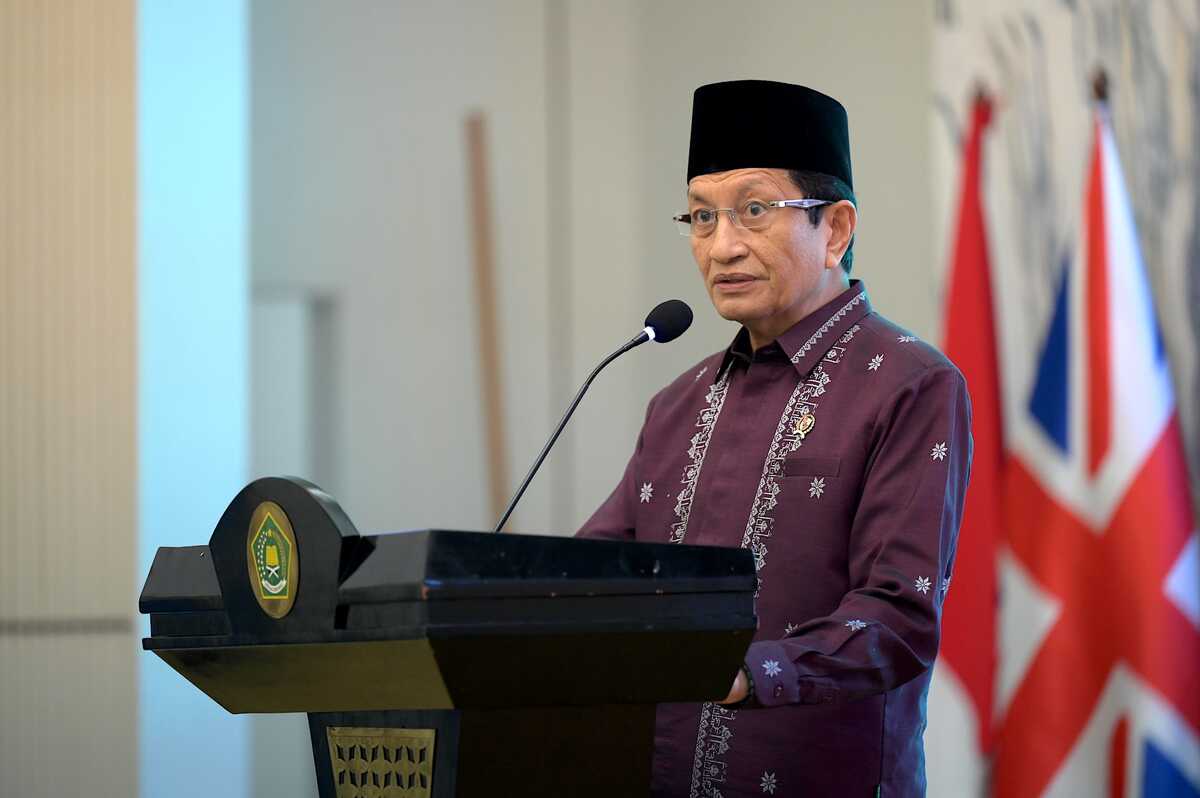
“This collaboration represents a concrete step in realising the Ministry of Religious Affairs’ Eight Pillars (Asta Protas). It also supports the Indonesia-UK Strategic Partnership agreement signed by President Prabowo and Prime Minister Keir Starmer in January 2026, in which education is one of the main pillars of cooperation,” explained Indonesia’s Minister of Religious Affairs, Prof. Dr. KH. Nasaruddin Umar, M.A.
This strategic role is directly visible in strengthening madrasah teacher capacity. Beyond forming Muslim generations with strong religious foundations, madrasah teachers also open access for students to higher education and global networks. This requires preparedness aligned with contemporary development and international education dynamics.
The collaboration between the Directorate of Teachers and Education Personnel (GTK) for Madrasahs, the Ministry of Religious Affairs, and the British Council began with competency mapping to measure pedagogical ability and English language proficiency of MTs and MA teachers, along with the implementation of a pilot Continuing Professional Development (CPD) programme. Both initiatives will serve as the foundation for future teacher development programmes.
Summer Xia, Country Director Indonesia and Director Southeast Asia, British Council, outlined the challenges and achievements of this training initiative: “A total of 613 teachers, evenly distributed across almost all provinces in Indonesia, have now completed this programme. By delivering training online in a structured format with comprehensive support, strengthened by e-moderators and weekly live sessions, we ensure that high-quality professional development is accessible to educators wherever they are located,” she said. This data-driven approach provides a more objective picture of teacher development needs and can serve as a reference for future policy planning.
During the eight-week implementation period, changes began to appear in learning practices. Teachers adopted more student-centred approaches and created more active classroom interactions. Confidence in using English also increased, which had an impact on student participation.
Ni’Matus Zahroh, an English teacher from Madrasah MTsN 15 Jombang, shared her experience: “Professional development opportunities for educators in madrasahs are still limited. Through this programme, English teachers in madrasahs can deliver enjoyable teaching to students and inspire them to continue learning in order to develop generations that are both faithful and intellectually sound,” said Ni’Matus Zahroh.
As a pilot programme, this initiative serves as the foundation for broader development. Although the number of participants remains a small fraction of national needs, the tested model opens space for expansion and continuous strengthening. Future development is expected to expand training access whilst encouraging the formation of professional learning communities among madrasah teachers, generating systemic impact that can be continuously replicated.
“Progress on this scale can only be realised when all partners share the same commitment to building a measured, impactful education system ready for national adoption. Through this collaboration, the British Council is committed to strengthening capacity, accelerating knowledge transfer, and ensuring solutions that are not only effective now but also sustainable in the long term,” concluded Summer Xia.