
Strengthening Digital Oversight, Ministry of Transportation Targets Owners and Operators of ODOL Trucks
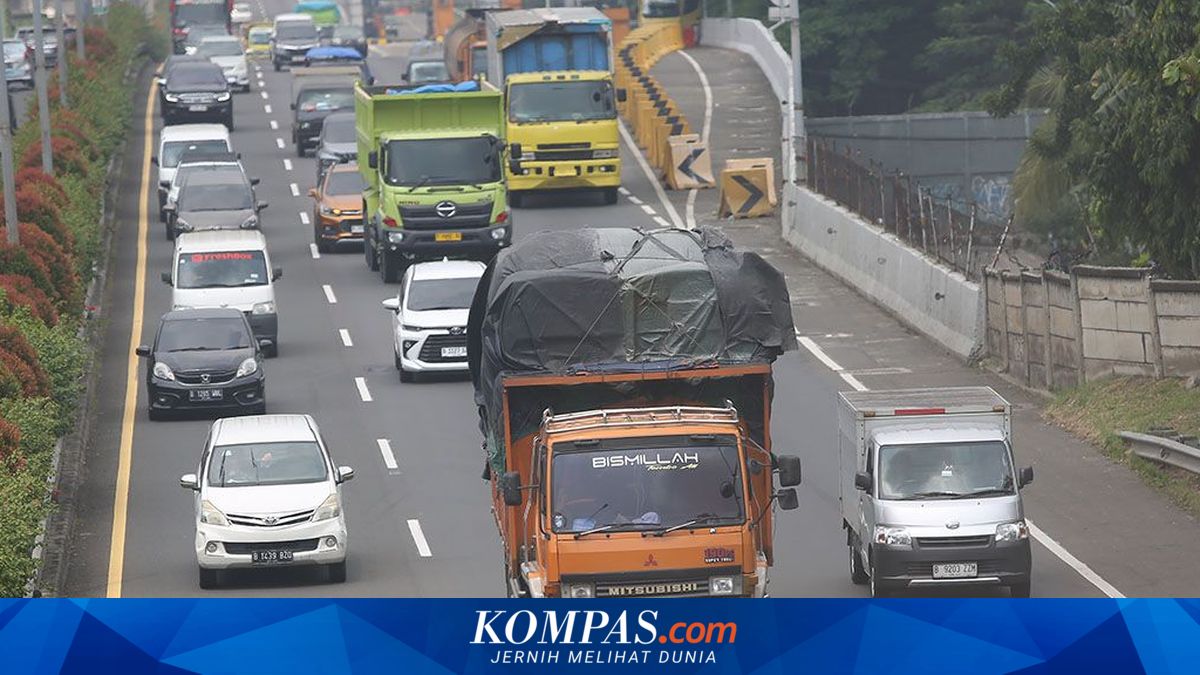
JAKARTA - To strengthen the strategy for handling over-dimension and overweight (ODOL) vehicles, the Directorate General of Land Transportation at the Ministry of Transportation will conduct oversight through a digital scheme.
Director General of Land Transportation Aan Suhanan stated that a comprehensive digital transformation is crucial for logistics transport oversight. The aim is to detect ODOL violations more quickly and effectively.
“Currently, oversight is still partial and conventional. Our personnel are limited and must monitor numerous ODOL vehicles. This means we need technology- and data-based digital oversight because manual methods are no longer sufficient,” said Aan in his official statement in Jakarta on Monday (13/4/2026).
“We will maximise the utilisation of data available in the ministry and other institutions,” he continued.
The transformation is carried out by utilising technologies such as ETLE cameras and Weigh in Motion (WIM) bridges to facilitate the oversight process up to law enforcement against over-dimension and overweight vehicles.
According to Aan, the oversight transformation also aims to ensure that responsibility for violations is not solely borne by ODOL vehicle drivers.
With technology-based oversight, cargo owners or transport operators can also be held accountable for over-dimension and overweight violations.
Not only that, the digital-based oversight system is also claimed to prevent illegal levies (pungli) by reducing interactions between officers and drivers in the field.
According to him, the Ministry of Transportation is not turning a blind eye to ongoing pungli practices and is taking a firm stance against such violations.
“Some have already been demoted and are no longer assigned to weighbridges. We see this as a challenge to continue monitoring personnel to prevent pungli. With digital systems like CCTV or ETLE, the room for negotiation between drivers and officers can be reduced, thereby minimising pungli practices,” he said.
This is done so that all parties understand the policies to be implemented and can adapt to digital-based oversight and law enforcement, thus achieving the Zero ODOL 2027 target.
“I am optimistic that Zero ODOL can be achieved in 2027. Let us end tolerance for ODOL vehicles and traffic accidents, because nothing is more important than human safety. One life is too many,” said Aan.