
Strengthening Cold-Chain Interconnectivity Based on Regional State-Owned Enterprises for National Food Security
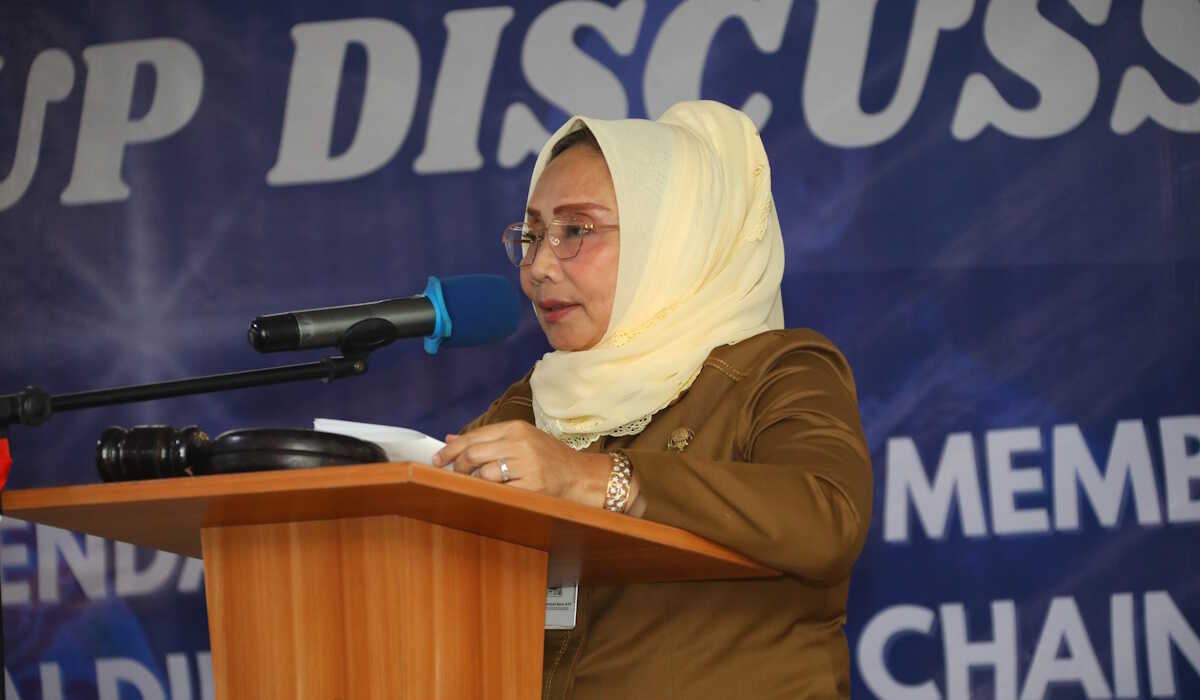
Jakarta — The governance of food is a joint responsibility between the central government and regional governments as mandated by Law No. 18 of 2012 on Food. Rochayati Basra, Head of the Policy Strategy Center for Development, Regional Finance and Village Affairs (BSKDN) at the Ministry of Home Affairs, said this during a Focus Group Discussion on the strategic role of the Ministry of Home Affairs in building interconnectivity of the cold chain based on Food BUMDs to strengthen national food security in Jakarta.
“Regional governments hold a highly strategic role in ensuring smooth distribution, stabilising supply, and managing logistics effectively. In this context, strengthening Food BUMDs is a concrete step towards building an integrated cold chain system,” she said.
She noted that the Act also states that food affairs are a concurrent government matter under regional authorities; therefore, local government devices together with BUMDs have an important role in building a sustainable food distribution system.
Based on data collection and interviews with six local governments — East Java, South Sulawesi, Tanah Datar Regency, Sumenep Regency, Surabaya City and Balikpapan City — Food BUMDs are seen as an implementable and realistic approach to strengthening distribution interconnectivity and cold chain systems at the regional level.
However, implementation faces three main challenges: lack of strong regulation governing BUMD capital participation in the food sector; high operating costs and a low utilisation rate not yet at break-even; and operational risks due to suboptimal cold storage capacity.
Therefore, focused interventions are required through drafting a legal umbrella for BUMD capital participation, the application of energy incentive schemes, and a mechanism to guarantee supply volume to ensure cold chain operations are sustainable. The results of this strategic study are expected to inform policy recommendations to the Minister of Home Affairs to be conveyed to the President of the Republic of Indonesia as part of strengthening the national food system.
Hasanuddin Yasni, a representative of the Indonesian Cold Chain Association, emphasised the importance of the cold chain ecosystem in supporting national food self-sufficiency. He stated that strengthening the cold chain requires readiness of facilities and infrastructure, improved human resource capacity, and collaborative business models. “Most important now is how these BUMDs can spur the regional economy through collaborative business models; in the future, if we are limited not only by human resources but also investment,” he concluded.
Global logistics giant DHL Express Indonesia officially expanded into the lifestyle arena by partnering with Bandung streetwear label Machine56. The collaboration was announced at the Borneo FC Training Center, marking the continuation of a partnership after Extrajoss supported Borneo FC in 2021.
State civil servants in East Java have been invited to help build smart and impactful policies through strengthening high-quality human resources and the use of digital technology.
The CIS team from Japan, Universitas Budi Luhur, and the East Java Provincial Government will conduct a collaborative drone-path research for disaster mitigation in the Cangar Pacet area of Mojokerto Regency. This collaboration is crucial as students require stronger science and technology as the foundation for building robust business capabilities.
The Free Nutritious Meals (MBG) programme in Indonesia continues to be widely discussed into early 2026. The Ministry of Agriculture confirms the availability of various chilli peppers in West Java under very secure conditions ahead of Ramadan and Eid al-Fitr 2026. The use of mung beans to address stunting is seen as highly relevant due to easy access, affordable prices, and high nutritional content.
One online media outlet focusing on agribusiness news, Panen News, celebrates its sixth anniversary with Panen Fest 2026 at Lapangan Banteng, Central Jakarta.
Researchers say Native American peoples spread wild potatoes across the Four Corners region about 10,000 years ago, long before the advent of agriculture.