
Strengthen Bargaining Position, Rubber Farmers Must Optimise Potential
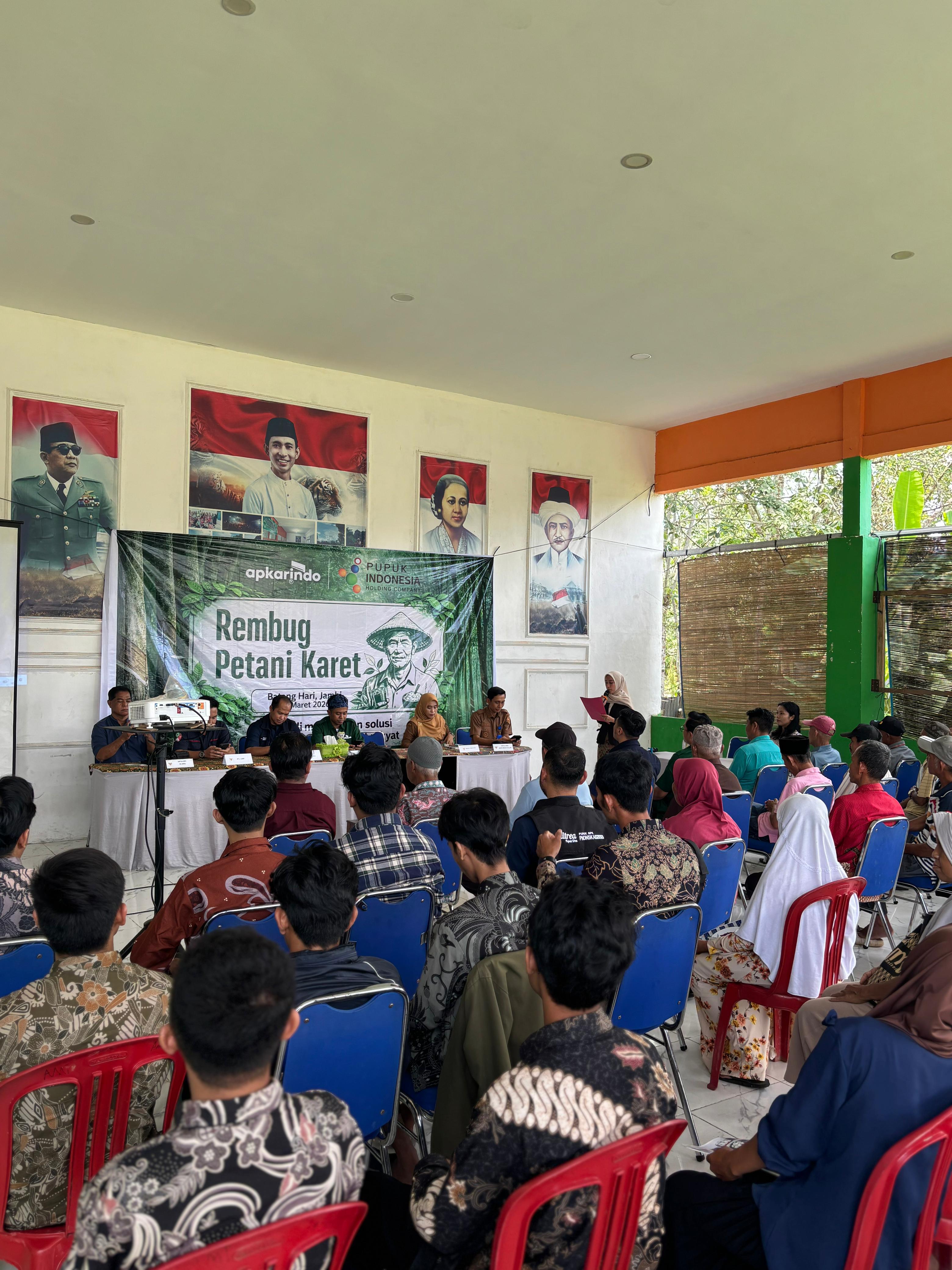
Smallholder rubber farmers are being called upon to demonstrate greater solidarity in managing their economic potential, particularly amid fluctuations in global prices and productivity challenges. This is especially significant given that over 80% of Indonesia’s rubber plantations are smallholder farms managed independently by local communities.
The statement was made by Irfan Ahmad Fauzi, Chairman of the Central Leadership Council of the Indonesian Rubber Farmers Association (Apkarindo), in Bandung on Tuesday, 10 March.
He explained that strengthening the national rubber sector must begin with empowering farmers as the primary stakeholders. The dedication of rubber farmers in maintaining the sustainability of this commodity represents a substantial asset that must be optimised. “Rubber farmers are the backbone of the national industry. Therefore, every effort to strengthen this sector must ultimately strengthen economic value at the farmer level,” said Irfan.
Optimising this potential, he continued, depends heavily on creating a transparent trading system that favours farmers. Apkarindo is committed to serving as a bridge for farmer aspirations to ensure their labour yields fair and competitive value in the global market.
To address these challenges, Irfan mentioned that the association organised a Rubber Farmers’ Forum as a venue for strategic consolidation on Tuesday, 10 March. This forum is not merely a social gathering but a concrete effort to analyse trading challenges and formulate collective steps to restore rubber commodities to their status as a pillar of the national economy.
The activity was attended by several strategic partners, including SVP of Sales Strategy and Customer Service at PT Pupuk Indonesia (Persero) Asep Saepul Muslim, and VP of Customer Management at Pupuk Indonesia Robbin Radhian Lee.
“The presence of industry and government representatives is expected to accelerate collaboration, particularly regarding the reliable supply of production inputs such as fertiliser and standardisation of harvest quality,” he said.
He hoped that this forum momentum in Jambi would spark a national movement to restore rubber commodities as a stable source of prosperity.
“We want the fruits of farmers’ labour to receive fair value, so that the household economy of farmers can continue to grow,” he concluded.