
Street Dwellers and Seasonal Beggars Proliferate During Ramadan as Enforcement Operations Prove Ineffective
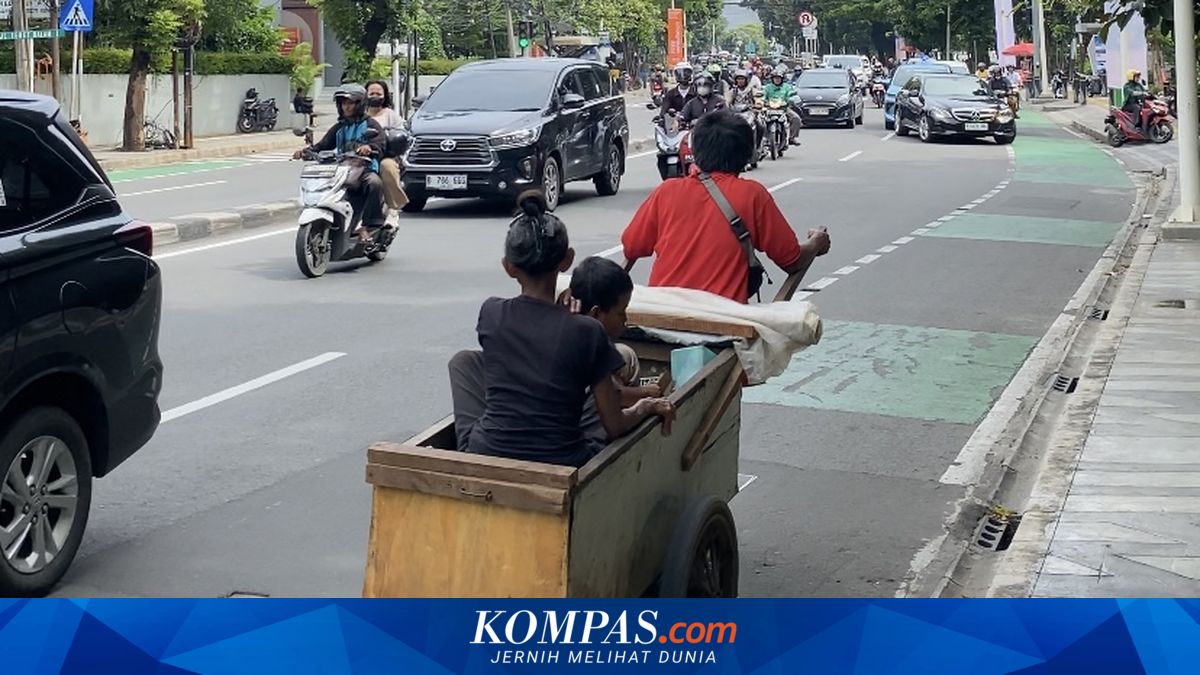
JAKARTA — Pavements along several Jakarta streets are becoming increasingly populated by street dwellers or seasonal beggars as the approach of Eid al-Fitr draws near.
Despite routine enforcement efforts by the government, many of them continue to arrive in the capital city seeking livelihoods during the month of Ramadan.
Kompas.com monitoring on Friday (6 March 2026) revealed several residents utilising pavements in the area connecting Jalan Pasar Minggu to Jalan Prof. Dr. Soepomo in South Jakarta as resting places and even overnight shelters.
This phenomenon frequently emerges approaching Eid, when some residents from outside Jakarta arrive in the capital city hoping to receive food assistance, fitrah alms, or simply money from charitable donors.
According to Nanto, the presence of street dwellers on pavements is actually prohibited.
“The Pasar Minggu Civil Service Police emphasises that no residents are living on pavements. We regularly conduct outreach patrols for PPKS (those requiring social welfare services) in Pasar Minggu District,” Nanto said when contacted by Kompas.com.
Enforcement operations are conducted together with relevant agencies in Pasar Minggu District.
Nevertheless, according to Nanto, officers frequently encounter difficulties when conducting enforcement operations.
The phenomenon of residents arriving with carts to scavenge for waste materials is something that has long occurred in Jakarta.
“This is what we typically call the cart people,” Nanto said.
According to him, the presence of street dwellers usually increases approaching Eid al-Fitr.
Regarding items used for scavenging, Nanto emphasised that confiscated carts cannot be redeemed by their owners.
“If they can be redeemed, they could return again,” he said.
Several of them sat on tactile paving for the visually impaired while waiting for the breaking of fast time.
Some carried carts, sacks, or used cardboard boxes that served as storage for scrap materials from scavenging.
Others relied only on simple bags containing clothing and personal belongings.
Idah (52) claimed to have lived on the streets of the area for approximately four years with her husband after both her parents passed away.
According to Idah, approaching Eid typically sees more residents arriving in Jakarta to seek livelihoods.
“Some come from Manggarai, and others migrate here,” Idah said when met.
Ramadan also becomes a time when street dwellers hope to receive assistance from the community.
“Sometimes I receive fitrah alms, clothing, or money envelopes,” Idah said.
She claimed to continue fasting despite living on the streets.
When night falls, Idah and her husband typically sleep in front of a grilled chicken stall near the location.
Daily, she relies on work as a scavenger to survive.
“Sometimes I find things, sometimes I don’t. Living on the street requires patience,” she said.
Apart from scavenging, Idah also occasionally sells raincoats when it rains.
“When it rains I sell raincoats. To buy snacks, food, or break the fast,” she said.
Materials from scavenging are typically sold to collectors in the Tebet area.