
Street Cobblers: Symbols of Informal Sector Resilience Amid Urban Modernisation
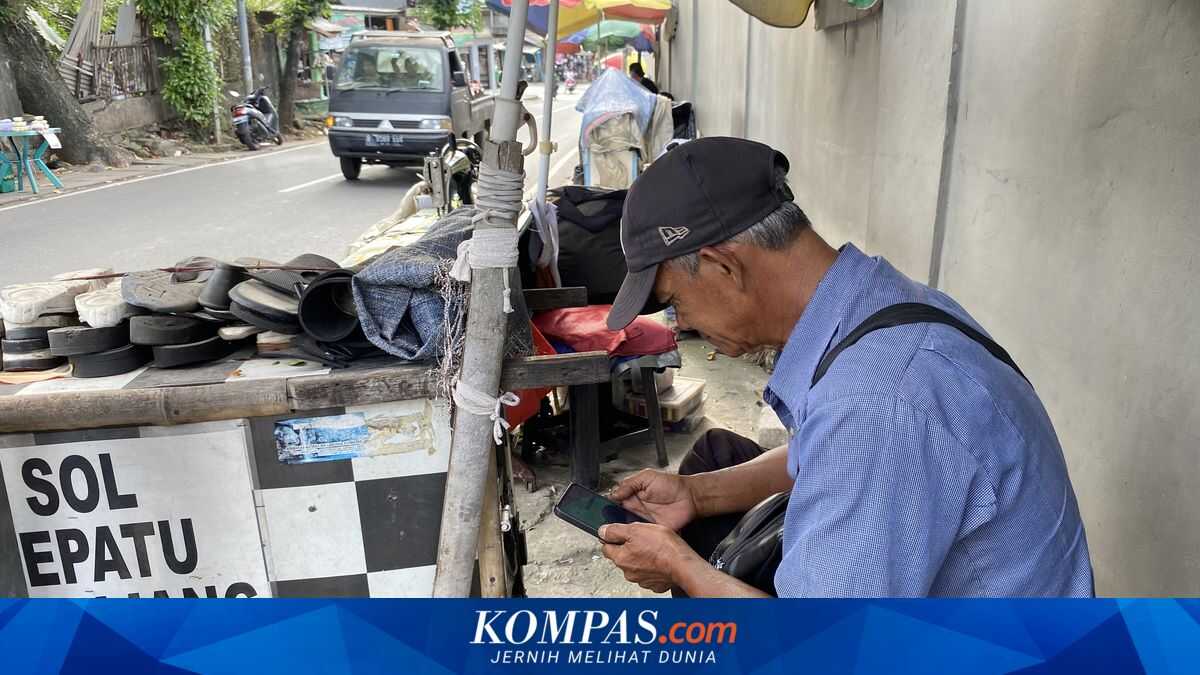
Jakarta — The presence of roaming shoe repairers at street corners in Jakarta may seem simple and easily overlooked. Yet amid the proliferation of shopping centres and the surge in consumer culture focused on new goods, this profession carries deeper social significance.
Rakhmat Hidayat, a sociologist at Jakarta State University (UNJ), views the existence of street cobblers in Jakarta as reflecting the dynamics between the formal and informal sectors of urban society.
“The existence of shoe repairers amid modernisation and the development of shopping centres demonstrates the dynamics between formal and informal sectors,” Rakhmat said when contacted by Kompas.com on Thursday, 26 February 2026.
According to Rakhmat, shoe repairers form part of the informal sector that depends on daily income and meets immediate community needs. They typically live in rented accommodation with fellow workers from their hometowns and work without the formal structure of companies or large industries.
Despite shopping centres continually offering new products with various promotions, street cobblers persist because they fulfil needs not fully covered by the formal market.
“Shopping centres target consumers with high purchasing power and offer new goods. Street cobblers, meanwhile, are closer to segments of society with financial constraints or those seeking more economical solutions,” he said.
Not everyone has the ability or desire to continually purchase new items when old ones can still be repaired.
Furthermore, Rakhmat views the cobbler profession as a symbol of informal sector resilience. Amid the tide of modernisation and urbanisation eroding traditional spaces, the informal sector continues to demonstrate its adaptive capacity.
“Shoe repairers, itinerant tailors, mobile watch repairers—these are all examples of the flexible and adaptive informal sector. They manage to survive with the skills they possess,” Rakhmat explained.
From a social perspective, this profession also involves a different dimension of relationships compared to transactions at shopping centres. Interactions between customers and cobblers are often personal and recurring.
“The shoe repair process is not merely an economic transaction; there is also a social relationship. There is trust, there is closeness. They have regular customers, they have community,” he said.
He added that as awareness among segments of society grows regarding sustainability issues, the practice of repairing old goods can be viewed as more conscious consumption.
Street cobblers, in this context, represent the values of recycling and frugality.
“This is not just about repairing shoes, but also about attitudes towards consumption. There is a sustainability value in this,” Rakhmat said.
Along busy motorway edges, a street cobbler can be seen stationed on the pavement with a simple wooden cart topped with an umbrella. His stall is positioned against the fence wall of a residential home, utilising the narrow space between the road and the boundary wall.