
Stream Flow in Marunda, North Jakarta, Disrupted, Suspected Due to Mud Burial from Project
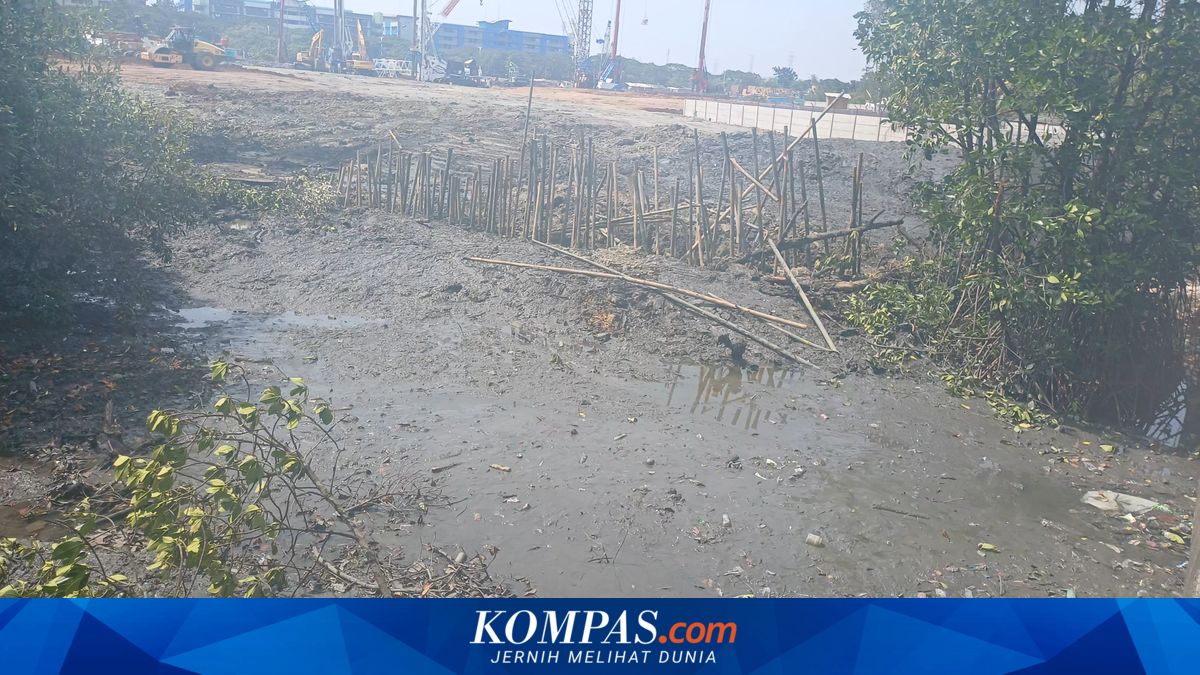
JAKARTA, KOMPAS.com - The flow of Kali Anakan Blencong in Marunda, Cilincing, North Jakarta, has been disrupted due to being buried under fill mud suspected to originate from the Rusunawa Marunda construction project.
Kompas.com observations at the site on Monday (11/5/2026) showed that the point where the stream flow is disrupted is around the bridge on Rumah Si Pitung Street, Marunda.
On the left side of the bridge, the stream flow is still visible with a width of about five metres. However, on the right side, the flow that should connect is now covered in mud.
Nevertheless, project activities continue with the operation of at least five yellow excavators and several other heavy machines.
The head of RT 07/RW 07 Marunda, Nesan, complained about the condition of Kali Anakan Blencong, which is now buried in mud.
“The covering happened just in the last few weeks. That’s the main access to there. The water’s inlet and outlet,” he said when met by Kompas.com near the location on Monday.
“That’s why yesterday I directed them, ‘So if from the mud pile, the right side there, right, there are trees, well, those trees were cleared, excavated. So it goes along the edge, it’s not possible in the middle of the bridge anymore,’ like that,” he explained.
Meanwhile, a resident named Akoy (45) assessed that the stream’s coverage occurred due to a lack of anticipatory steps during the project work.
“Anticipation with revetment, right, or using bamboo or something. But this one was just pushed everywhere,” he clarified.
In response to the issue, the Head of the Housing Provision Sub-Group of the DKI Jakarta Housing Department, Akbar Rizali, provided his explanation.
“For the soil elevation filling process of the rusun, it does not reach the stream flow point; in the future, there will be a boundary in the form of a revetment,” Akbar said when confirmed by Kompas.com via WhatsApp message on Monday.
“So the existing mud sediment in that stream rose because it was displaced by our soil compaction,” he added.