
Strategic Lessons from Tehran's Military Resilience
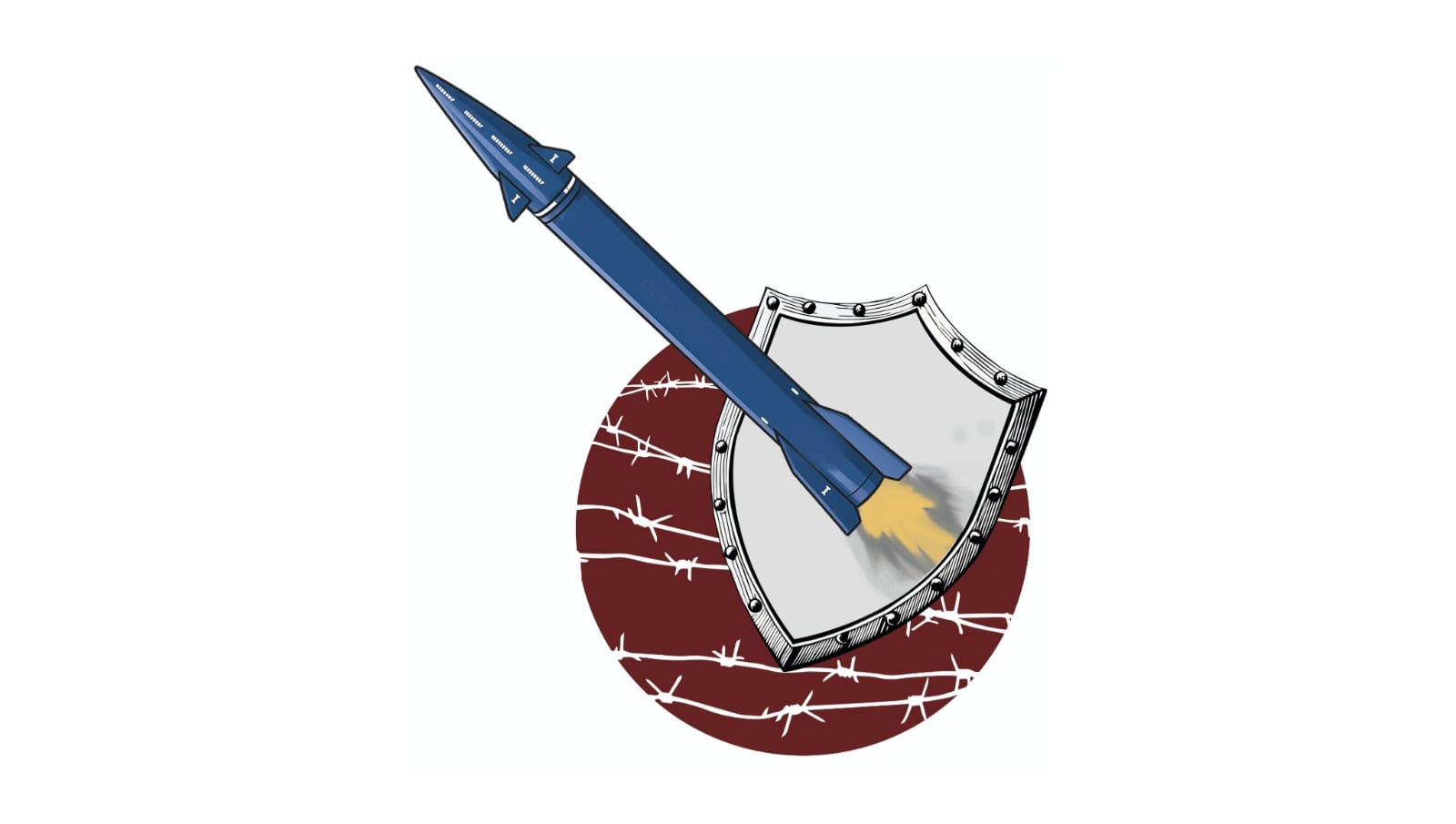
The world was shocked by an unprecedented event. On 28 February 2026, the United States and Israel simultaneously launched large-scale military attacks on Iranian territory in two operations they named Operation Epic Fury (US) and Operation Roaring Lion (Israel).
The attack, described by many analysts as ‘geopolitical gang-up’, struck hundreds of military targets, defence installations, and, most shockingly to the world, the residential centres of Iran’s top leaders in the Pasteur Street area of Tehran, including the headquarters of the National Security Council.
It did not stop there. In the simultaneous attacks targeting various cities in Iran, a heartbreaking humanitarian tragedy occurred in Minab, Hormozgan Province: a girls’ primary school named Shajareh Tayyebeh was hit by a missile, killing at least 165 people, mostly children, teachers, and parents who were dropping off their children to class. Amnesty International and UN experts strongly condemned the attack as a serious violation of international humanitarian law.
However, amid the grief and dust of destruction, the world witnessed something unexpected by the US and Israeli military planners: Iran did not collapse. Iran retaliated. Their response was not merely symbolic strikes, but a wave of ballistic missiles, advanced drones, and hypersonic missiles that overwhelmed the enemy’s defence systems. This became known as Operation True Promise IV.
What is the secret behind Iran’s military resilience? How has a country boycotted by the West since the 1979 Islamic Revolution managed to build a war machine that forces the world’s two largest military powers to recalculate? This article seeks to answer these questions through the perspective of international relations and strategic security studies.
IRAN’S DEFENCE DOCTRINE
One key to understanding Iran is understanding their doctrine. For decades, Iran has built what analysts call asymmetric endurance, an asymmetric resilience doctrine that prioritises preserving second-strike capability above all, rather than attempting to prevent every enemy attack. This means Iran may suffer initial losses, but they ensure they can retaliate devastatingly. That is why Iran’s missile production and launch facilities are built underground, decentralised, and dispersed, making them difficult to destroy all at once.
However, the doctrine has now shifted further. In March 2026, the Commander of the Khatam al-Anbiya Headquarters, Iran’s highest operational command, Major General Ali Abdollahi, officially announced that Iran’s military doctrine has transitioned from defensive to offensive, accompanied by the deployment of newer, more advanced weapons and fully updated battlefield tactics. This is not mere rhetoric. The shift is an official acknowledgement of a transformation that has been quietly underway for years.
Furthermore, Iran has developed what is called the Mosaic Defence Doctrine, a decentralised warfare strategy where every military cell can operate autonomously even if the central leadership is destroyed. This is what allowed Iran to continue functioning as a military power even after the devastating 28 February attack that targeted their leaders. Combined with threats to close the Strait of Hormuz and Bab al-Mandab, two vital global energy routes, Iran can transform a regional conflict into a global economic shock.
Former IRGC Commander Mohammad Ali Jafari once revealed that since the 1990s, direct confrontation with Israel has been considered a realistic scenario, which is why massive investments in precision missile and drone technology have been continuously made. It is a long-term strategic vision, not a knee-jerk reaction.
IRAN’S MODERN WAR ARSENAL
The military world may have once underestimated Iran’s combat capabilities. Now, reality proves otherwise. Iran has built an arsenal consisting of the latest generation Shahed drones with non-GPS navigation systems, ballistic missiles, long-range cruise missiles, and, most worryingly for adversaries, the Fattah family of hypersonic missiles.
The Fattah-1 missile, introduced in 2023, can reach speeds of up to Mach 15 with a range of 1,400 kilometres, using solid fuel and designed to manoeuvre both inside and outside the atmosphere, rendering interception systems like Iron Dome and Patriot batteries nearly powerless.
Its successor, Fattah-2, extends the range to 1,500 kilometres with even more unpredictable flight paths thanks to liquid-fuelled hypersonic glide vehicle technology. Combined with the Khorramshahr-4 and Khyber missiles, Iran has layers of complementary strike capabilities that are difficult to neutralise simultaneously.
In the context of the June 2025 war, the conflict preceding the 2026 escalation, Iran successfully launched more than 350 ballistic missiles and hypersonic drones in less than 6 hours, disabling over 70% of Israel’s Iron Dome defence systems through a combination of attack volume and high precision. This was not luck. It was the result of a consistent weapons research and development programme over decades, strengthened by strategic cooperation with Russia in space and defence technology development.
IRAN’S DEFENCE BUDGET MANAGEMENT
This is a dimension often overlooked by the public: how does Iran fund all this? In fact, although multilateral sanctions have proven capable of pressuring Iran’s military budget, scientific studies show that multilateral sanctions can cut Iran’s military spending by up to 77% in the long term, Iran has consistently found ways to prioritise their defence industry.
The most concrete indicator is this: Iran’s military budget for 2025 surged 35% to around US$23.1 billion, even amid economic pressures and in