
Strategic food commodities in East Java stable ahead of Ramadan
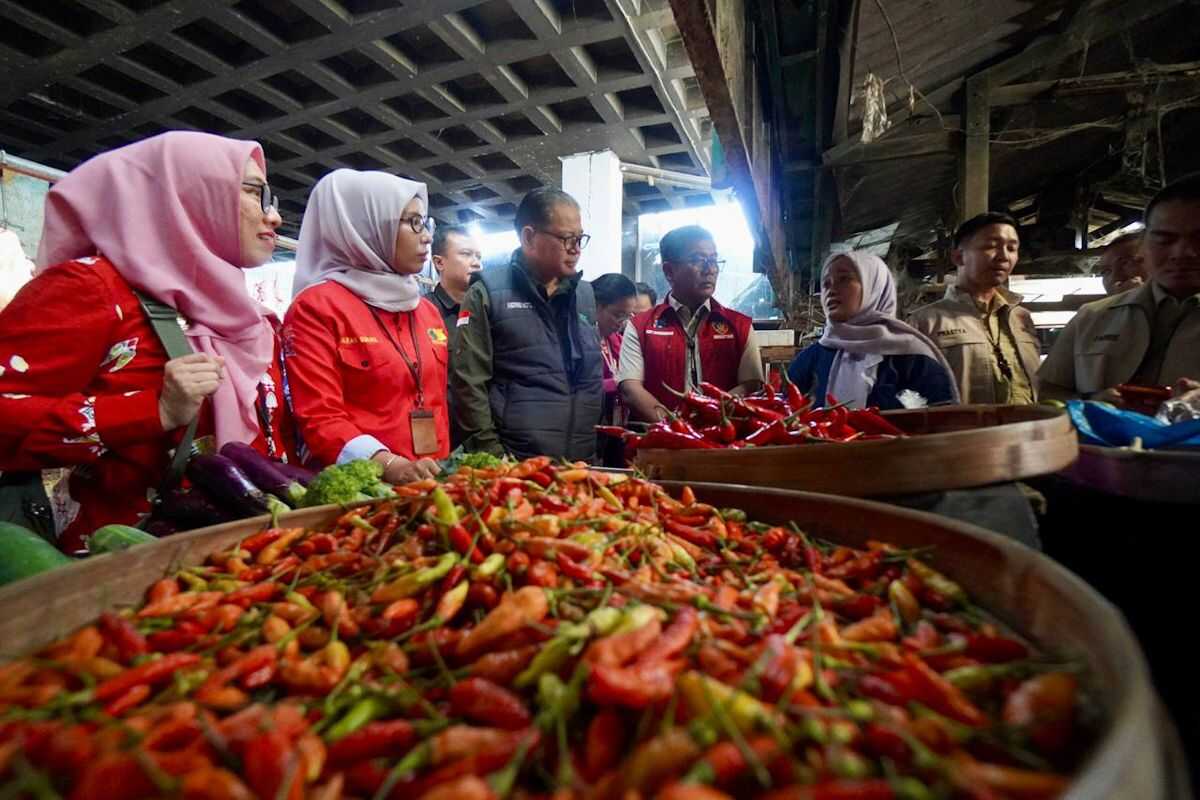
Price movements for food commodities across several markets in East Java throughout February 2026 have demonstrated relatively controlled dynamics and tend to be stable ahead of Ramadan, according to Andriko Noto Susanto, Deputy for Consumption Diversification and Food Security at Bapanas, in a statement in Jakarta on Sunday.
He noted that based on monitoring results from the Task Force Team on Price Violations, Food Safety, and Quality since 13 February 2026 at Pucang Anom Market in Surabaya and on 16 and 27 February at Sidoharjo Market in Lamongan, most strategic commodities have moved within reasonable ranges and in accordance with both the highest retail price corridor (HET) and reference sales prices (HAP).
Rice emerged as the most stable commodity. Premium rice prices ranged from Rp15,000–16,000 per kilogramme in Surabaya and Rp15,000/kg in Lamongan in mid-February, declining slightly to Rp14,900/kg on 27 February. Medium rice remained consistent at Rp13,500/kg, whilst subsidised rice (SPHP) stayed at Rp12,500/kg. This stability demonstrated adequate stock availability and the effectiveness of government stabilisation instruments.
Chicken meat experienced minor fluctuations, rising from Rp40,000/kg on 13 February to Rp42,000/kg on 16 February, then returning to Rp40,000/kg on 27 February. Chicken egg prices moved from Rp30,000/kg to Rp32,000/kg before correcting to Rp31,000/kg towards the end of February.
Among horticultural commodities, small red chilli prices continued to face pressure in the range of Rp85,000–90,000/kg due to supply and weather factors in production centres. By contrast, curly red chilli prices fell significantly from Rp40,000/kg to Rp22,000/kg by the end of February. Red onion and garlic prices also showed gradual downward trends.
Minyakita cooking oil prices remained stable at Rp15,700 per litre across all monitoring points, whilst loose granulated sugar fell from Rp17,000/kg to Rp16,000/kg. Since 19 January through 26 February 2026, the State Logistics Agency (Bulog) has distributed approximately 6 million litres of Minyakita to 2,250 merchant outlets across 160 markets in East Java as part of strengthening supply and controlling prices.
“Increased demand during major religious occasions must be anticipated in a coordinated manner,” he explained. He affirmed that the government is strengthening surveillance whilst business operators maintain smooth distribution and price stability on the ground. “The public should feel confident because the entire food ecosystem is moving with one commitment,” he stated.
Following this commitment, on 12 February 2026 a Joint Commitment was signed by the Task Force for Clean Sweep of Price Violations, Food Safety, and Quality in East Java ahead of Ramadan and Eid al-Fitr 2026. A total of 35 business operators, producers, and farmer associations pledged to maintain supply availability, ensure prices remain within reasonable corridors, and comply with food safety and quality standards so that consumers obtain safe and suitable products.
Andriko added that from various task force monitoring at several points in East Java, prices remain relatively stable and within the reference price ranges set by the government. In accordance with instructions from Bapanas Head Andi Amran Sulaiman, continued Andriko, in-depth investigation of supply chains is ongoing to ensure no price distortions occur at the distributor or wholesale trader level. “If price increases are found that do not comply with regulations or reference price policies, the police as part of the task force will take steps in accordance with applicable regulations,” Andriko stressed.
Similarly, I Gusti Ketut Astawa, Deputy for Food Availability and Stabilisation at Bapanas, stated that the supply of strategic commodities remains secure. “The availability of rice and other strategic commodities is in a safe condition. The challenge we are collectively managing is ensuring smooth distribution down to retail merchants, including distribution of subsidised rice to be more equitable and in line with actual field needs,” said Ketut.