
Strait of Hormuz Now a 'Paid Gateway', Global Trade Under Threat
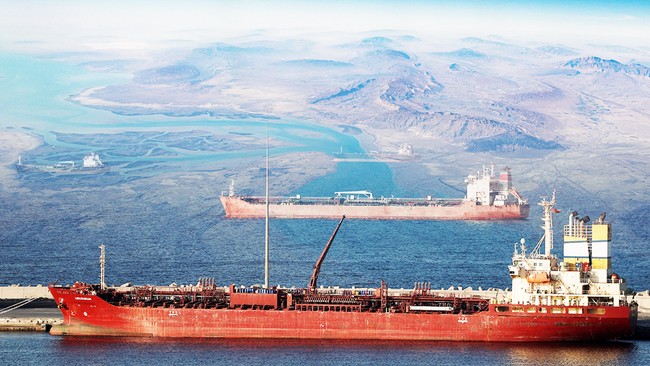
Jakarta, CNBC Indonesia - Iran’s war over the past six weeks has shaken the foundations of global trade. The sea route, previously freely navigable, is now beginning to be controlled, particularly in the Strait of Hormuz, one of the world’s most vital energy routes.
Although US President Donald Trump announced a ceasefire, the situation on the ground has not yet recovered. Iran is reportedly deciding which ships may pass and even charging fees for safe access.
According to The Wall Street Journal, more than 700 ships carrying cargo worth tens of billions of dollars remain stranded in the vicinity. In radio communications, Iranian authorities warn that ships passing without permission could be destroyed.
This situation has major impacts. Around 20% of global oil and gas supplies pass through the Strait of Hormuz, so disruptions in distribution directly trigger pressure on energy prices, logistics, and global inflation.
Analysts and economists warn that if Iran continues to impose safe passage fees, the effects will accumulate into global fuel prices. Capital Economics assesses this move as potentially giving Iran de facto control over world energy distribution, while also increasing geopolitical risks to the global economy.
On the other hand, global shipping faces real pressure. Around 20,000 seafarers are now trapped at sea, with some ships running out of food supplies. Some crews are even trying to circumvent the rules by changing ship flags or identities, a practice that violates international law.
A Syrian captain, Ali Kanafani, described the current situation as full of uncertainty. He saw dozens of ships queuing without clarity on sailing permits.
“Everyone is confused,” said Ali, quoted from The Wall Street Journal, Saturday (11/4/2026).
A similar story comes from a ship with an Indonesian crew. Captain Zefanus Waruwu is maintaining crew morale with physical activities on board after more than 40 days of being stranded.
Although a ceasefire has been announced, Iran has only allowed a handful of ships to pass, even just two ships per day. Access is said to depend on geopolitical relations and willingness to pay fees that can reach US$2 million.
This practice raises concerns about the emergence of a new precedent in global trade. Some analysts believe the ‘paid sea’ model could be emulated by other countries, including China in the South China Sea, a route through which more than a quarter of world trade passes.
The impacts are also beginning to be felt in the global financial system. Iran is reportedly receiving payments in Chinese yuan or cryptocurrencies, which could reduce the dominance of the US dollar in energy trade.
The Hormuz crisis has become the third major disruption to global shipping in the last four years, after the Russia-Ukraine war and the conflict in the Red Sea. However, this time the scale is considered more systemic because it affects the world’s main energy route.
According to the Secretary General of the European Shipowners (ECSA), Sotiris Raptis, the stability of global trade depends on the safety of seafarers.
“Smooth shipping and safe trade are only possible if seafarers can carry out their duties safely,” said Raptis.
Maritime analyst Salvatore Mercogliano considers the changes occurring to be structural. The current global trade system is highly dependent on speed and high volume, so a disruption at one point can have widespread impacts like a domino effect.
“The concept of free sea routes is beginning to disappear. There will be no more normal like before,” said Mercogliano.
Amid this uncertainty, industry players believe the world is now entering a new era, where sea access is no longer entirely free but increasingly influenced by geopolitical power.