
Strait of Hormuz in Turmoil, 10 Ships Attacked—Deaths Mount
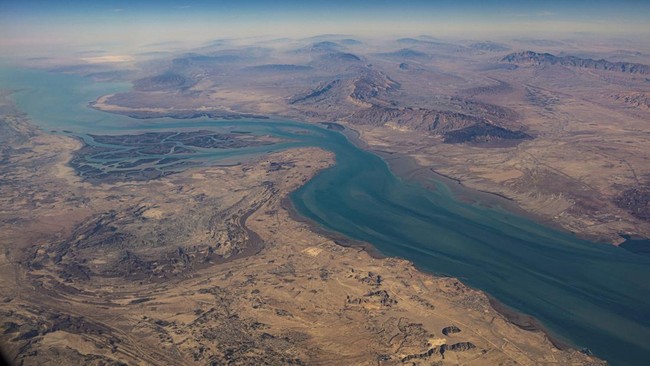
Jakarta—Over more than a week since the conflict between the United States, Israel, and Iran erupted on 28 February, approximately ten ships have been reported attacked in or near the Strait of Hormuz following Tehran’s blockade of the strategically vital waterway.
Data from several maritime analysis groups indicate that the successive attacks have nearly paralysed shipping traffic through the strait, which serves as the primary route for global oil shipments and various commodities.
The United Kingdom Maritime Trade Operations (UKMTO) maritime security agency has issued approximately ten warnings regarding attacks and suspicious activities in the region. However, the agency has released limited information concerning the vessels involved.
The International Maritime Organisation (IMO) has recorded at least nine attacks on ships in the Strait of Hormuz within a single week. From this series of incidents, four attacks resulted in a total of seven deaths.
According to the IMO, three attacks on 2 March each killed one person aboard the Skylight, MKD Vyom, and Stena Imperative respectively. On the same day, the ship Hercules Star was also reportedly targeted.
The attacks continued over subsequent days. Between 3 and 5 March, four other vessels were reportedly attacked, namely Libra Trader, Gold Oak, Safeen Prestige, and Sonangol Namibe.
On 6 March, a further attack occurred, resulting in four deaths when the ship Mussafah 2 was struck.
Previously, the Indonesian government announced that a ship with characteristics and last known position matching Mussafah 2 was discovered to have sunk.
The Ministry of Foreign Affairs revealed that three Indonesian crew members remain missing. One Indonesian citizen was reported safe but sustaining injuries, whilst four crew members of other nationalities were rescued.
The maritime security company Vanguard disclosed that Mussafah 2 was struck by two missiles whilst attempting to provide assistance to the container ship Safeen Prestige, which had previously been attacked by missiles two days earlier.
This situation has triggered concern that ships attempting to assist attack victims also face the risk of becoming subsequent targets.
The Joint Maritime Information Centre (JMIC), operated by a coalition of Western naval forces, has warned of this potential.
“Recent incident reports…demonstrate that vessels providing assistance or conducting rescue operations to previously targeted ships may also face heightened risk of further attack,” stated JMIC in a briefing released on Saturday.
In its analysis, JMIC also identified a particular pattern in the attacks occurring in these waters.
“The pattern of attacks observed against moored vessels, drifting vessels, and assistance vessels indicates a campaign focused on creating operational uncertainty and obstructing routine commercial movement, rather than sustained efforts to sink ships,” the organisation continued.
Drone and missile attacks claimed to be conducted by Iran’s Islamic Revolutionary Guard Corps cannot always be independently confirmed. In several cases, confirmation has only emerged days later, and the identities of targeted vessels have not always been disclosed. Casualty figures also frequently differ between reports.
An Iranian Revolutionary Guard general issued harsh threats against ships attempting to traverse the waterway on 2 March.
He warned that Iran would “burn every ship” attempting to pass through the strait and would blockade all oil exports from the Gulf region.
However, a different statement came from Iranian Foreign Minister Abbas Araghchi. He stated on Thursday that his country “has no intention” of closing the Strait of Hormuz.
Meanwhile, the United States has begun considering military measures to maintain open shipping lanes. US Energy Secretary Chris Wright stated that his government is prepared to escort commercial vessels attempting to traverse the strait.
He said the escort would be conducted “as soon as it becomes prudent to do so”.
French President Emmanuel Macron stated on Tuesday that he is working to build an international coalition to secure shipping lanes in the region. Macron said this effort aims to protect a waterway that is vital to the global economy.
The Strait of Hormuz has long served as a vital global energy trade route. Approximately 20% of the world’s oil and liquefied natural gas typically pass through these waters.
However, the deteriorating security situation has caused shipping activity to plummet sharply. Analysis firm Kpler, which operates the MarineTraffic vessel tracking platform, reported that tanker traffic in the region has declined by up to 90% within a single week.
MarineTraffic data analysed by AFP shows that only nine commercial vessels, including tankers, cargo ships, and container ships, have been detected traversing the strait since Monday. Some vessels have even been observed periodically disabling their position tracking systems.