
Strait of Hormuz Crisis! Global Energy Emergency as IEA Releases 400 Million Barrels of Oil
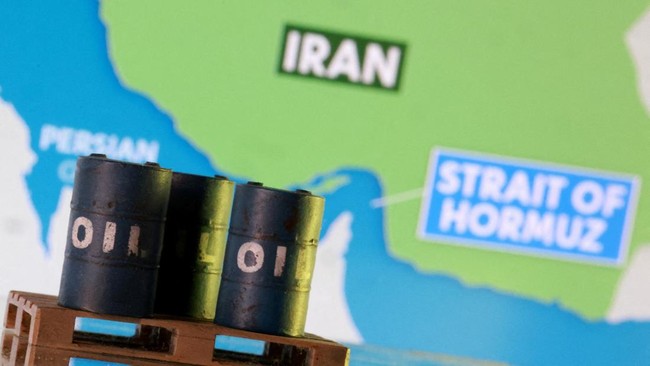
Global energy crisis triggered by conflict in the Middle East has forced developed nations to take emergency measures. The International Energy Agency (IEA) on Wednesday, 11 March 2026, unanimously agreed to release 400 million barrels of oil from strategic reserves to mitigate supply shocks caused by the conflict in Iran.
This move represents the largest reserve release in the history of the organisation.
However, the IEA has not set a definite timetable for when the oil reserves will enter the market. The agency stated only that the release of stocks would proceed according to conditions in each member state.
The IEA comprises 32 member nations, mostly advanced economies from Europe, North America, and Northeast Asia. The organisation is tasked with maintaining stability and security of global energy supplies.
The IEA was established in 1974 following the oil embargo imposed by Arab nations against the United States in response to Washington’s support for Israel during the 1973 Arab-Israeli War.
IEA Executive Director Fatih Birol said the ongoing Middle Eastern conflict has had a significant impact on global energy markets.
“The conflict in the Middle East has a significant impact on global oil and gas markets, with major implications for energy security, energy affordability, and the global economy’s dependence on oil,” Birol said in a statement from the IEA headquarters in Paris.
He then announced the important decision taken by member nations.
“I can now announce that IEA member countries have unanimously decided to launch the largest emergency oil stock release in the history of our agency,” Birol said.
Currently, IEA member nations collectively hold more than 1.2 billion barrels of public emergency oil reserves, plus approximately 600 million barrels of industrial stock held under government mandate.
Birol said the oil reserve release aims to address the immediate impact of supply disruptions. However, he noted that global energy markets will not truly stabilise until tanker ships resume transit through the Strait of Hormuz.
The narrow strait off Iran’s coast connects the Persian Gulf with the Gulf of Oman and serves as a vital route for global energy trade.
Approximately 20% of global oil and gas supplies normally pass through the strait. However, since the Iran conflict erupted, tanker traffic has virtually ceased as shipping companies fear becoming targets of attack.
US Contribution
US Energy Minister Chris Wright stated that Washington will release 172 million barrels of oil from its strategic reserves.
According to Wright, distribution of the oil will begin next week. However, the entire release process is estimated to take approximately 120 days before all barrels enter the market.
This decision follows remarks by US President Donald Trump, who previously stated his administration was prepared to utilise strategic oil reserves to contain energy price rises.
“We will do that, and then we will refill it,” Trump said in an interview with Cincinnati-based broadcaster WKRC.
The US President stated that the measure is temporary and the government will replenish the reserves at a later date.
“I have filled it once, and I will fill it again, but right now, we will reduce it somewhat, and that brings the price down,” Trump said.
Currently, the United States’ strategic oil reserves total approximately 415 million barrels. This figure equals approximately 58% of the maximum permitted capacity of 714 million barrels.
Previously, the Japanese government had already stated its readiness to release national oil reserves.
Japanese Prime Minister Sanae Takaichi said her country would likely begin releasing oil stocks as early as next week. This step was taken because Japan has very high dependence on energy supplies from the Middle East.
Largest Supply Disruption
According to analysis by energy consulting firms Rapidan Energy Group and Wood Mackenzie, the closure of the Strait of Hormuz now triggers the largest recorded oil supply disruption.
Energy analysts had previously warned that even if the IEA released oil reserves at maximum levels, the measure would likely still be insufficient to cover the shortfall of approximately 20 million barrels per day that normally transit the strait.
Birol also described the global energy situation as highly concerning.
According to him, several Middle Eastern oil producers have reduced production, whilst refinery operations have been disrupted. This has had a major impact particularly on diesel and jet fuel supplies.
He also noted that attacks during the conflict continue to damage energy infrastructure and facilities related to the energy sector.
This crisis extends beyond oil. Global liquefied natural gas (LNG) supply has also been affected.
According to Birol, global LNG supplies have now decreased by approximately 20%. This situation has forced wealthy Asian nations to compete with European countries for available LNG cargo.
LNG is natural gas cooled until it becomes liquid, allowing transport via tanker ships for international trade. Natural gas itself is widely used globally for electricity generation and home heating.
Since the Iran conflict erupted on 28 February, global oil prices have moved erratically.
The global benchmark Brent crude price surged to nearly US$120 per barrel early this week before falling back to around US$90 per barrel.