
Strait of Hormuz Closure, Prabowo's Energy Strategy Proceeds Smoothly
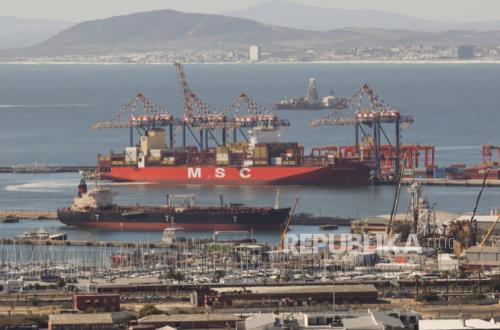
Indonesia has long experienced anxiety whenever geopolitical tensions flare in the Middle East. For decades, the nation’s heavy reliance on oil supplies transiting through the Strait of Hormuz—the world’s most precarious energy chokepoint—meant that any disruption triggered immediate concerns: petrol queues at service stations, stock shortages, and government announcements of fuel price increases.
The picture at the beginning of 2026, however, presents a starkly different scenario. The world is currently anxious because the Strait of Hormuz has been completely closed owing to the Iran-Israel conflict and American involvement. By conventional logic, global crude oil supplies should be disrupted and Indonesia should face an energy emergency.
In reality? Fuel supplies throughout the country remain flowing smoothly, with no shortage issues apparent, no snaking queues at service stations, industrial machinery continuing to operate, and no public panic. Why is the Middle Eastern “curse” no longer affecting us? The answer lies in the geopolitical move made by President Prabowo Subianto through the Agreement on Reciprocal Trade (ART) with the United States.
The Washington accord
Retracing events to February 2026, when many observers questioned the urgency of President Prabowo’s sudden visit to Washington DC to meet Donald Trump: a major agreement was signed there. Indonesia committed to redirecting annual energy expenditure worth US$15 billion towards the United States. This step was not merely a routine commercial transaction, but rather a precisely calibrated risk mitigation strategy.
Our historical dependence on the Strait of Hormuz represented a critical vulnerability. When that passage closed, tankers carrying Saudi Arabian oil destined for our refineries became trapped. By shifting to purchasing crude oil and liquefied petroleum gas from the United States, Indonesia automatically redirected its vital supply route from the turbulent Indian Ocean to the relatively calmer Pacific Ocean.
Oil from Texas or Louisiana now flows directly to the Balikpapan and Cilacap refineries without needing to traverse the geopolitically sensitive Middle Eastern chokepoint. This explains why, even with Hormuz closed today, our fuel stocks remain secure. The supply exists, routes are open, and ships continue sailing.
Economic logic: countering dollar pressure
The larger question arises: won’t purchasing oil from the US in dollars—when exchange rates are high—drain the state budget? This is where the ART scheme’s ingenuity operates. The agreement is reciprocal in nature.
The cause-and-effect logic is straightforward: Indonesia agrees to become a loyal buyer of American energy, but in return, America offers zero-percent tariffs for Indonesia’s flagship products such as palm oil, textiles, and processed nickel. This constitutes “modern barter”. Our export value to America surges dramatically as our textiles and footwear become 10-15 per cent cheaper than competitors in the American market.
Benefits from this massive export serve as a “cushion” for the state budget. Although we expend dollars to purchase oil, we receive substantially larger dollar inflows from finished goods exports. The result is a trade surplus equilibrium. Pressure on the rupiah is successfully mitigated because market demand for Indonesian products increases. Rather than squandering state budget funds merely subsidising skyrocketing prices caused by shortages, the government now utilises the trade surplus to maintain domestic energy price stability.
Efficiency amid crisis
This mitigation is further reinforced through strengthened logistics capacity via Pertamina International Shipping (PIS). Operating independently owned Very Large Crude Carrier (VLCC) tankers enables massive oil transportation from the US in single voyages. Although distances are greater, with carrying capacity reaching 2 million barrels per trip and without expensive war risk insurance costs (by avoiding conflict zones), the per-barrel logistics cost becomes highly competitive.
We are witnessing a paradigm shift. Whereas Indonesia previously occupied a defensive and reactive position regarding global crises, the government now operates tactically. Energy source diversification extends from the Middle East to the United States and Africa. This does not mean abandoning Middle Eastern producers; rather, we cannot stake the fate of 280 million citizens on a single narrow strait carrying extreme risks.
The urgency behind normalcy
The success of this mitigation scheme offers us a valuable lesson: policies appearing “routine” or merely ceremonial during peacetime frequently become lifesavers during crisis. When the ART agreement was signed last February, perhaps few recognised it as the foundation of our energy resilience.
Today, as the Strait of Hormuz closes and the world braces with anxiety, Indonesians can still start their vehicles to earn their livelihoods without fearing shortages. The smooth supply we experience today represents tangible proof that long-term strategy and courageous geopolitical decision-making constitute essential requirements for national sovereignty. What appears normal today is actually the result of yesterday’s diplomatic and negotiating efforts.