
Strait of Hormuz Closure Poses Global Recession Risk to Oil Markets
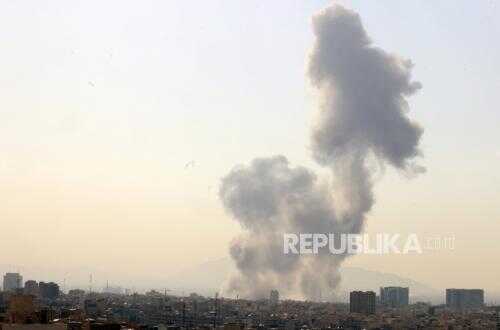
Combined attacks by the United States and Israel on Iran, a member of the Organization of the Petroleum Exporting Countries (OPEC), risk triggering major disruptions to oil supplies in the Middle East that, in worst-case scenarios, could trigger global economic recession. Iran is OPEC’s fourth-largest oil producer with output slightly above 3 million barrels per day in January.
The Islamic Republic has coastline on the Strait of Hormuz, the world’s most critical maritime thoroughfare for global oil trade.
The oil market has tended to overlook supply disruption risks in the Middle East. Traders are perceived to be underestimating the threat of Iranian retaliation against US attacks that could shake markets, according to Bob McNally, former energy advisor to the White House under President George W. Bush.
“This is genuinely serious,” said McNally, founder and president of Rapidan Energy, cited by CNBC on Sunday (1 March 2026).
Crude oil futures contract prices are likely to rise $5 to $7 per barrel when trading opens at 18:00 Eastern Time (ET) on Sunday as markets begin to account for these risks.
On Friday, Brent crude oil closed at $72.48 per barrel, rising $1.73 or 2.45 per cent. Meanwhile, US West Texas Intermediate (WTI) crude oil ended at $67.02 per barrel, up $1.81 or 2.78 per cent.
Iran could attempt to pressure President Donald Trump by rendering the Strait of Hormuz unsafe for commercial traffic, potentially driving oil prices above $100 per barrel, according to McNally. He stated that the market has not fully accounted for the fact that Tehran possesses large quantities of mines and short-range missiles that could seriously disrupt traffic through the waterway.