
Strait of Hormuz Closure: Examining the Catastrophic Implications
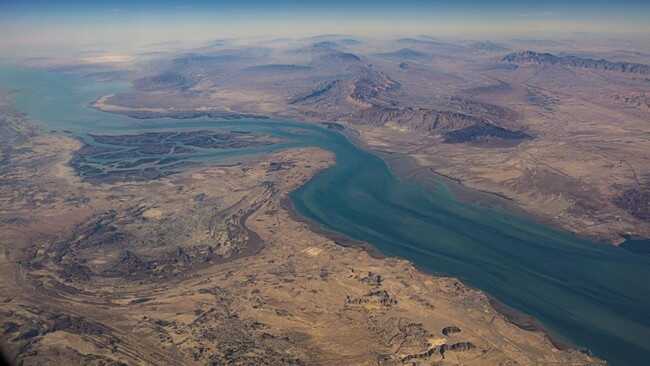
Iran has decided to close the Strait of Hormuz in response to the death of Supreme Leader Ayatollah Ali Khamenei following an escalation of conflict involving the United States and Israel in recent days.
This action represents the first occasion Iran has undertaken such a measure since the onset of its conflict with Israel in 1979. The Strait of Hormuz is one of the world’s most strategically important maritime routes, serving as the passage for approximately one-fifth of global oil and gas supplies.
Previously, Arcandra Tahar, Deputy Minister of Energy and Mineral Resources (2016–2019), disclosed the volume of crude oil and petroleum products transiting the Strait of Hormuz daily.
According to Arcandra, approximately 15 million barrels of crude oil per day pass through the waterway, representing roughly 15 per cent of global oil demand. Consequently, if this route were completely closed, global oil trade would experience substantial disruption.
Among the world’s three largest oil-producing nations conducting transactions through the Strait of Hormuz are Saudi Arabia, the United Arab Emirates, and Kuwait.
“If crude oil is around 14–15 million barrels per day, this represents 14–15 per cent of global demand,” he explained to CNBC Indonesia in the Energy Corner programme.
The Strait of Hormuz serves not merely as a transport route for crude oil. Various refined petroleum products destined for nations worldwide also transit the Strait of Hormuz. Consequently, petroleum fuel supplies representing up to 20 per cent of global demand would be disrupted.
“Refined petroleum product volumes are approximately 8 million tonnes, bringing the total dependence on the Strait of Hormuz to around 20 per cent of global needs,” he added.
Additionally, liquefied natural gas (LNG) transported by vessel also relies upon the Strait of Hormuz as a strategic transport route. Notably, approximately 20 per cent of global LNG supplies from the United Arab Emirates and Qatar transit the Strait of Hormuz would be disrupted.
“Furthermore, LNG—which has become a traded commodity via vessel and other means—represents approximately 15–20 per cent of supplies originating from the UAE and Qatar passing through the Strait of Hormuz,” he concluded.