
Strait of Hormuz Closure Drives Global Oil Prices Up by 20 Dollars Per Barrel
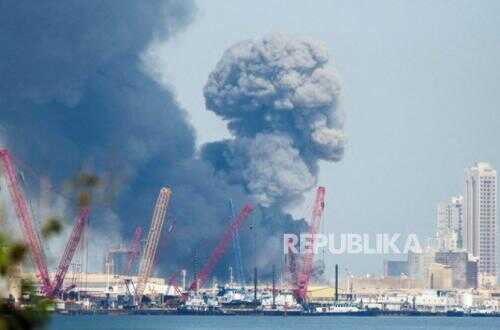
Geopolitical tensions in the Middle East have once again rattled global energy markets. Direct military strikes by the United States and Israel against Iran in the early morning of 28 February have triggered an escalation considered more extensive than previous confrontations.
Jorge Leon, Senior Vice President and Head of Geopolitical Analysis at Rystad Energy, explained that the closure of the Strait of Hormuz and the escalation of the Iran conflict could have direct impacts on global oil prices.
“At the opening of trading on 2 March, Brent crude oil prices are estimated to surge approximately $20 per barrel as risk premiums increase in the market,” said Leon.
According to Leon, Iran has retaliated with a far more aggressive scale compared to previous incidents, including targeting US military bases in the region and its Gulf allies.
“This marks a structural expansion of the conflict, no longer merely symbolic attacks,” he said.
The most tangible impact on the oil market is the halt of tanker traffic through the Strait of Hormuz. Approximately 15 million barrels per day (bpd) of crude oil, equivalent to nearly 30 per cent of global seaborne oil trade, transits through this corridor.
Should disruptions continue, approximately 8 to 10 million barrels per day of global oil supply could potentially be lost from the market, although some could be rerouted through alternative pathways.
Saudi Arabia does possess an East-West pipeline to the Red Sea with capacity of approximately 5 million bpd. The United Arab Emirates can also utilise the Abu Dhabi pipeline with capacity of approximately 1.5 million bpd. However, this capacity is considered insufficient to fully replace the volume that normally transits the Strait of Hormuz.
“Whether the strait is physically closed or functionally avoided due to high risk, the impact on oil flows is essentially the same,” explained Leon.
He added that increases in global benchmark prices and sharp backwardation conditions are expected to persist until shipping routes return to normal.
Several countries holding strategic petroleum reserves could potentially release stocks to dampen volatility, including China and other major consuming nations. However, such measures would only provide short-term buffers.
“Strategic reserves are designed to cushion temporary shocks, not to plug prolonged structural disruptions,” he said.
Rystad estimates that if the Strait of Hormuz is truly closed, it will likely last only one to two weeks. However, even brief disruptions can create logistics bottlenecks, tanker congestion, and port delays with effects persisting longer.
Interestingly, the OPEC+ group is scheduled to meet and is reported to be discussing larger production increases than anticipated. Under normal conditions, production increases would suppress prices.
However, Leon stressed that if crude oil cannot exit the Gulf due to constraints at the Strait of Hormuz, additional production will have little significant impact in the short term.
“The problem is not upstream production capacity, but rather export routes and shipping corridors,” he said.
Rystad Energy currently sees no signs of de-escalation. Diplomatic channels are described as stalled, whilst risks have shifted from limited conflict towards potential systemic disruptions.
Several critical indicators to monitor going forward include the reopening of diplomatic channels, responses from GCC nations, confirmation of attacks on energy infrastructure, and real-time maritime traffic patterns at the Strait of Hormuz.
“This conflict has entered a materially more dangerous phase. For the global oil market, the effective status of the Strait of Hormuz, whether physically or functionally closed, becomes the most dominant variable,” concluded Leon.