
Strait of Hormuz Closed; Government Secures Non-Middle Eastern Oil Supply
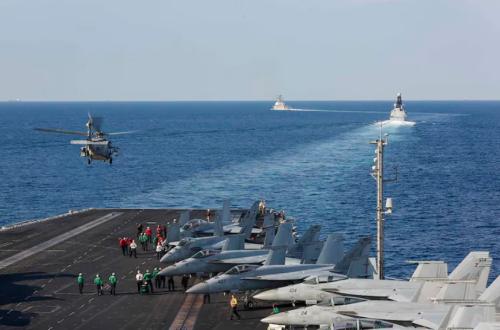
Jakarta – Coordinating Minister for Economic Affairs Airlangga Hartarto stated that the escalating conflict between the United States, Israel, and Iran is disrupting global oil supply and driving up world energy prices. This follows Iran’s closure of the Strait of Hormuz, which has historically served as the principal distribution route for global oil.
“Naturally, if Iran closes it, oil supply will definitely be disrupted, and oil supply is affected because the Strait of Hormuz is blocked. That’s not even accounting for the Red Sea situation. So we need to see how long this conflict will continue,” Hartarto said at his office in Jakarta on Monday, 2 March 2026.
In response to this situation, Hartarto stated that the government has anticipated potential supply disruptions by securing import sources from outside the Middle Eastern region. He noted that this approach has been pursued through memoranda of understanding (MoU) between PT Pertamina (Persero) and various oil and gas companies from the United States.
“The government already has an MoU to obtain supplies from non-Middle East sources. For example, Pertamina recently signed an MoU with America, specifically with Chevron, ExxonMobil, and others,” he said.
When asked whether geopolitical conflict would affect economic growth, Hartarto assessed that the impact would largely depend on the duration and intensity of the war. In addition to oil supply, the logistics and tourism sectors also face potential disruption.
“We will continue to monitor developments in this conflict—whether it lasts long, lasts 12 days, or continues for some other duration,” he added.
The government will continue to monitor the evolving situation to prepare policy adjustments if necessary.
Regarding the possibility of domestic fuel price increases, Hartarto acknowledged that energy prices do tend to rise during conflicts, as witnessed during the Russia-Ukraine war.