
Strait of Hormuz Ablaze; Trump Woos China to Join Coalition
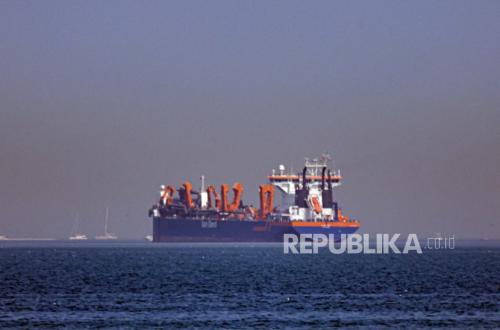
JAKARTA — The waves in the Persian Gulf that afternoon appeared calm. Yet anyone living on Iran’s southern coast knows that tranquility is a mask easily torn. Above the merchant vessels transiting these waters, ship captains close their eyes longer as they navigate towards the Strait of Hormuz, a narrow 39-kilometre gap between Iran and Oman that represents the world’s energy artery.
Since late February, the strait dividing Iran and Oman has ceased to be merely a blue shipping lane traversed by thousands of tankers. It has become a front line. A line between war and peace. Between global energy needs and geopolitical ambitions. Between the lives and deaths of thousands.
On 28 February, the Tehran sky suddenly roared. Israeli and American fighter jets dropped bombs on numerous targets in the heart of the Islamic Republic of Iran. Within hours, casualty reports poured in. Not only military officials were targeted, but also children. 175 female students from Shajareh Tayyebeh Special Primary School in Minab city, Hormozgan Province, perished in the strike. A further 95 were injured. The attack left a wound that will not heal within a generation.
Iran retaliated. Missiles rained down on Israeli territory and American military bases in the Middle East. Yet Tehran’s most strategic response was a decision that shook global energy markets: they effectively closed the Strait of Hormuz. Not to everyone, as Iranian officials repeatedly emphasised thereafter, but to “America, Israel, and their allies.”
Since then, the world has become divided.
Oil Trapped in the Middle of War
Can you imagine what it would feel like if one of every five drops of oil powering vehicles and factories worldwide suddenly ran dry? This is the scenario now shadowing global markets.
The Strait of Hormuz is the world’s energy artery. Approximately 20 per cent of global crude oil, petroleum products, and liquefied natural gas must pass through this narrow waterway daily. When Iran closed the strait, or at least made it extremely risky to traverse, global oil and fertiliser prices soared. Poor nations dependent on food imports grew anxious. Global supply chains, barely recovered from the pandemic, faced fresh disruption.
Aboard Air Force One, returning to Washington, President Donald Trump spoke to journalists. He referred to the strait security operation with a dramatic name: “Epic Fury”. Seven nations were being consulted, he said. China was mentioned specifically, the Asian giant deriving 90 per cent of its crude oil imports from this route.
“They get their oil, a lot of it, about 90 per cent, from that strait. So I asked them, ‘will you join us?’ We’ll see later. Maybe they will, maybe they won’t,” Trump said.
A day earlier, he had written on Truth Social, his primary media platform, calling on China, France, Japan, South Korea, and the United Kingdom to dispatch warships to the Strait of Hormuz. A call that sounded very much like an order.