
Stock Markets Slump Across the Board as Latest Update on the US–Israel–Iran War
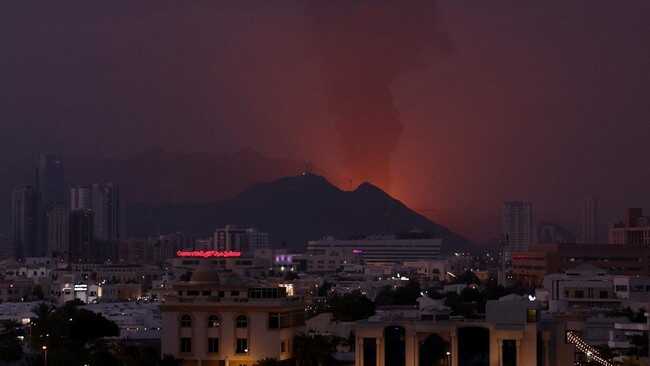
Stock markets fell broadly as the US–Iran confrontation intensified, with the conflict threatening energy supplies and global growth. In the first 24 hours of its military operations on Saturday, the United States said strikes nearly doubled the scale of its ‘shock and awe’ campaign against Iraq in 2003, claiming almost 2,000 targets around Iran. The Guardian reported that US Central Command Admiral Brad Cooper said Washington was also submerging ‘the entire Iranian navy’ and claimed to have destroyed 17 Iranian ships.
Amid the escalation, US President Donald Trump said the US Navy could begin escorting oil tankers transiting the Strait of Hormuz if necessary, a move among the most aggressive steps of his administration to curb a spike in global energy prices. World oil and gas prices surged after the conflict disrupted energy exports from the Middle East. Iran has attacked ships and energy facilities, closed shipping routes in the Gulf, and forced production halts from Qatar to Iraq.
The turmoil quickly reverberated in global financial markets. In Seoul, the Kospi index, which had fallen 7.2% on Tuesday, briefly slid more than 12%, hit its worst day in decades. The Korea Exchange even halted trading of the Kospi index temporarily after the steep drop. The circuit breaker mechanism was also triggered on the Kosdaq, which fell about 13%. In Tokyo, the Nikkei 225 resumed its decline on Wednesday morning, down around 3.9% at the start of trading, while the Topix fell nearly 4%. In Australia, the S&P/ASX 200 fell more than 2%. Hong Kong’s Hang Seng also slid about 2.7%, while China’s CSI 300 weakened around 1.6%.
The Indonesia Stock Exchange (IHSG) dropped 4.32% in the morning session, with all sectors in the red, though some energy stocks managed to hold green territory. Meanwhile, Wall Street was set to open slightly lower in New York, according to pre-trade data.
Tensions escalated further. Early on Wednesday, Israel said it had launched a broad wave of strikes on Iran targeting missile launch sites, air defences, and additional Iran infrastructure. On the diplomatic front, Trump broadened tensions with Western allies, threatening to terminate trade ties with Spain after Madrid refused to allow US forces to use its bases for operations against Iran.
Trump also vented his displeasure with British Prime Minister Keir Starmer for not taking part in the attack on Iran, arguing, ‘This is not the Winston Churchill we are facing’ in reference to Starmer.
Meanwhile, the conflict’s reach widened in the region. Lebanon’s Health Ministry reported on Wednesday that Israel’s strikes on two southern Beirut cities killed six and injured eight. Aramoun and Saadiyat are outside the Hizbullah heartland. The United Nations said at least 30,000 people have fled Lebanon due to intensified Israeli air strikes.
On the other hand, the US Department of Defense on Tuesday identified four of six American soldiers killed on Sunday in a drone attack on a US base in Kuwait. Trump said there could be more military casualties before the war ends. The President also claimed Iran had planned to strike first before Washington acted, revising earlier comments by Foreign Minister Marco Rubio who said Israel had triggered the war.
‘If there are any, I may have forced Israel to act,’ Trump said, adding that he believed Iran planned to strike first.
Casualties continued to rise on both sides. The Iranian Red Crescent Society said at least 787 people had died since the fighting began. The deadliest mass casualty event so far has been an attack on a female elementary school in Minab on Saturday, killing up to 168 people.
Iran also continued firing dozens of ballistic missiles at Israel, though most were intercepted by air defences. So far, 11 people in Israel have been reported killed since the conflict began.
The crisis has also spurred military moves by European powers. France’s President Emmanuel Macron ordered the nuclear-powered aircraft carrier Charles de Gaulle to move from the Baltic Sea to the Mediterranean to help protect allied assets. The carrier will be escorted by a frigate and air wing.