
Stitching Back the Pulse of Trade
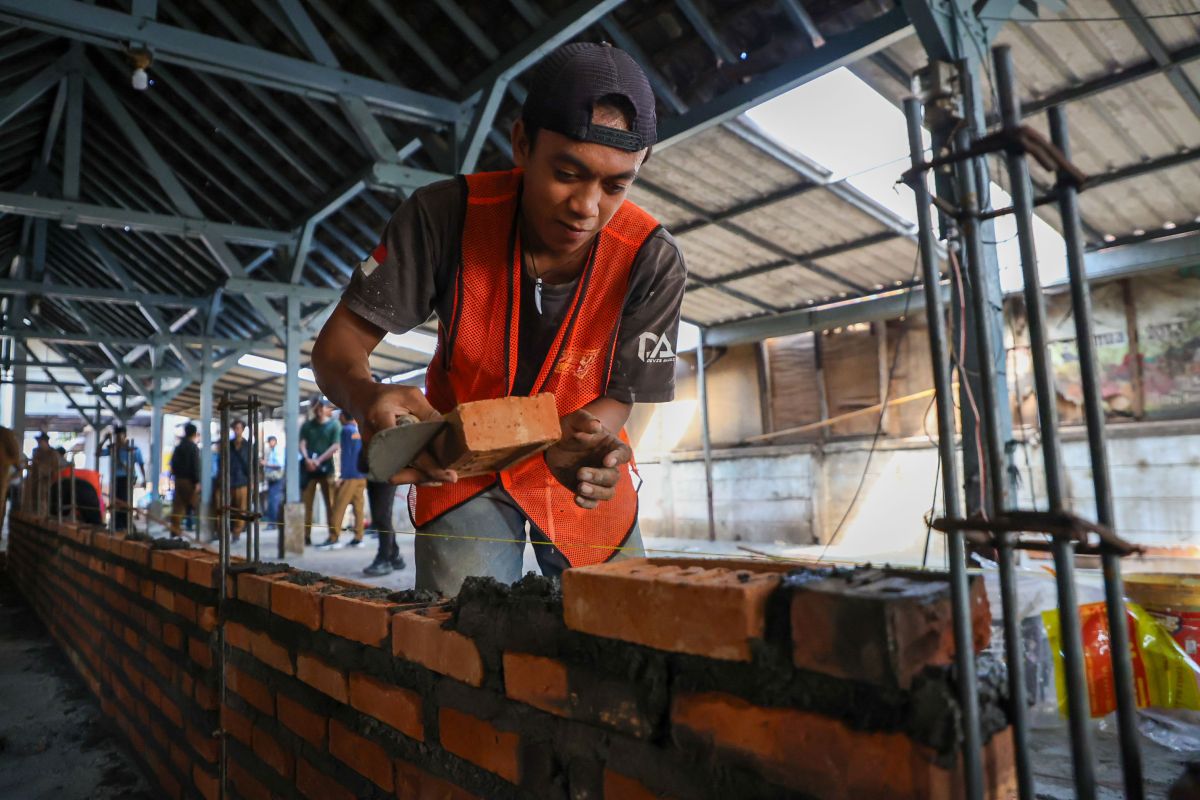
Surabaya (ANTARA) - A female shopper pauses briefly in front of the neatly arranged stalls. She no longer has to lift the hem of her trousers to avoid the mud, or hold her breath due to the overpowering stench. Her steps are lighter, her view more unobstructed. Around her, traders stand in more dignified spots, no longer spilling onto the roadway. The change feels simple, but it quietly alters how people view the market—from a tolerated space to one that is valued once more. The Surabaya city government has appeared increasingly serious about developing this sector in recent years. 2026 marks an acceleration phase, with at least ten markets targeted for renovation, five of which are being rushed to completion by mid-May. Pasar Tembok Dukuh, Pasar Kembang, Pasar Babakan Baru, Pasar Wonokromo, and Pasar Simo Gunung serve as the starting points for a more systematic major effort. This step did not emerge suddenly. It is a response to the classic problems of traditional markets that have long accumulated, such as poor infrastructure, weak governance, and competitiveness continually eroded by modern markets. Restoring Function Revitalisation of markets in Surabaya demonstrates a fairly clear approach: returning the basic function of the market as a decent transaction space. The main focus is not solely on aesthetics, but on fundamental aspects like drainage, flooring, roofing, and air circulation. The case of Pasar Tembok Dukuh serves as a concrete example. Before renovation, this market was often flooded due to narrow drainage channels and a floor position lower than the road. This condition not only disrupted comfort but also encouraged the emergence of spillover markets on the roadway. Revitalisation was then carried out by improving drainage, raising the floor level, and reorganising the trader areas. The results are not only visible physically. The market’s capacity has increased from around 135 stalls to 189 stalls. This means there is a real effort to accommodate traders who were previously outside the system. This approach is important because market problems cannot be solved solely through physical construction without considering the existence of its economic actors. On the other hand, Pasar Babakan Baru and Wonokromo show a new direction in market management based on health standards. The arrangement of a more hygienic poultry slaughtering system, even equipped with wastewater treatment installations, marks a paradigm shift. Markets are no longer seen as informal spaces that are entirely lax, but as part of a trading system that must meet regulations. This step aligns with national policies that encourage people’s markets to become cleaner, more organised, and competitive. However, behind all this, there is one important question: is this revitalisation enough to change public perception of traditional markets? Market Culture Revitalisation often stops at the physical aspects. Yet, the problems of traditional markets are far more complex. They concern trader behaviour, consumer habits, and sustainable management systems. Surabaya seems to be starting to realise this. In addition to renovating buildings, the government is also encouraging changes in traders’ mindsets. Regulating types of goods sold, implementing standard operational procedures for cleanliness, and promoting cashless transactions are part of a broader transformation.