
Stern IMF Warning: Global Debt Has Gone Too Far!
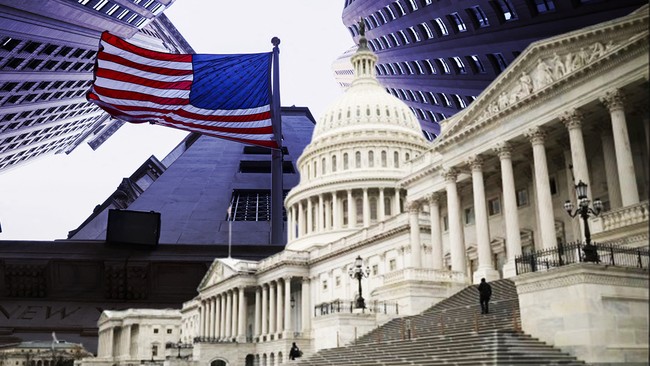
Jakarta, CNBC Indonesia - The United States’ debt, which has now surpassed US$39 trillion or approximately Rp674,000 trillion (US$1=Rp17,280), is no longer merely a domestic issue.
The International Monetary Fund (IMF) warns that the fiscal pressures in the US are indicative of problems faced by many other countries.
The US debt has long been a subject of political debate. The issue typically heats up during budget discussions or congressional meetings but often subsides afterwards.
However, the IMF’s latest warning indicates that the problem is far larger. The US is not the only country facing financial pressures. It serves as the clearest example of the growing debt issues spreading across various parts of the world.
Citing Fortune, during the launch of the IMF’s biannual Fiscal Monitor report on Wednesday (15/4/2026), IMF Fiscal Department Director Rodrigo Valdés issued a stern warning. According to him, the global economy is once again being tested by the impact of the war in the Middle East, while many countries now have increasingly limited fiscal manoeuvrability.
Valdés stated that public finances in many countries are becoming increasingly strained. This means that governments around the world no longer have many options to respond to new shocks, whether from wars, rising energy prices, or economic slowdowns.
The IMF estimates that global public debt will reach 99% of world GDP by 2028. This figure means the global debt ratio is nearly equivalent to the total value of the global economy.
Moreover, in a heavy-pressure scenario that is still considered possible, the global public debt ratio could surge to 121% of world GDP within just three years.
US Debt Burden Continues to Grow
The US remains the primary example of increasingly complex fiscal problems.
The US budget deficit did dip slightly last year, from nearly 8% of GDP to below 7% of GDP. One reason was the additional revenue from tariffs flowing into the federal government’s coffers.
However, this improvement is deemed unsustainable.
Valdés said the IMF forecasts the US deficit to rise back to around 7.5% of GDP and remain at that level for some time.
At the same time, US debt is expected to exceed 125% of GDP this year. The figure could even potentially rise to 142% of GDP by 2031.
To merely stabilise the debt trajectory, rather than reduce it, the US would need to implement fiscal tightening of about 4 percentage points of GDP.
According to Valdés, this is not a minor adjustment. If implemented, it would be one of the largest peacetime fiscal tightenings in modern US history.
Warning signs are also emerging in the bond market. The premium previously enjoyed by US government bonds over those of other advanced countries is beginning to narrow.
Valdés assesses that this condition shows the market is no longer as complacent about US debt as before. The longer reforms are delayed, the greater the pressures that could emerge in the future.
The IMF’s message to the US Congress is firm. This problem cannot be postponed indefinitely.
The World Also Lives Under a Debt Burden
Washington’s issues still appear more manageable compared to the global picture.
The IMF highlights the worsening fiscal gaps, which is the distance between a country’s current primary balance position and the position needed to stabilise debt.
This gap has now deteriorated by about 1 percentage point compared to five years before the Covid-19 pandemic.
Valdés emphasised that this is not merely a cyclical economic issue. In his view, it reflects policy choices, namely permanently higher government spending and lower revenues.
The debt burden is also becoming heavier because real interest rates are now about 6 percentage points higher than before the pandemic.
In other words, every dollar of existing debt is now more expensive to service. The longer governments delay reforms, the heavier the adjustments that will have to be made in the future.
Middle East War Worsens Fiscal Risks
The ongoing Middle East conflict adds a new dimension to global fiscal risks.
When energy and food prices rise, many governments are tempted to take the politically easy but economically dangerous route. This involves providing broad energy subsidies or cutting fuel taxes.
The IMF considers such policies not the best solution.
Valdés said that broad energy subsidies or tax cuts can distort price signals, burden national budgets, be poorly targeted, and be difficult to reverse once implemented.
The problem is that if half the world’s countries protect their consumers from rising energy prices, the other half must bear larger demand adjustments.
Valdés warned that one country’s domestic policies can affect global prices. Based on IMF modelling, the spillover effects from such subsidies could even double the impact of price increases for countries not providing subsidies.
Era Dabla-Norris, who led the preparation of the IMF’s Fiscal Monitor, said that governments’ responses this time are indeed more restrained than during the 2022 energy crisis.
However, she reminded that fiscal space is now far more limited. If governments revert to old policies of broad subsidies, the costs could be enormous.
The IMF recommends that governments protect people, not prices. This means aid should be temporary and targeted to the most vulnerable groups, rather than distributed evenly to everyone.
AI Could Be a Saviour, But Also Brings Risks
Amid the bleak figures, artificial intelligence (AI) emerges as one of the hopes.
Dabla-Norris said