
Steps to Elevate Indonesia's Manufacturing Industry
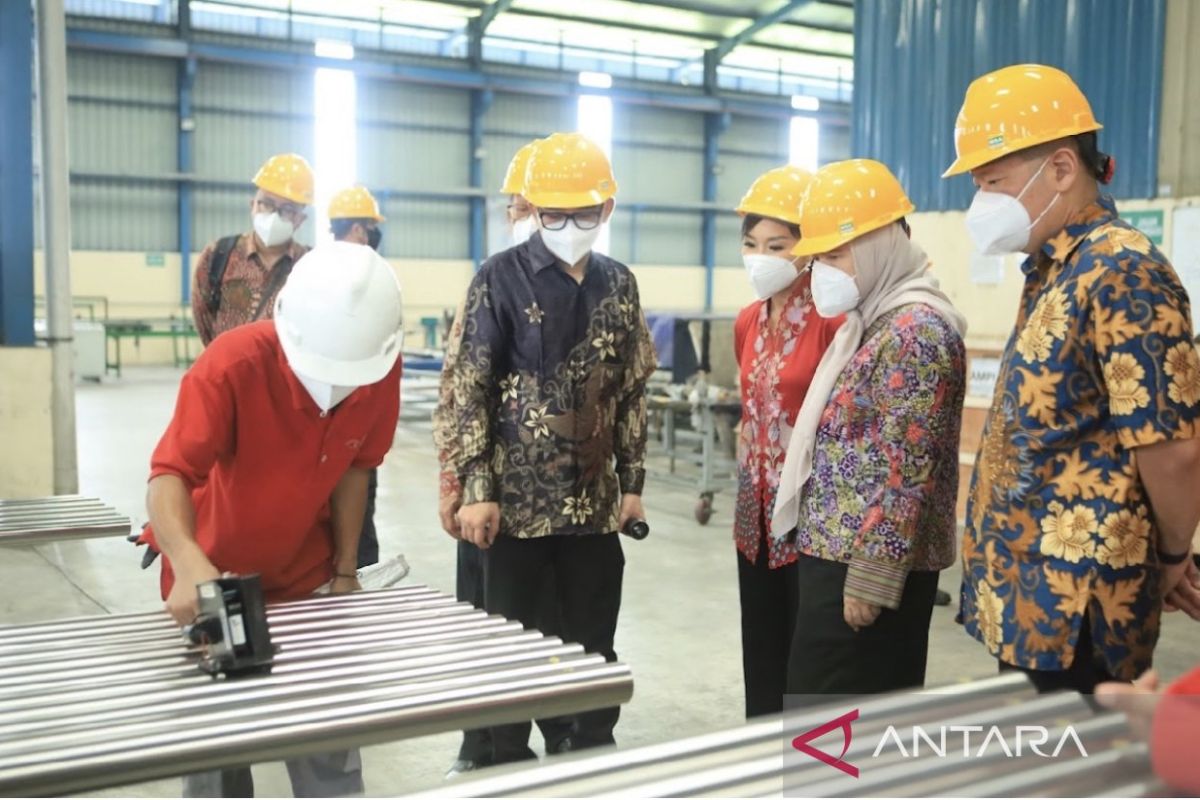
Expansion does not merely require increasing production capacity but also readiness to meet sustainability standards that are increasingly a global concern. Jakarta (ANTARA) - Like it or not, every small step in the national industrial sector truly holds great significance for the direction of Indonesia’s economic development. For instance, the launch of the first export of 20 tonnes of stainless steel pipes to Germany by PT Stainless Prima Pipe in Cikarang at the end of April 2026 initially seemed like a typical business ceremony. However, upon deeper reflection, this step encapsulates a long process of strengthening domestic manufacturing capacity, which is beginning to find its footing to be more confident in international markets. This step is intriguing not because of its large volume figures, but because of the message it carries. Indonesia’s manufacturing industry, which has long been positioned in the global value chain as a supplier of raw materials or semi-finished products, is now showing serious efforts to upgrade through high-value added products. The stainless steel pipes produced are not mere commodities but the result of technological processes, standardisation, and consistent quality that must meet the strict demands of global markets. The President Director of PT Stainless Prima Pipe, Mustika Ali, described this inaugural export as a momentum to prove that Indonesian manufactured products can compete in global markets. For years, the main challenge for the national industry has not only been production capacity but also perceptions regarding quality. When a product successfully penetrates a market like Germany, known for its high industrial standards, what is tested is not only the goods but also the production system, quality management, and trust in the country of origin. This is where the role of international standards becomes crucial. The General Manager of PT Stainless Prima Pipe, Edi Tandiono, stated that the company has adopted standards such as ASTM, 3A, and EN 10357. These are not mere technical labels but a universal language in global trade. These standards ensure that the produced products not only meet technical specifications but are also acceptable in the industrial systems of destination countries. With a production capacity of 1,100 tonnes per year, the step to penetrate export markets shows that the company’s orientation from the outset was not limited to the domestic market. However, this success does not stand alone. The Director General of National Export Development at the Ministry of Trade, Fajari Puntodewi, stated that the state has a strategic role in driving market expansion. Government support through promotion facilitation, trade exhibitions, and business matching serves as an important bridge between domestic producers and global markets that are often not easily accessible without strong networks. This approach reflects a paradigm shift in trade policy. The state no longer functions solely as a regulator but also as an active enabler opening pathways for businesses to penetrate international markets. In this regard, collaboration between the government, industry players, and other stakeholders becomes key. Strengthening the ecosystem