
Stembus Accord: A Middle Ground for Representation or a Setback for Democracy?
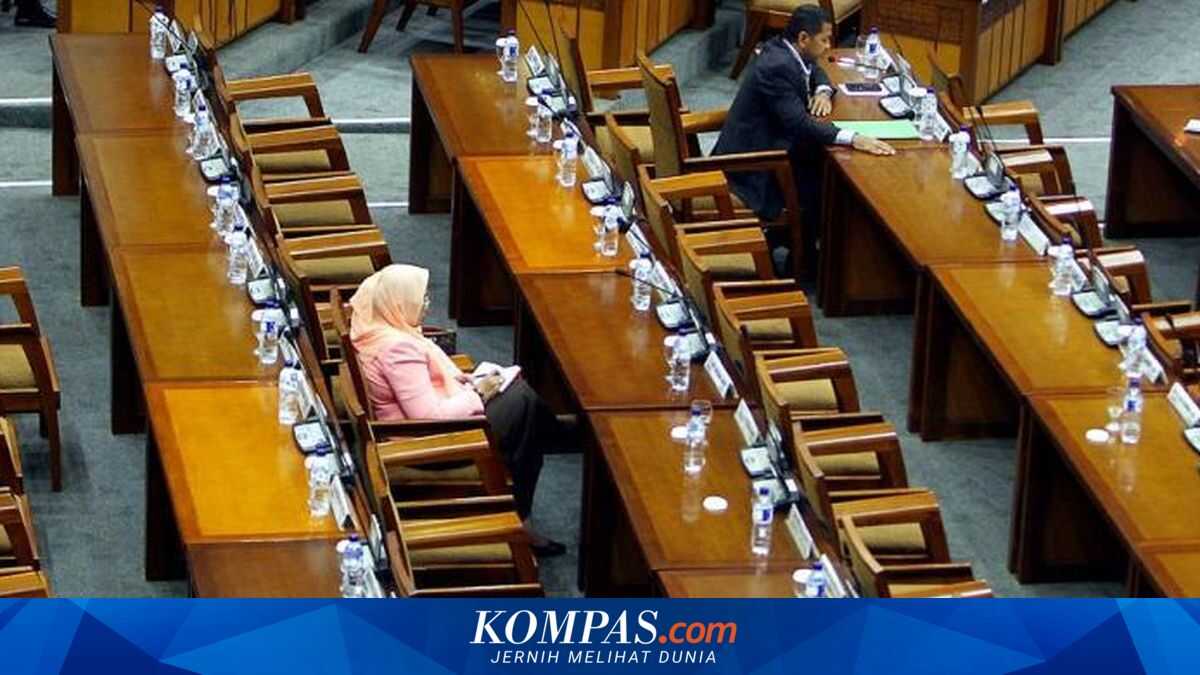
JAKARTA, KOMPAS.com - The discourse on reviving the Stembus Accord scheme has re-emerged amidst debates about the parliamentary threshold.
In simple terms, the Stembus Accord is a mechanism for combining leftover votes among participating political parties in an election.
Through this scheme, parties that do not meet the parliamentary threshold can still “entrust” their votes to other parties that pass into the DPR, based on political agreements between party elites.
However, behind the argument of saving the people’s votes, there lies a fundamental issue regarding the ethics of representation and the consistency of voters’ mandates.
The Director of Indonesia Political Review (IPR), Iwan Setiawan, believes that the Stembus Accord is procedurally valid but substantively problematic within the framework of representative democracy.
According to Iwan, the Stembus Accord reflects the face of Indonesian democracy in the early days of reform, when political practices were more determined by elite negotiations than by strengthening a well-established and voter-based party system.
He explained that in practice, parties that do not win the election tend to form coalitions to control strategic positions, especially the leadership positions in the DPR and MPR (People’s Consultative Assembly).
This coalition is not an ideological coalition born from a shared policy vision, but rather an instrumental coalition based on power calculations.
“The coalition is formed not because of ideological proximity, but because of power calculations,” said Iwan.
Iwan then referred to the experience of the 1999 election, when no single party won an absolute majority of seats in the DPR.
The PDI Perjuangan (Indonesian Democratic Party of Struggle) did emerge as the winner of the election, but the composition of the parliament at that time was very fragmented and filled with many parties.
In the process of selecting the leadership of the DPR, an agreement emerged among the parties that did not win the election to form a coalition to counterbalance the power of the PDI Perjuangan.
From this, the idea of the Stembus Accord was born, namely a political agreement to divide the leadership positions in the DPR and MPR collectively.
A number of parties, such as Golkar, PPP, PAN, and PKB, agreed on the division of parliamentary leadership positions based on the strength of the coalition.