
Station Porter Stories During Eid Homecoming: Earning Rp500,000 Per Day
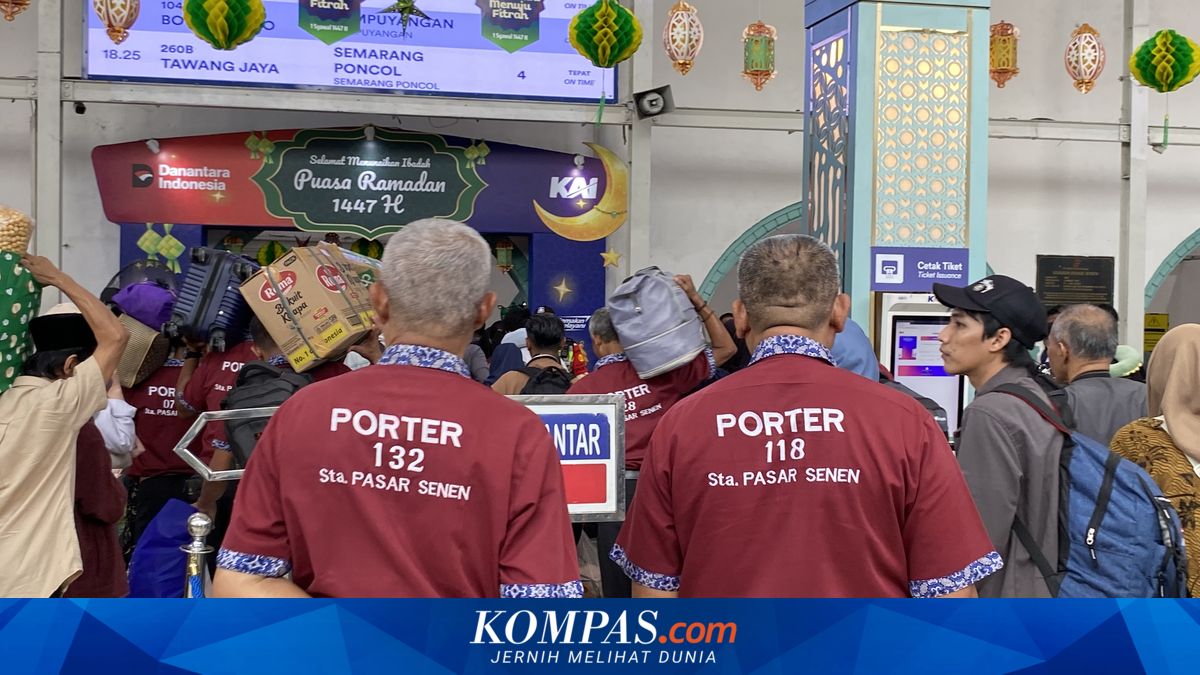
JAKARTA — Activity at Pasar Senen Station is increasing ahead of Eid as many people prepare for homecoming journeys. For porters, the period leading up to the religious holiday represents the busiest season of the year.
When passenger numbers surge, porter earnings can increase by hundreds of thousands of rupiah per day. “During really busy periods like before Eid, I can earn up to Rp500,000 in a day,” said Asman (44), a porter at Pasar Senen Station.
According to Asman, the income increase occurs because more passengers use porter services to help carry luggage. Some passengers now book services through an e-porter application available at the station. Through the application, service rates have been set transparently at approximately Rp38,000 for one instance of carrying luggage from the entrance to the waiting area or platform.
“If you book through the app, the rates are already set,” he said.
However, many passengers book porter services directly on-site. In certain circumstances, passengers even pay more than the standard rate. “When booking directly, sometimes passengers give more than the set amount,” Asman explained. This extra payment is typically given by passengers carrying large quantities of luggage or those who feel particularly helped by the porter service.
During normal conditions, Asman usually serves around three to five passengers daily. However, during the homecoming season, the number of customers increases significantly. “During busy periods, I can serve up to a dozen or more people,” he said.
With an average rate of approximately Rp38,000 to Rp40,000 per service, porter daily earnings can reach hundreds of thousands of rupiah when the station is crowded with passengers.
In the departure area, he was seen carrying a cardboard box containing bottled water whilst pulling a passenger’s suitcase. Slamet, who has worked as a porter for nearly five years, explained that porters operate under a rotating shift system organised by the porter coordinator. “Usually there’s a rotation schedule. We work according to the allocation from the coordinator,” Slamet said.
Under this system, porters remain available at the station throughout the day to assist passengers needing help with luggage. When passenger flow increases, porters must move faster to serve more customers. “Sometimes passengers carry really large cardboard boxes. They can weigh dozens of kilogrammes,” Slamet said.
Despite the physical demands, he acknowledged that the atmosphere approaching Eid always brings a different feel for porters because of the crowds of passengers heading home to their hometowns.