
State Responsible for Ensuring Safe Daycare Services
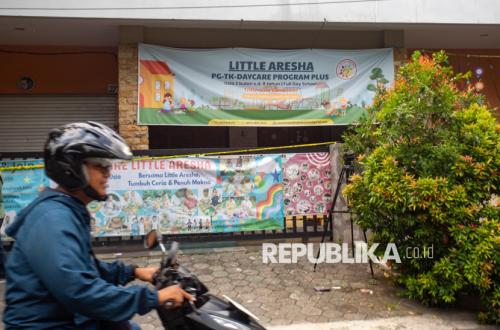
Cases of violence against children in daycare environments in recent times are seen as the impact of weak state oversight. However, the state is responsible for guaranteeing that daycare services available in society are safe for children.
Ai Rahmayanti, a commissioner of the Indonesian Child Protection Commission (KPAI), assesses that the violence still frequently occurring in daycare settings is evidence that the government is not yet ready to conduct oversight. On the other hand, the government is promoting the expansion of daycare services in various regions.
“KPAI sees the main issue today as daycares growing faster than their oversight system. On one side, societal needs are increasing and the state is encouraging the expansion of daycare services, but on the other side, governance, licensing, and oversight have not been built strongly,” she said to Republika on Wednesday (29/4/2026).
According to her, oversight of daycare services should be conducted in layers. This means the oversight should not only be administrative in nature.
Ai mentioned that the government must conduct oversight even before the daycare operates. This oversight is carried out through a strict verification process regarding legality, safety standards, caregiver competence, and the ratio of caregivers to children.
“No daycare should accept children before passing that minimum verification,” she said.
After the daycare is operational, the government must still conduct inspections. These inspections are deemed necessary to be carried out periodically, not waiting for cases to occur before conducting field examinations. “There must be routine audits and cross-sector inspections,” she said.
Ai added that oversight must also be carried out with a child protection-based system. This means daycares should not only be overseen as business entities, but as services concerning children’s rights and safety.
“Therefore, KPAI is pushing for a national integrated daycare oversight system, not oversight that is scattered and passes responsibilities around,” she said.
She emphasised that the government has a responsibility to ensure every daycare service is safe for children. However, currently, the authority for managing daycares is fragmented.
Ai gave an example that currently there are many types of daycare services, including as educational services, childcare services, social services, to business services. The many different definitions of daycares are seen as potentially creating oversight gaps.
For that reason, KPAI is pushing for a clear coordinative authority in daycare management. “If everyone feels they have a role, but no one is in control, that is dangerous,” said Ai.
She also urged the government to clarify the definition and position of daycare services. On the other hand, the government must also build a clear cross-sector governance model to avoid regulatory and oversight vacuums.
She added that the government must be firm in taking action against daycares operating without permits, including temporary suspension of operations for services that do not meet legal requirements and child protection standards. Daycares must also implement child safety policies or child safeguarding as an obligation to prevent violence, negligence, and various risks to children.
Not only that, every caregiver must also have certification through competency standards, training, and certification based on Child Rights Mainstreaming (PUHA). This is done to ensure the quality of childcare and child protection.
On the other hand, Ai also emphasised a national licensing system for daycare services accompanied by firm oversight authorities. This way, daycare operators have a clear licensing scheme.
“The development of national standards for daycare services, as minimum standards that must be applied by all daycare providers to ensure service quality and child safety,” she said.
Ai assessed that the government must also build an integrated national inspection system. That system must be run with periodic inspections accompanied by sanction mechanisms for violations of service standards and child protection.
Finally, the government must also develop a national database of licensed daycares that is transparent and easily accessible to the public. This is deemed necessary to make it easier for the public to find safe daycares. “The state is responsible for ensuring every daycare is safe for children,” she said.