
State-Owned Exporter Danantara Sumberdaya Emerges as Market Awaits Rules for SDA Exports
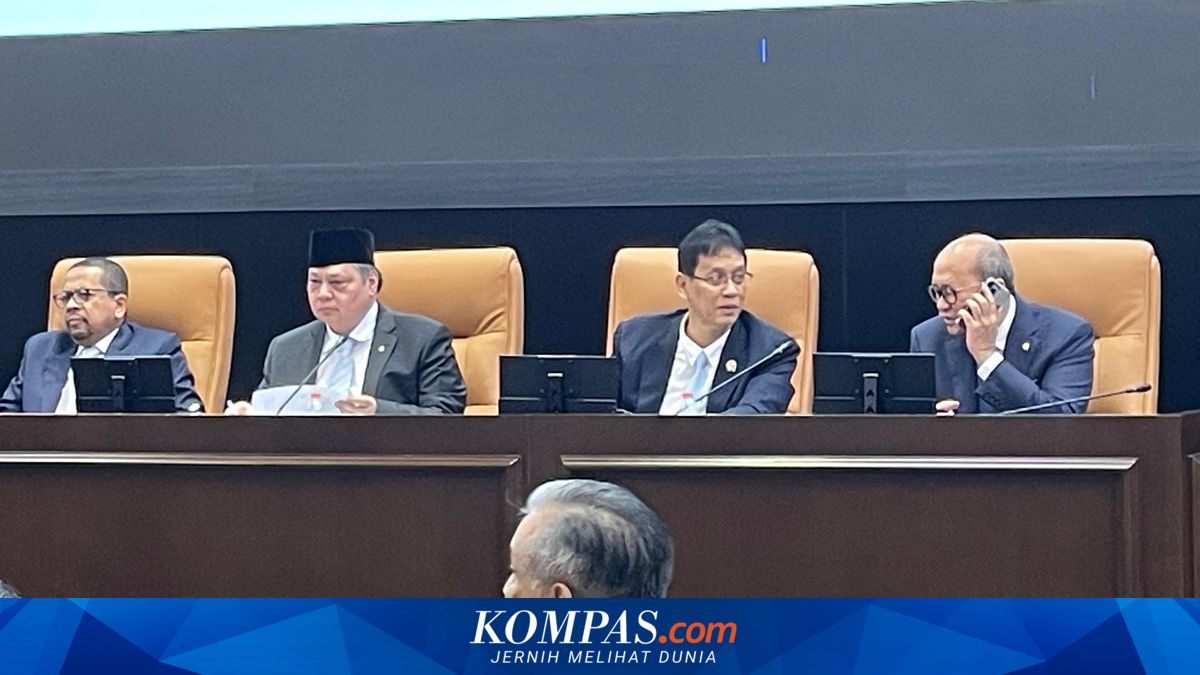
The government is beginning to set up a body or export aggregator, Danantara Sumberdaya Indonesia (DSI), to strengthen the governance of exports of strategic natural-resource commodities. The move is projected to serve as an instrument to optimise export earnings in foreign exchange while bolstering Indonesia’s bargaining position in the global market. In the initial phase, the policy covers palm oil, coal, and ferroalloy alloys that have substantial export value. Indonesian President Prabowo Subianto outlined the policy direction in a Plenary Session of the House of Representatives on the Macro Economic Framework and Main Policy on Fiscal Policy (KEM-PPKF) 2027, Wednesday 20 May 2026. Amid talk of forming DSI, the government also noted that non-tax state revenue (PNBP) from the energy sector reached about 40 per cent of the 2026 State Budget target in the first quarter of 2026. Member of Commission XII of the Indonesian House of Representatives from the Golkar Party faction, Alfons Manibui, said the achievement shows the energy sector and mineral resources remain the main pillar of national fiscal resilience. He said the momentum should be used to accelerate downstreaming of the domestic industry and strengthen national energy resilience. He also said the acceleration of construction and operation of national smelter projects should be continually monitored to contribute to higher added value, job absorption, and state revenue. ‘Going forward, the energy sector must become stronger not only as a source of state revenue but also as a driver of more equitable development and welfare for the people, including for areas that produce natural resources,’ the West Papua-born legislator said. Board of Trustees member Fuad Bawazier of Prasasti noted that forming DSI addresses structural problems that have long plagued the governance of SDA exports, from fragmented export recording to suboptimal foreign-exchange repatriation. ‘Strengthening the governance of SDA exports through DSI is an important and strategic agenda,’ Fuad said in a statement on Friday 22 May 2026. ‘Indonesia cannot allow high-value commodities to continue leaving through a fragmented system of recording and transactions. This step aligns with the need to safeguard foreign exchange reserves, strengthen state revenue, and support exchange-rate stability amid ongoing external pressures,’ he added. According to Fuad, an export aggregator can be understood as an instrument to ensure export values are recorded more accurately, foreign exchange earnings are returned more optimally, and Indonesia’s bargaining position in the global market becomes stronger. He added that the export aggregation model has been implemented in several countries through state energy companies or national export cooperatives. ‘Global experience shows export aggregators can generate significant economic impact,’ he said. ‘Saudi Aramco has reported annual net profits in the range of $100-160 billion in recent years, with a record $161 billion in 2022,’ he said further.