
State Funds Leaking as Prabowo Highlights Complexity of BUMN Subsidiaries
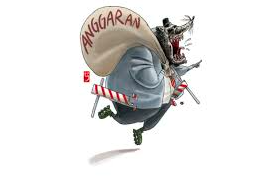
President Prabowo Subianto has highlighted the complexity of state-owned enterprise structures, which he considers excessively bloated. He revealed that the number of entities under government management is far greater than initially estimated.
This was conveyed by Prabowo whilst providing guidance at the inaugural commemoration of Danantara Indonesia in Jakarta on Wednesday, 11 March. On this occasion, he deemed consolidation of BUMN management to be critical given the vast number of companies requiring oversight.
“It is impossible for us to manage 250 companies; as it turns out, I only just discovered it is not 250, but over 1,000 companies,” Prabowo said.
According to him, from a management theory perspective, no system exists that can manage such a vast number of entities under a single authority. Initially, Prabowo noted, BUMNs were established with strategic objectives by the nation’s founders to meet the basic needs of a state that lacked its own industrial sector at the time.
He exemplified how the government in the early days of independence established various state enterprises due to limitations in the domestic industrial sector.
“BUMNs were established by our nation’s founders; they were called state enterprises, and have operated for decades. We had no textile industry, so the state established one,” Prabowo said.
According to him, the state also developed various other vital sectors, ranging from the paper industry to pharmaceuticals, to support public education and healthcare needs.
However, over time, the structure of state enterprises has become increasingly complex through the establishment of various subsidiary and sub-subsidiary companies. Prabowo admitted to being shocked after learning the number of entities owned by one of Indonesia’s largest BUMNs, Pertamina.
“It turns out that the good intentions of our nation’s founders ultimately gave rise to subsidiary companies, sub-subsidiaries, and sub-sub-subsidiaries. I was shocked to learn that Pertamina has 200 subsidiaries and sub-subsidiaries,” he said.
“And what is even stranger is that there are even more peculiar regulations. Apparently BUMNs can be audited by the state, but it is said that sub-subsidiaries cannot be audited. Where do these regulations come from?” Prabowo asked.
Therefore, on this occasion, Prabowo reminded the managers of Danantara Indonesia to maintain integrity and manage state assets carefully, as this concerns the interests of future generations.
He also emphasised the importance of strict oversight of state fund management, particularly given that many sovereign wealth funds in various countries have suffered losses due to poor management.
To that end, Prabowo ensured that institutions such as Danantara will be subject to oversight by various state institutions. Such oversight will involve a number of institutions including the Financial Audit Board, the Financial and Development Supervisory Board, as well as law enforcement and defence institution authorities.
Additionally, he stated that he will appoint a special presidential envoy to assist in overseeing the management of BUMNs falling under Danantara’s coordination.
“We must oversee this because it is the lifeblood of the Indonesian nation. If this lifeblood continues to leak, our nation will be in distress,” he concluded.