
State Budget Under Pressure: Should the Deficit Be Widened Beyond 3 Per Cent?
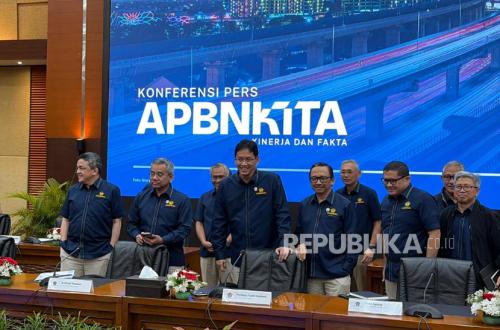
Jakarta — The head of the Budget Committee of the Indonesian House of Representatives (Banggar DPR), Said Abdullah, believes the government still has fiscal space to maintain a deficit below 3 per cent of gross domestic product (GDP). This statement responds to Finance Minister Purbaya Yudhi Sadewa’s suggestion of widening the state budget deficit for the 2026 fiscal year above 3 per cent of GDP.
“To achieve such fiscal discipline, there are certainly many ways,” Said stated in remarks in Jakarta on Friday, 13 March 2026.
He listed various approaches including maintaining state revenue targets, improving tax administration through a new coretax system expected to enhance tax collection, and increasing export commodity prices such as crude oil and coal, which would boost non-tax state revenue (PNBP).
On the expenditure side, he said the government could also conduct efficiency measures by focusing on non-priority programmes. The government is considered to have experience in implementing such steps. According to him, if spending can be controlled and balanced with revenue realisation, the target of maintaining a deficit below 3 per cent can be preserved.
Additionally, Said stressed that the government must also maintain financing targets to ensure they are properly managed. Amid pressure from negative credit rating assessments, he said, it is not easy to obtain financing through government securities (SBN).
“The finance minister and all officials must convince foreign buyers to resume accepting SBN and expand retail SBN portions,” he said.
He noted that the Budget Committee has not yet had preliminary discussions from the government regarding widening the deficit beyond 3 per cent of GDP or implementing quantitative easing policies.
If the government pursues a deficit policy exceeding 3 per cent of GDP, Said said there are both advantages and disadvantages. The advantage is that in the short term, fiscal space becomes wider. However, in the medium term, such a policy could potentially shift current fiscal burdens to the future because the deficit expansion is financed by debt.
He made similar remarks regarding quantitative easing policies. If using the Bank Indonesia (BI) model of absorbing SBN from the secondary market, the central bank’s capacity must be considered, as it carries responsibility for controlling exchange rates and inflation. He noted that both responsibilities are not simple and require vigilance and a strong policy mix from BI.
“It must be calculated carefully, so that when BI absorbs SBN in the secondary market, it does not collapse in exchange rate and inflation control, which are its main responsibilities. The risks must be carefully calculated,” Said said.
Likewise, he continued, with money printing. The risk of stagflation must be analysed clearly and cannot be done arbitrarily because current consumer purchasing power remains weak. If the money supply increases simultaneously, stagflation could occur.
The Budget Committee chair hopes there will be studies involving economists to ensure each economic policy has adequate technocratic support. In this way, all risks can be mapped along with mitigation steps.
“What I want to emphasise is that our fiscal condition is healthy, stable, and sustainable,” he concluded.