
State Budget Spending Accelerated from the Start of the Year
The government is changing the pattern of state spending to avoid concentration at year-end. This strategy is implemented to maintain deficit stability while encouraging more even economic growth throughout the year.
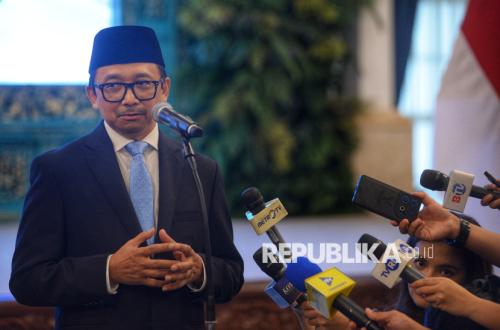
Deputy Finance Minister Juda Agung stated that the spending pattern, previously concentrated in the fourth quarter, is now being spread from the beginning of the year. “We want to change the government’s expenditure pattern, the government’s spending pattern, which used to have the highest growth in the fourth quarter, now we are trying to even it out,” Juda said in Jakarta on Monday (27/4/2026).
This change is reflected in the first quarter 2026 state spending realisation of Rp815 trillion, or a 31.4% year-on-year growth. This figure equates to 21.2% of the total 2026 state budget, higher than the same period last year at 17.1%.
With this achievement, the government targets spending distribution in quarters II to IV at around 26% each. Juda assessed that this step will accelerate economic growth within the current year. “So this is indeed the aim so that economic growth is even, fast, and occurs in the same year. So there is a change from the government’s consumption pattern,” he said.
He added that the spending acceleration is beginning to impact household consumption. Indicators such as the Mandiri Spending Index show an upward trend in the consumption sector, including electronics and household needs.
However, this policy has drawn notes from economists. Indef economist Eko Listiyanto said that accelerating spending is indeed more effective than the old pattern concentrated at year-end.
“Actually, from the concept that has changed, namely accelerating spending, I agree, because our spending usually tends to accelerate only in the fourth quarter, and that is not optimal for the economy,” Eko said.
Nevertheless, he warned of the risk of deficit control at year-end. The 2026 state budget deficit in the first quarter was recorded at 0.93% of GDP, approaching the annual fiscal discipline limit of 3%. “But on the other hand, because the deficit is 0.93% (Q1 2026), if we average it over, say, four quarters, it will indeed exceed 3%, so mathematically, because Q1 is already 0.93%, there might be concerns, if it’s accelerated too much, perhaps in Q4 there will be a sudden brake. This is what we worry about,” Eko explained.
The Ministry of Finance assured that it will conduct regular evaluations of budget realisation to keep the deficit under control. Up to Q1 2026, the deficit was recorded at Rp240.1 trillion, with state revenues reaching Rp574.9 trillion or growing 10.5%.
Tax receipts became the main support with a realisation of Rp394.8 trillion or up 20.7%, including a 57.7% surge in VAT and luxury goods sales tax.
Meanwhile, customs and excise receipts fell 12.6%, and non-tax state revenues weakened by 3%.
On the spending side, central government recorded a significant 47.7% increase to Rp610.3 trillion, while transfers to regions dipped slightly 1.1% to Rp204.8 trillion.