
Starting with Rp 10 Million, Azwir Builds Nasi Padang Business into Family Livelihood
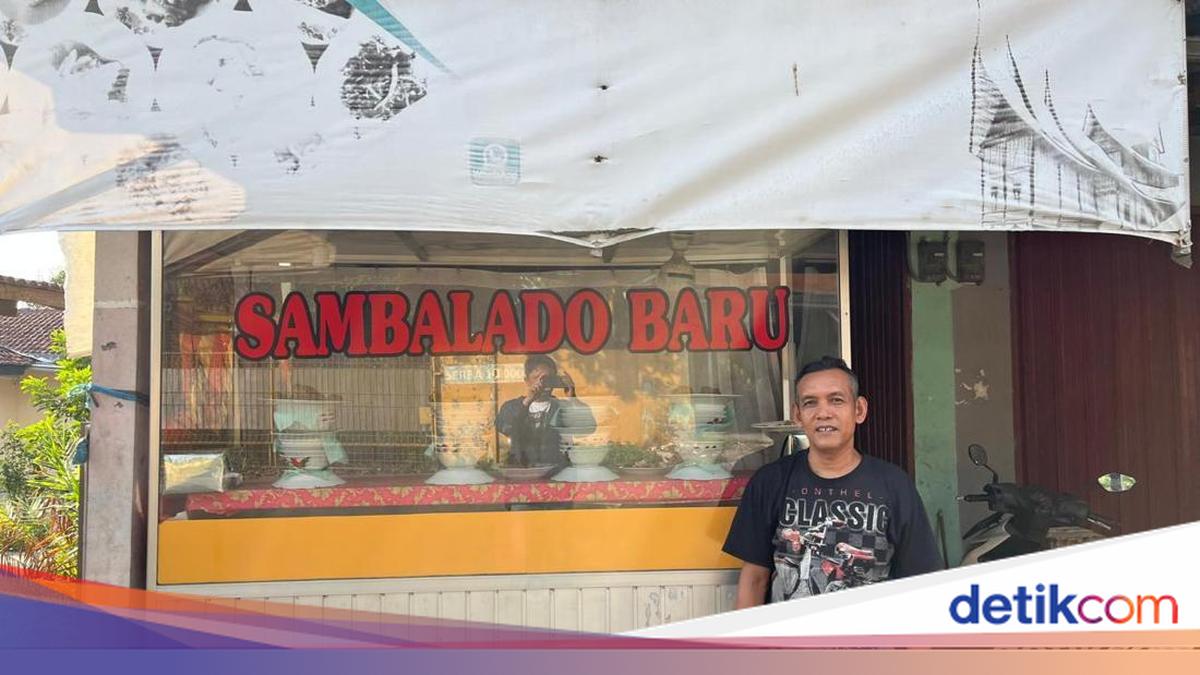
Like many Minang people known for their merantau tradition, Azwir Rahim left his hometown of Padang to seek his fortune elsewhere. Twelve years ago, he started a nasi padang business with minimal capital. Gradually, the venture grew into a source of livelihood for his family. That afternoon, after serving a number of customers at his nasi padang stall, Sambalado Baru, Azwir took time to speak about his business journey. Sitting in the stall area, he enthusiastically recounted how the enterprise he founded years ago slowly developed. Azwir explained that when he first migrated to Jakarta, he did not immediately open a nasi padang business. He initially worked as a security guard in North Jakarta. Only after marrying in 2012 did he try his luck by opening a Minang culinary business. “Living with her, alhamdulillah, I was helped by my in-laws, then we started the business,” Azwir said at his nasi padang stall in Bojong Village, Klapanunggal, Bogor Regency. In the early days, Azwir admitted the business did not take off immediately. He had to overcome various challenges because sales were unstable. “We struggled at first; starting a business, you know, sometimes it’s busy, sometimes it’s quiet,” Azwir said. The 46-year-old initially had capital of around Rp 10 million. According to him, that amount was sufficient to purchase food ingredients because prices at the time were not yet too high. In the early phase, Azwir managed the stall by himself. After the business grew, he employed two staff to help with operations. After several years, Azwir needed additional capital to expand the business. He then applied for a Kredit Usaha Rakyat (KUR) loan from BRI in 2015. He used the funds to open a new branch in the Bogor area. However, the venture did not end smoothly. After surviving for a few years, the nasi padang stall was eventually closed due to various challenges. One of those challenges was the COVID-19 pandemic, which impacted his business. Because public activities were restricted, his nasi padang sales declined. Even so, Azwir chose to persevere until his business gradually picked up again. “Now, alhamdulillah, there have been some small improvements,” he said. Over the course of running his business, Azwir has applied for KUR BRI loans about five times. The loan amounts varied, starting from Rp 10 million, Rp 15 million, Rp 25 million, Rp 30 million, up to Rp 35 million, with an average repayment tenor of two years. He said the KUR BRI application process has always run smoothly, and the disbursement of funds has been fast. “Quick. Straight to processing, straight to disbursement, it doesn’t take long, because our BI checking is good,” Azwir said. At his stall, Azwir sells various menu items including chicken, fish, beef, and eggs. He offers affordable prices, with all dishes priced at Rp 13,000. “Even if the profit is small, the important thing is that it runs smoothly,” he said. Azwir’s nasi padang customers include local residents as well as buyers through online services. He also receives large orders, such as from the village office or the local community health centre. “The village office has events, the Puskesmas too, for example, bulk orders. Sometimes 100 packs, sometimes 50 packs,” Azwir said. In a day, he can sell 100 packs of nasi padang. However, he acknowledged that the current economic conditions mean sales are not always stable. He is grateful for the KUR BRI loan assistance because it helps him sustain and rotate his business capital. “Luckily there is assistance from BRI’s KUR. So we can keep the money circulating,” he added. Currently, Azwir estimates his daily profit at around Rp 150,000 to Rp 200,000. Although not large, he remains grateful to still earn an income amid rising living costs. “I say the important thing is that the business runs smoothly, even if the profit is small, as long as the money keeps turning over,” Azwir said. Thanks to the business, Azwir says he has been able to improve his family’s economic condition. The profits are used for various needs, from renovating the house to helping his parents. “Alhamdulillah, everything has been helped, we could renovate the house, make it nicer,” Azwir said. In addition, the profits are used to fund his children’s education. He has two children who are currently in primary and junior secondary school. “Alhamdulillah, since getting assistance from BRI KUR, we could expand the business, make it progress, make it bigger,” Azwir said. He expressed his gratitude to BRI for helping provide business capital loans. He feels assisted by the funds. “Alhamdulillah, it can help small MSME businesses. It can be used for all needs, buying equipment, renovating. Alhamdulillah, we have been helped by BRI KUR,” he added. Head of BRI Gandoang Unit in Bogor Regency, Mokhamad Rokhmat, affirmed BRI’s commitment to supporting business actors to grow and move up in class. The KUR BRI loan assistance is expected to help the community’s economy. “Hopefully, with this, we want to help small communities move up in class, so to speak. Those who were perhaps ultra-micro businesses can move up to micro. Micro can then perhaps become retail, then mid-to-upper retail,” Rokhmat said in a separate interview. However, Rokhmat noted that the business journey is not short. Therefore, he assured that BRI is always present throughout the community’s business process. “Because there must still be some form of mentoring. For example, during Covid, we continued to assist them,” Rokhmat said.