
Start of Ramadan 1447 H Potentially Differs Among Muslim Groups
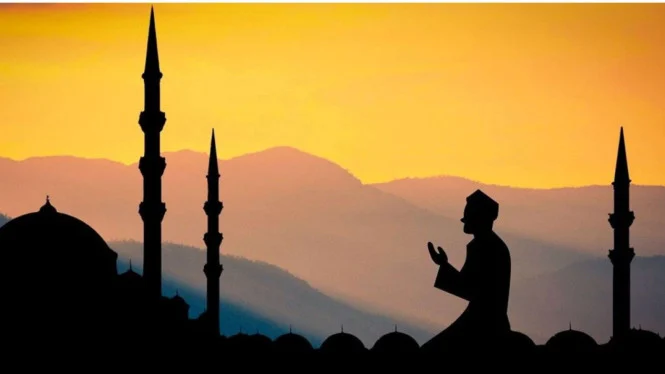
Jakarta, VIVA – The Indonesian Government, through the Ministry of Religious Affairs, will hold an isbat (official determination) session to determine the start of 1 Ramadan on Tuesday, 17 February 2026. Meanwhile, a number of Islamic mass organisations have already set their own dates for the beginning of 1 Ramadan. Muhammadiyah, for instance, will commence the Ramadan fast on Wednesday, 18 February 2026, whilst Persatuan Islam (Persis) will begin the Ramadan fast on Thursday, 19 February 2026.
In response to the potential differences in the start of Ramadan 1447 H among Muslims in Indonesia, Deputy Chairman of the Indonesian Ulema Council (MUI) KH Cholil Nafis urged the Muslim community to respond maturely.
“It is almost certain that there will be differences in when we begin Ramadan. Some have already determined the start of Ramadan as 18 February, as they use hisab (astronomical calculation) combined with a global calendar,” he said, as quoted from the official MUI website on Monday, 16 February 2026.
Others, meanwhile, use hisab combined with the imkan rukyat (possible sighting) method, which depends on the possibility of observing the crescent moon after sunset.
“According to imkan rukyat, the possibility of sighting the hilal (crescent moon) is unlikely to be observable,” he added.
Cholil explained that the position of the hilal is likely still below 3 degrees. Meanwhile, the Mabims convention — comprising scholars from the Southeast Asian ulema forum including Malaysia, Indonesia, Singapore, and Brunei Darussalam — stipulates that the hilal can be considered sighted only when it is above 3 degrees.
“So it is virtually certain that the start of our Ramadan will differ. Some will begin on 18 February and others on 19 February. I hope everyone understands this. The important thing is that we can observe it properly and with devotion,” he said.
Cholil stressed that the Muslim community must not allow friction that could damage ukhuwah Islamiyah (Islamic brotherhood). The MUI chairman also emphasised the importance of Islamic brotherhood in bringing Muslims closer to Allah SWT.
“I hope the public has matured on this matter. This is a matter of khilafiyah fikr — a difference in scholarly interpretation. It need not lead to division; rather, let this difference be an opportunity for us to learn more,” he added.
He explained that such learning includes the study of wihdatul mathali’ and sa’atul mathali’ — how the moon is observed based on respective locations.
“Some consider the entire world as one calendar, one mathla’, one place where the moon is sighted. So if the moon is sighted in one country, it is equally considered as sighted here, and fasting begins accordingly,” he explained.