
Stagnant for 20 Years, Revision of Military Judiciary Law Deemed to Ignore the Constitution
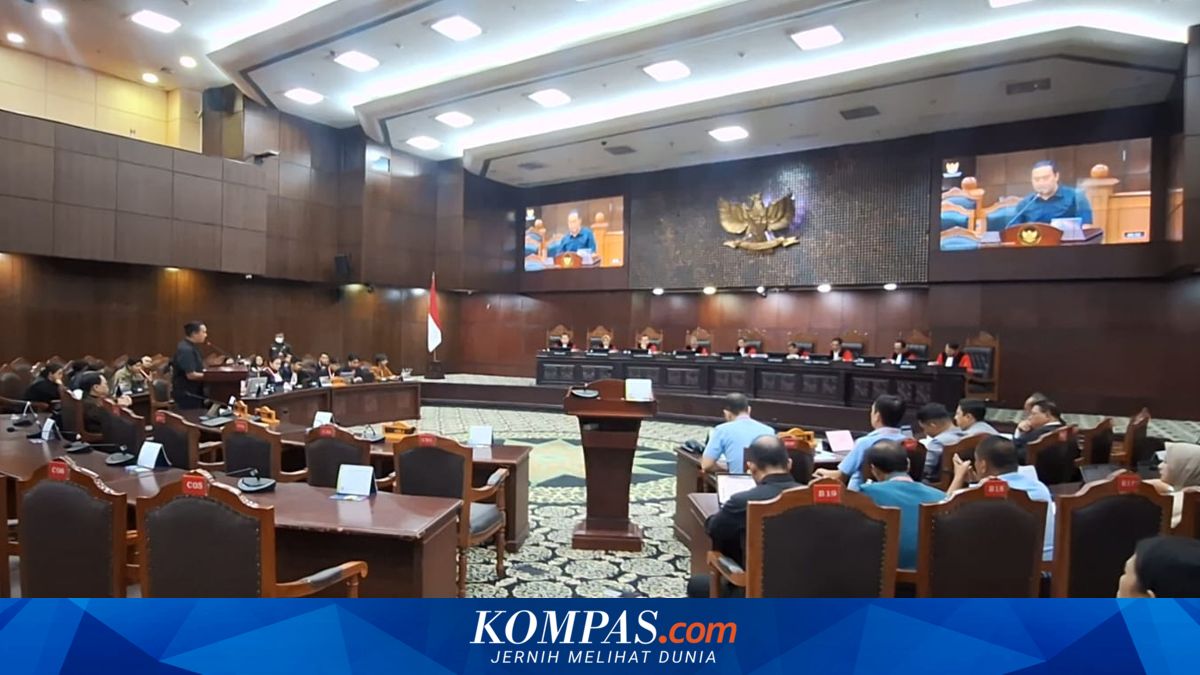
Jakarta, Kompas.com - The revision of Law Number 31 of 1997 on Military Judiciary is considered to have been stagnant for more than two decades and has the potential to ignore constitutional mandates.
This was stated in the expert testimony of the petitioner Al Araf during the hearing of Case Number 260/PUU-XXIII/2025 held at the Constitutional Court (MK) on Tuesday (14/4/2026).
“From a legal politics perspective, the need for change has long been acknowledged but has not been followed up. This indicates neglect of constitutional mandates,” said Araf.
The hearing was chaired by MK Chief Justice Suhartoyo along with the constitutional justices, with the agenda of hearing the petitioner’s expert witnesses, namely Zainal Arifin Mochtar and Al Araf.
Al Araf emphasised that the Military Judiciary Law did not emerge in a neutral space but was formed within the construction of the New Order regime, which tended to be repressive.
According to him, during that era, legal products functioned more as tools for power control rather than upholding the principles of a rule of law state.
“The state formed laws not within the framework of rule of law, but merely to meet the needs of rule by law,” he said.
That mandate is reflected in the constitutional amendments through the amendments to the 1945 Constitution of the Republic of Indonesia, and strengthened by MPR Decree Number VII/MPR/2000 and Law Number 34 of 2004 on the TNI.
Within that framework, Araf continued, the lawmakers had actually designed strict limits on the jurisdiction of military courts.
Military courts are only authorised to try military criminal offences, while general criminal cases involving military members should be examined in general courts.
“The expansion of military court jurisdiction into the realm of general criminal offences contradicts the established normative and constitutional design,” he said.
In that decision, the Court stated that military members are subject to military courts only in military criminal cases, and to general courts for general criminal acts.