
Staggering Gap! US vs Iran War Technology Costs Leave Heads Shaking
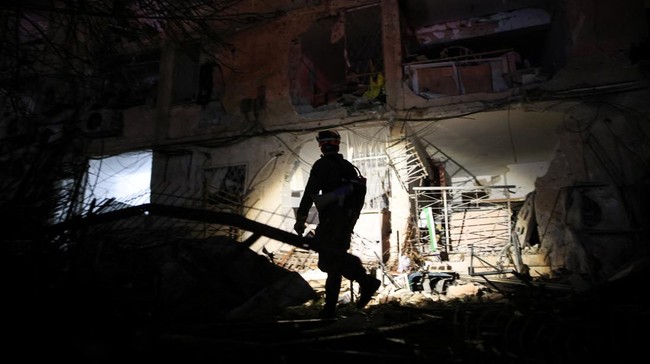
The conflict between the United States (US) and Iran highlights the stark disparity in the costs of modern military technology. The US Department of Defense (Pentagon) reports having to spend far more to repel low-cost unmanned aerial vehicle (drone) attacks launched by Iran.
Citing CNBC International, US Secretary of Defense Pete Hegseth had previously warned of the situation. He emphasised that the US military cannot continue using expensive ammunition to counter the enemy’s cheap weaponry.
“We cannot afford to shoot down cheap drones with missiles costing US$2 million. We ourselves must be able to deploy capable attack drones in large numbers,” Hegseth stated, as cited by CNBC International, quoted on Sunday (29/3/2026).
Based on public estimates, Iran uses swarms of Shahed drones, each priced between US$20,000 and US$50,000. These inexpensive drones have proven capable of penetrating and damaging US military bases and related facilities.
In contrast, the US reportedly spent US$5.6 billion in just the first two days of the war on ammunition alone.
In response to this disparity, the US military is beginning to look towards defence technologies from startups in Silicon Valley. Currently, the US has deployed the Low-cost Uncrewed Combat Attack System (LUCAS), a drone produced by SpektreWorks in Arizona, priced at around US$35,000 per unit.
However, Govini CEO Tara Murphy Dougherty notes that LUCAS production remains at moderate levels. The majority of US air capabilities in Iran currently still rely heavily on traditional fighter jets and bomber aircraft.
In the anti-drone defence sector, cost-suppression innovations are also being accelerated.
Aerovironment recently released the Locust X3 laser system, claimed to have operational costs below US$5 per shot. Other technology companies such as Anduril, Epirus, and Axon are also scaling up production of their anti-drone technologies.
The conflict is serving as a catalyst for defence technology companies. Pitchbook data shows that the value of venture capital (VC) funding deals in this sector nearly doubled to US$49.9 billion last year from US$27.3 billion in 2024.
Meanwhile, major companies like Palantir and Anduril have recently signed contracts worth billions of dollars with the Pentagon.
Although enthusiasm in Silicon Valley is high, data from the Ronald Reagan Presidential Foundation and Institute indicates that spending on defence technology startups still accounts for less than 1% of the total US defence contract value in 2025. From that small portion, 88% is dominated by three major companies: Anduril, Palantir, and SpaceX.
Demand for cheap and efficient technology has skyrocketed since the US and Israel attacked Iran at the end of February. Several startups claim they have been asked by the Pentagon to immediately increase production capacity.
Chaos Industries CEO John Tenet stated that his manufacturing team is working day and night to meet the demand without waiting for official contracts to be issued first.
This shift in focus towards low-cost autonomous technology aligns with US President Donald Trump’s target of proposing a US$1.5 trillion military budget in 2027. Hegseth aims for the US defence industry to be able to produce and operate 300,000 low-cost drones rapidly by 2027.