
Stability of Malacca Strait Highlighted Amid Global Chokepoint Tensions
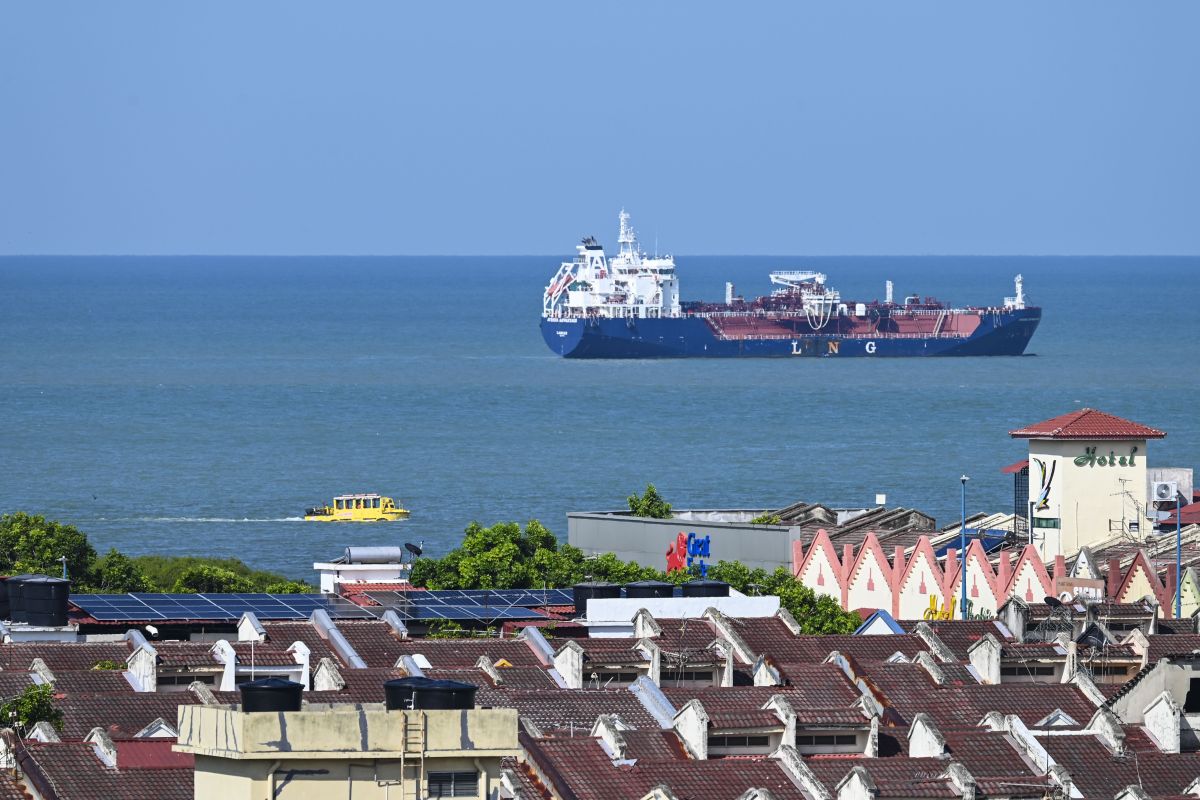
Kuala Lumpur (ANTARA) - Amid rising geopolitical tensions and risks of disruptions in major global shipping lanes, particularly the Strait of Hormuz, global attention is increasingly focused on the stability and reliability of the Malacca Strait, which analysts say remains relatively stable and well-managed.
Analysts explain that while the Strait of Hormuz primarily serves as a crucial energy export route, the Malacca Strait acts as a broader artery for global trade, connecting major economic regions, including East Asia, the Middle East, Europe, and Africa.
The Malacca Strait handles more than 102,500 ship transits in 2025, accounting for around 22% of global maritime trade, and remains one of the world’s largest oil transit chokepoints, with shipping volumes reaching 23.2 million barrels per day, or about 29% of total global seaborne oil flows.
According to Julia Roknifard, a senior lecturer at Taylor’s University, disruptions to vital maritime routes like the Strait of Hormuz have demonstrated how quickly global supply chains can be affected, given the roles of these routes not only in transporting oil and gas but also various key industrial inputs, such as fertilisers, sulphur, and helium.
Roknifard emphasised that the impact would be far greater if a similar disruption occurred in the Malacca Strait. “The Malacca Strait handles greater overall volumes of trade and energy flows, making it fundamentally more important to global trade dynamics,” she said.
From a structural perspective, the Malacca Strait operates under governance and risk frameworks that are fundamentally different from those of the Strait of Hormuz, providing a more predictable environment for global trade despite its strategic interests, according to a report from TA Securities.
The research institution TA Securities explained that the Malacca Strait is governed by the United Nations Convention on the Law of the Sea (UNCLOS) as an international strait with guaranteed transit passage, ensuring that no single country can blockade, prohibit, or impose fees on shipping traffic.
This legal framework provides continuity and predictability for global supply chains, while operational oversight is jointly managed by regional countries through coordinated systems for maritime safety, navigation, and security.
“As a result, although chokepoint risks remain, particularly due to density, accidents, and physical constraints, these risks are largely technical and manageable, rather than driven by strategic or political pressures,” stated TA Securities.
In contrast, the Strait of Hormuz is characterised by centralised control and geopolitical sensitivity, where tensions can more directly impact global supply shocks, making it a more volatile chokepoint, according to the research institution.
Despite these differences, both routes remain crucial for global energy and trade flows, with risks influenced by different underlying factors: operational factors in Malacca and geopolitical factors in Hormuz.
Currently, the main risks facing the Malacca Strait lie in maritime safety and efficiency challenges caused by high shipping density on the route, according to analysts.
Amid growing attention to maritime security risks, the Malacca Strait is now increasingly viewed not only as a crucial trade route but also as a focal point in long-term geopolitical and economic planning.
Looking ahead, Roknifard expressed hopes for deeper regional cooperation, stating that closer ties could help mitigate external risks, enhance regional resilience, and ensure sustainable navigation flows in the strait.
“The countries in the region are expected to continue strengthening coordination and promoting pragmatic cooperation so that all parties can benefit from mutually advantageous agreements,” she said.